The Force under strain

August 21, 2026 • Web Admin •
Share this story:
The Force under strain
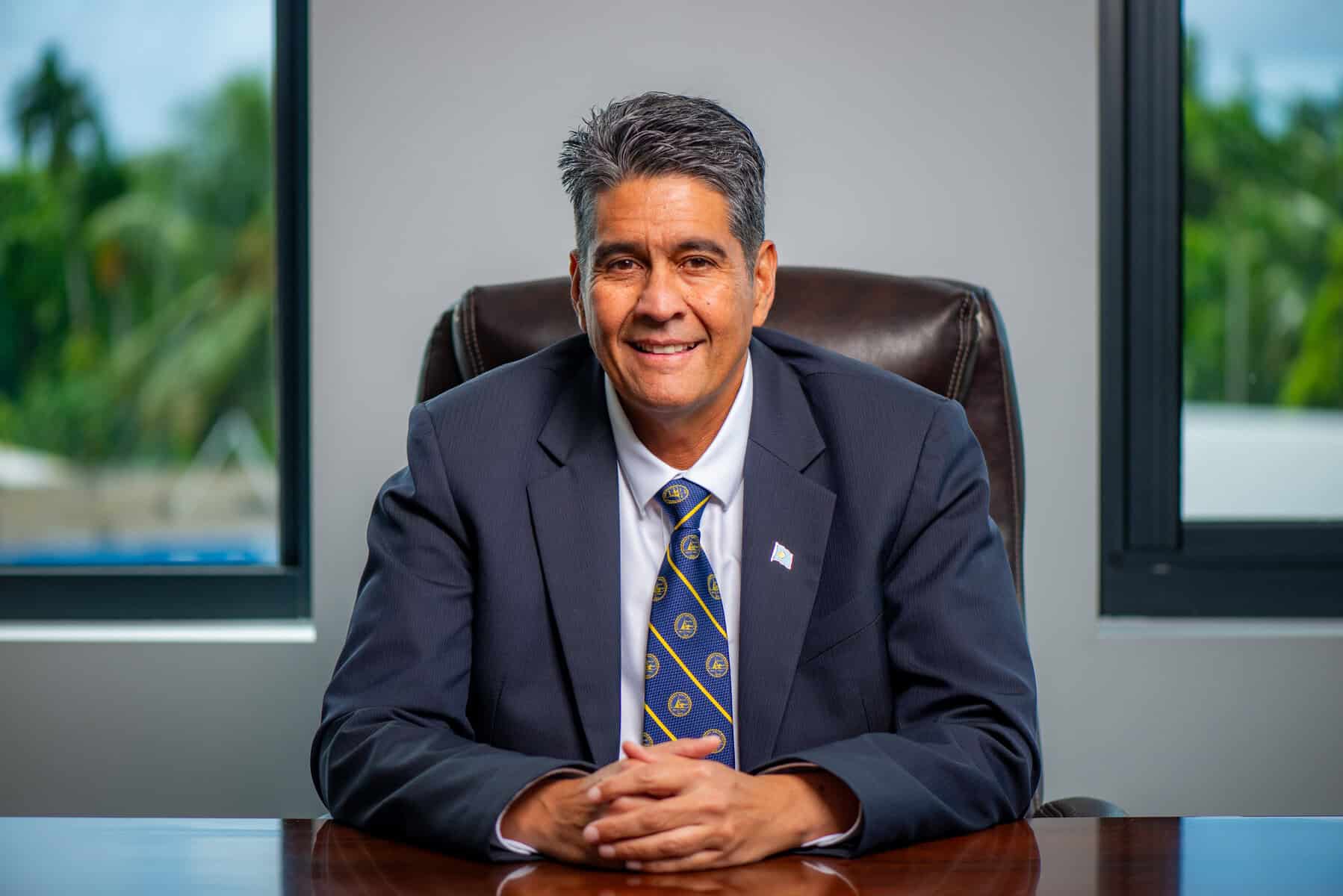
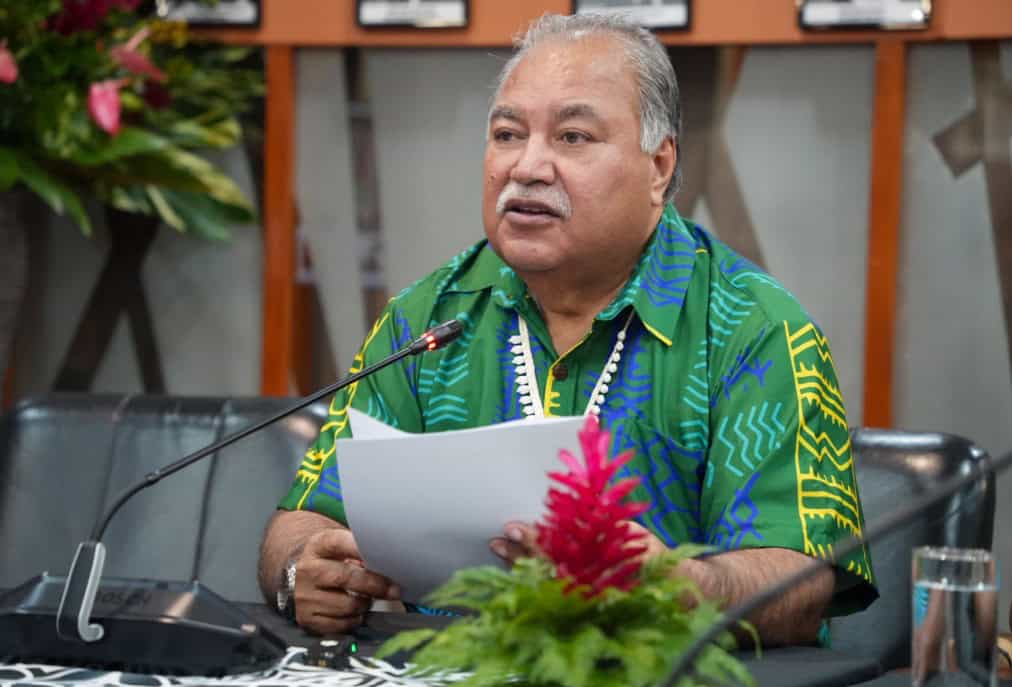
Fiji Police Commissioner Rusiate Tudravu. Image: Fiji Police Force

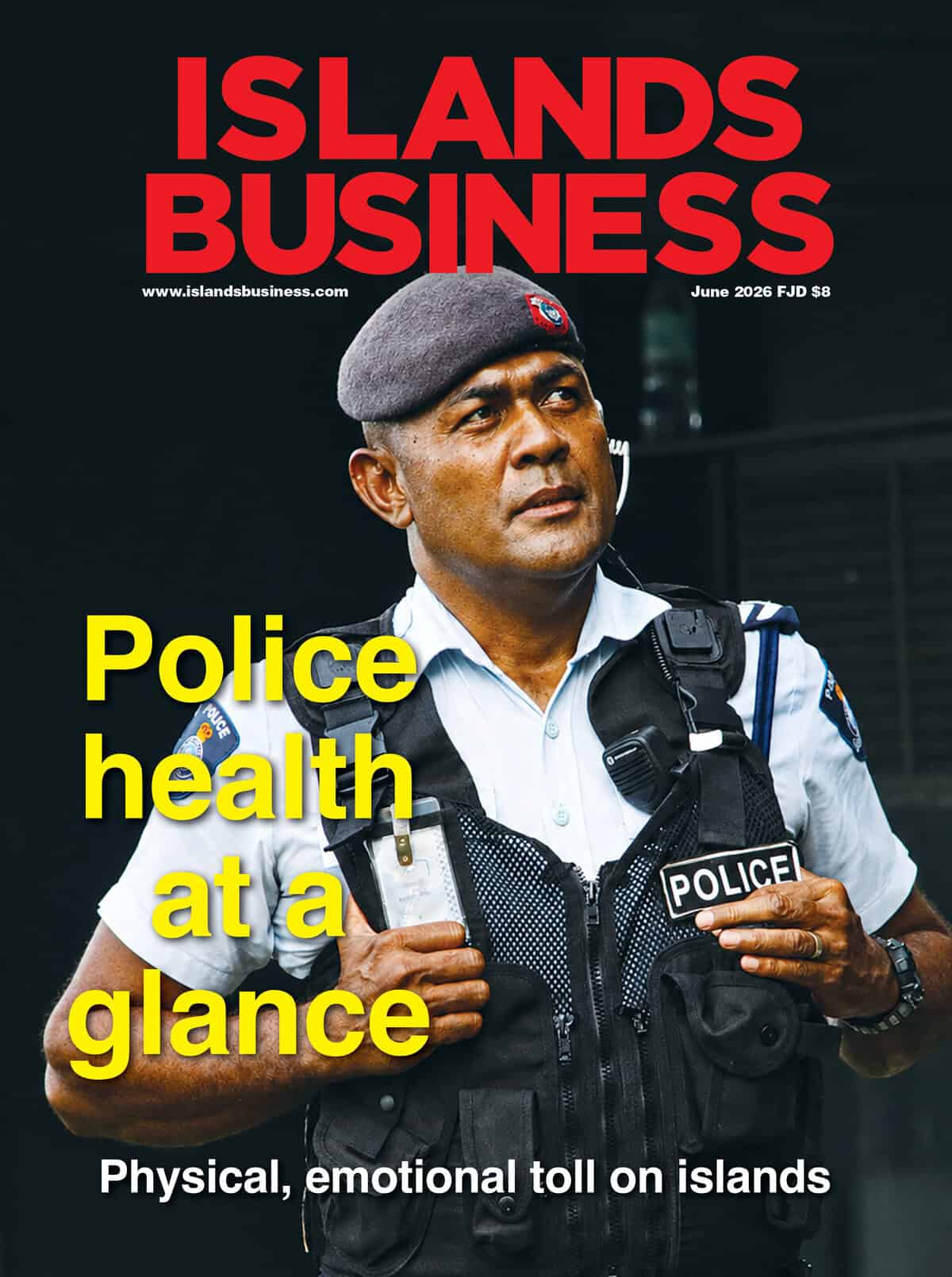
THIS is the final instalment in a series that commenced in our June edition with “When the badge becomes heavy” and continued in July with “Policy of silence”, following up on the “Impacts of Everyday Policing on Police Officers’ Psychological, Emotional, and Physical Well-being in Fiji,” a study by Soropepeli Ramake, Social Work Assistant Lecturer at the University of the South Pacific, co-authored with Julian Lawakeli.

Fiji Police Commissioner Rusiate Tudravu responds to Islands Business (IB) on internal transparency, operational integrity, and institutional wellness strategies.

IB: The study says 32% of officers were not aware of the wellbeing policy. Why is a policy that matters to morale and retention still not reaching a third of the force? What is failing: communication, trust, or leadership?

Tudravu: The Fiji Police Force (FPF) is currently undergoing internal reform measures, with technical support from the Australian Federal Police, to strengthen the three areas mentioned: communication, trust, and leadership. We acknowledge that we are working with archaic processes which work against us, such as internal communication. However, this does not negate the fact that we have mechanisms in place to disseminate information about new policies or issues of concern, whereby middle managers conduct weekly lectures and use the opportunity to highlight such policies.

IB: Nearly half of respondents struggled to balance work and family time. Will there be any concrete changes made to shift work patterns, overtime, and deployment so officers can have a life outside the badge?

Tudravu: Policing is a demanding profession, and it requires effective time management. Shift work is mandatory as we operate on a 24 hour basis, and middle managers have always shown empathy towards officers in their time of need. As the Commissioner of Police, I have directed officers with a large number of outstanding leave days to take their leave. Understanding also the environment officers were working in, which had contributed to job insecurity, led to some not wanting to take their leave.

IB: Officers reported bullying, verbal abuse, stand-over tactics, and discrimination as part of their daily reality. What is being done inside the organisation to reduce harm from colleagues and superiors, not just from the public?

Tudravu: We have an internal affairs units that deals with disciplinary issues related to officers’ conduct. Officers have reported against officers when they face instances of misbehaviour. We have a Force Chaplain and Psychologist that officers can turn to raise their issues, which will be addressed through appropriate channels.

IB: The article shows that 92% reported potentially traumatic incidents and 84% said those incidents had a negative impact. Why has trauma exposure become routine, and what is the FFP plan to reduce repeated exposure or build stronger recovery systems?

Tudravu: Policing is a stressful profession, as we face trauma daily. It is not a profession for the faint hearted. Being a police officer means dealing with the worst parts of society and human cruelty every day. Seeing this destroys any innocent ideas about how the world works. Police officers are required to build mental toughness and understand that the call of duty also requires one to carry the heavy burden of one’s duty. We have a Force Chaplain, Welfare and Psychologist and external partners such as Medical Services Pacific and Empower Pacific that our officers can turn to. These services are provided, but ultimately it is up to the individual officer to access them, as it cannot be forced.

IB: If officers are routinely dealing with trauma, what after-care exists after a critical incident: mandatory debriefing, counselling, peer support, time off, or something else? Which of these are actually being used?

Tudravu: Briefings prior to and debriefings are part of major operations or investigations. This also includes the daily routine of policing, such as parades conducted before and after a shift.

IB: The paper notes stigma around seeking mental health support. In practice, can an officer ask for help without risking career damage, missed promotion, or being seen as weak? What proof can you offer that the culture has changed?

Tudravu: The Fiji Police Force is a merit-based organisation. Recently, promotion processes for certain ranks have changed, where officers apply through an online portal, whereby an individual’s competency is based on their annual performance reports and qualifications. Stigma around mental health is not isolated to the Fiji Police Force, but to society as a whole.

IB: The force has previously discussed growing to 7000 officers. Why expand headcount if the current workforce is already stretched and stressed? How do you avoid scaling burnout instead of solving it?

Tudravu: I take you back to the Australian Federal Police’s UPLIFT supported programme focused on institutional reforms to streamline work and uplift service delivery. The FPF has operated in a certain way for decades, while the criminal landscape has evolved. As the criminal landscape has changed, our processes, enablers and infrastructure have remained the same. This is why the UPLIFT is an important component of my strategic leadership direction, to ensure the FPF is modern and responsive to modern policing needs. There are seven (7 pillars under the UPLIFT, which include Strategy and Planning, Leadership, Integrity and Ethics, Communication, Enablers (Proactive/ Reactive), and Enabling capabilities (HR/ICT).

In summary, we get our house in order, streamline processes with the aid of technology and capabilities, and we should be able to share the roles of traditional and modern policing.

Out of necessity, new units were formed, which has meant the redeployment of officers, such as the Prisoners Management Team, which at one time required around 20 officers, to now almost 100, so the push and pull of manpower has had an impact, hence the need for more manpower.

IB: The study suggests officers can be emotionally distant at home, have trust issues, and experience family strain. What responsibility does the police leadership accept for the burden policing places on spouses, children, and family life?

Tudravu: The FPF has measures in place, as mentioned earlier, to address the stress of this profession. The onus is on police officers to take advantage of these services; however, it cannot be forced on any individual. Stigma still plays a major role in this, and the perception that, as law enforcement, tasked with ensuring the welfare of the people we serve, we cannot show weaknesses and ask for help ourselves. It’s a stigma that is not isolated to FPF.

IB: Do you/FPF track wellbeing with the same seriousness as crime stats: sick leave, burnout, turnover, counselling uptake, stress-related absence, and retention? If not, why not?

Tudravu: Yes, we do, in our monthly reports, and this is not only evident for police officers but also for the civilian cadre.

IB: The article treats wellbeing as holistic, including psychological, emotional, physical, social, and spiritual dimensions. Does the police force’s support system actually reflect that, or is it still built around a narrow, clinical idea of mental health?

Tudravu: The existence of the Force Chaplain’s office is reflective of the holistic approach, and we do engage the assistance of other religious organisations.

IB: The paper argues that cultural ideas such as bula taucoko and community values matter in Fiji. How is FPF adapting welfare programmes to Pacific cultural realities instead of importing a one-size-fits-all policing model?

Tudravu: Divisional Police Commanders (DPCs) know what is best for their divisions and the officers under their command, and they have the authority to adapt programmes to suit their needs. While we have overarching support systems, the DPCs, Officers in Charge (OC) and Station Officers often plan team exercises that encourage team bonding to de-stress often tense and traumatic experiences following major operations and investigations, with the option to seek further assistance when needed.

IB: Officers reported unhealthy coping, including smoking, alcohol, and kava use. Do you see this as a personal failing, or as a symptom of an organisation that has normalised chronic stress?

Tudravu: The Fiji Police Force conducts bi-annual health audits which provide officers with insight into their health status. The onus is on the officers to take the advice given by medical officials and remedy their situation. The Force Psychologist team also visits Divisions and Units and provides counselling. Again, the onus is on the officer to come forward and take advantage of the services provided.

IB: The survey found that many officers knew someone who had been traumatised. At what point does repeated exposure stop being “part of the job” and become an organisational failure?

Tudravu: The criminal landscape is constantly evolving and becoming more dangerous. Hence the establishment of the Force Psychologists’ office that looks after the welfare of our officers. We recognise that there could be more direct approaches, such as mandatory counselling following major ops, and that is being explored.

IB: What would a genuinely safe police culture look like if an officer in difficulty can speak up early, be helped quickly, and not be punished socially or professionally for doing so?

Tudravu: With internal redress mechanisms in place through our Internal Affairs, Force Chaplain’s office and Force Psychologist, the Commissioner conducts Talanoa sessions across all ranks where issues are openly discussed and addressed.

IB: If there is one message you would want officers to hear about their wellbeing, what would it be?

Tudravu: The internal reforms are a holistic response to issues that have impacted officers’ wellbeing, so we are taking it seriously.
The Force under strain

August 21, 2026 • Web Admin •
Share this story:
The Force under strain
Fiji Police Commissioner Rusiate Tudravu. Image: Fiji Police Force

THIS is the final instalment in a series that commenced in our June edition with “When the badge becomes heavy” and continued in July with “Policy of silence”, following up on the “Impacts of Everyday Policing on Police Officers’ Psychological, Emotional, and Physical Well-being in Fiji,” a study by Soropepeli Ramake, Social Work Assistant Lecturer at the University of the South Pacific, co-authored with Julian Lawakeli.

Fiji Police Commissioner Rusiate Tudravu responds to Islands Business (IB) on internal transparency, operational integrity, and institutional wellness strategies.

IB: The study says 32% of officers were not aware of the wellbeing policy. Why is a policy that matters to morale and retention still not reaching a third of the force? What is failing: communication, trust, or leadership?

Tudravu: The Fiji Police Force (FPF) is currently undergoing internal reform measures, with technical support from the Australian Federal Police, to strengthen the three areas mentioned: communication, trust, and leadership. We acknowledge that we are working with archaic processes which work against us, such as internal communication. However, this does not negate the fact that we have mechanisms in place to disseminate information about new policies or issues of concern, whereby middle managers conduct weekly lectures and use the opportunity to highlight such policies.

IB: Nearly half of respondents struggled to balance work and family time. Will there be any concrete changes made to shift work patterns, overtime, and deployment so officers can have a life outside the badge?

Tudravu: Policing is a demanding profession, and it requires effective time management. Shift work is mandatory as we operate on a 24 hour basis, and middle managers have always shown empathy towards officers in their time of need. As the Commissioner of Police, I have directed officers with a large number of outstanding leave days to take their leave. Understanding also the environment officers were working in, which had contributed to job insecurity, led to some not wanting to take their leave.

IB: Officers reported bullying, verbal abuse, stand-over tactics, and discrimination as part of their daily reality. What is being done inside the organisation to reduce harm from colleagues and superiors, not just from the public?

Tudravu: We have an internal affairs units that deals with disciplinary issues related to officers’ conduct. Officers have reported against officers when they face instances of misbehaviour. We have a Force Chaplain and Psychologist that officers can turn to raise their issues, which will be addressed through appropriate channels.

IB: The article shows that 92% reported potentially traumatic incidents and 84% said those incidents had a negative impact. Why has trauma exposure become routine, and what is the FFP plan to reduce repeated exposure or build stronger recovery systems?

Tudravu: Policing is a stressful profession, as we face trauma daily. It is not a profession for the faint hearted. Being a police officer means dealing with the worst parts of society and human cruelty every day. Seeing this destroys any innocent ideas about how the world works. Police officers are required to build mental toughness and understand that the call of duty also requires one to carry the heavy burden of one’s duty. We have a Force Chaplain, Welfare and Psychologist and external partners such as Medical Services Pacific and Empower Pacific that our officers can turn to. These services are provided, but ultimately it is up to the individual officer to access them, as it cannot be forced.

IB: If officers are routinely dealing with trauma, what after-care exists after a critical incident: mandatory debriefing, counselling, peer support, time off, or something else? Which of these are actually being used?

Tudravu: Briefings prior to and debriefings are part of major operations or investigations. This also includes the daily routine of policing, such as parades conducted before and after a shift.

IB: The paper notes stigma around seeking mental health support. In practice, can an officer ask for help without risking career damage, missed promotion, or being seen as weak? What proof can you offer that the culture has changed?

Tudravu: The Fiji Police Force is a merit-based organisation. Recently, promotion processes for certain ranks have changed, where officers apply through an online portal, whereby an individual’s competency is based on their annual performance reports and qualifications. Stigma around mental health is not isolated to the Fiji Police Force, but to society as a whole.

IB: The force has previously discussed growing to 7000 officers. Why expand headcount if the current workforce is already stretched and stressed? How do you avoid scaling burnout instead of solving it?

Tudravu: I take you back to the Australian Federal Police’s UPLIFT supported programme focused on institutional reforms to streamline work and uplift service delivery. The FPF has operated in a certain way for decades, while the criminal landscape has evolved. As the criminal landscape has changed, our processes, enablers and infrastructure have remained the same. This is why the UPLIFT is an important component of my strategic leadership direction, to ensure the FPF is modern and responsive to modern policing needs. There are seven (7 pillars under the UPLIFT, which include Strategy and Planning, Leadership, Integrity and Ethics, Communication, Enablers (Proactive/ Reactive), and Enabling capabilities (HR/ICT).

In summary, we get our house in order, streamline processes with the aid of technology and capabilities, and we should be able to share the roles of traditional and modern policing.

Out of necessity, new units were formed, which has meant the redeployment of officers, such as the Prisoners Management Team, which at one time required around 20 officers, to now almost 100, so the push and pull of manpower has had an impact, hence the need for more manpower.

IB: The study suggests officers can be emotionally distant at home, have trust issues, and experience family strain. What responsibility does the police leadership accept for the burden policing places on spouses, children, and family life?

Tudravu: The FPF has measures in place, as mentioned earlier, to address the stress of this profession. The onus is on police officers to take advantage of these services; however, it cannot be forced on any individual. Stigma still plays a major role in this, and the perception that, as law enforcement, tasked with ensuring the welfare of the people we serve, we cannot show weaknesses and ask for help ourselves. It’s a stigma that is not isolated to FPF.

IB: Do you/FPF track wellbeing with the same seriousness as crime stats: sick leave, burnout, turnover, counselling uptake, stress-related absence, and retention? If not, why not?

Tudravu: Yes, we do, in our monthly reports, and this is not only evident for police officers but also for the civilian cadre.

IB: The article treats wellbeing as holistic, including psychological, emotional, physical, social, and spiritual dimensions. Does the police force’s support system actually reflect that, or is it still built around a narrow, clinical idea of mental health?

Tudravu: The existence of the Force Chaplain’s office is reflective of the holistic approach, and we do engage the assistance of other religious organisations.

IB: The paper argues that cultural ideas such as bula taucoko and community values matter in Fiji. How is FPF adapting welfare programmes to Pacific cultural realities instead of importing a one-size-fits-all policing model?

Tudravu: Divisional Police Commanders (DPCs) know what is best for their divisions and the officers under their command, and they have the authority to adapt programmes to suit their needs. While we have overarching support systems, the DPCs, Officers in Charge (OC) and Station Officers often plan team exercises that encourage team bonding to de-stress often tense and traumatic experiences following major operations and investigations, with the option to seek further assistance when needed.

IB: Officers reported unhealthy coping, including smoking, alcohol, and kava use. Do you see this as a personal failing, or as a symptom of an organisation that has normalised chronic stress?

Tudravu: The Fiji Police Force conducts bi-annual health audits which provide officers with insight into their health status. The onus is on the officers to take the advice given by medical officials and remedy their situation. The Force Psychologist team also visits Divisions and Units and provides counselling. Again, the onus is on the officer to come forward and take advantage of the services provided.

IB: The survey found that many officers knew someone who had been traumatised. At what point does repeated exposure stop being “part of the job” and become an organisational failure?

Tudravu: The criminal landscape is constantly evolving and becoming more dangerous. Hence the establishment of the Force Psychologists’ office that looks after the welfare of our officers. We recognise that there could be more direct approaches, such as mandatory counselling following major ops, and that is being explored.

IB: What would a genuinely safe police culture look like if an officer in difficulty can speak up early, be helped quickly, and not be punished socially or professionally for doing so?

Tudravu: With internal redress mechanisms in place through our Internal Affairs, Force Chaplain’s office and Force Psychologist, the Commissioner conducts Talanoa sessions across all ranks where issues are openly discussed and addressed.

IB: If there is one message you would want officers to hear about their wellbeing, what would it be?

Tudravu: The internal reforms are a holistic response to issues that have impacted officers’ wellbeing, so we are taking it seriously.

The Force under strain

August 21, 2026 • Web Admin •
Share this story:
The Force under strain
Fiji Police Commissioner Rusiate Tudravu. Image: Fiji Police Force

THIS is the final instalment in a series that commenced in our June edition with “When the badge becomes heavy” and continued in July with “Policy of silence”, following up on the “Impacts of Everyday Policing on Police Officers’ Psychological, Emotional, and Physical Well-being in Fiji,” a study by Soropepeli Ramake, Social Work Assistant Lecturer at the University of the South Pacific, co-authored with Julian Lawakeli.

Fiji Police Commissioner Rusiate Tudravu responds to Islands Business (IB) on internal transparency, operational integrity, and institutional wellness strategies.

IB: The study says 32% of officers were not aware of the wellbeing policy. Why is a policy that matters to morale and retention still not reaching a third of the force? What is failing: communication, trust, or leadership?

Tudravu: The Fiji Police Force (FPF) is currently undergoing internal reform measures, with technical support from the Australian Federal Police, to strengthen the three areas mentioned: communication, trust, and leadership. We acknowledge that we are working with archaic processes which work against us, such as internal communication. However, this does not negate the fact that we have mechanisms in place to disseminate information about new policies or issues of concern, whereby middle managers conduct weekly lectures and use the opportunity to highlight such policies.

IB: Nearly half of respondents struggled to balance work and family time. Will there be any concrete changes made to shift work patterns, overtime, and deployment so officers can have a life outside the badge?

Tudravu: Policing is a demanding profession, and it requires effective time management. Shift work is mandatory as we operate on a 24 hour basis, and middle managers have always shown empathy towards officers in their time of need. As the Commissioner of Police, I have directed officers with a large number of outstanding leave days to take their leave. Understanding also the environment officers were working in, which had contributed to job insecurity, led to some not wanting to take their leave.

IB: Officers reported bullying, verbal abuse, stand-over tactics, and discrimination as part of their daily reality. What is being done inside the organisation to reduce harm from colleagues and superiors, not just from the public?

Tudravu: We have an internal affairs units that deals with disciplinary issues related to officers’ conduct. Officers have reported against officers when they face instances of misbehaviour. We have a Force Chaplain and Psychologist that officers can turn to raise their issues, which will be addressed through appropriate channels.

IB: The article shows that 92% reported potentially traumatic incidents and 84% said those incidents had a negative impact. Why has trauma exposure become routine, and what is the FFP plan to reduce repeated exposure or build stronger recovery systems?

Tudravu: Policing is a stressful profession, as we face trauma daily. It is not a profession for the faint hearted. Being a police officer means dealing with the worst parts of society and human cruelty every day. Seeing this destroys any innocent ideas about how the world works. Police officers are required to build mental toughness and understand that the call of duty also requires one to carry the heavy burden of one’s duty. We have a Force Chaplain, Welfare and Psychologist and external partners such as Medical Services Pacific and Empower Pacific that our officers can turn to. These services are provided, but ultimately it is up to the individual officer to access them, as it cannot be forced.

IB: If officers are routinely dealing with trauma, what after-care exists after a critical incident: mandatory debriefing, counselling, peer support, time off, or something else? Which of these are actually being used?

Tudravu: Briefings prior to and debriefings are part of major operations or investigations. This also includes the daily routine of policing, such as parades conducted before and after a shift.

IB: The paper notes stigma around seeking mental health support. In practice, can an officer ask for help without risking career damage, missed promotion, or being seen as weak? What proof can you offer that the culture has changed?

Tudravu: The Fiji Police Force is a merit-based organisation. Recently, promotion processes for certain ranks have changed, where officers apply through an online portal, whereby an individual’s competency is based on their annual performance reports and qualifications. Stigma around mental health is not isolated to the Fiji Police Force, but to society as a whole.

IB: The force has previously discussed growing to 7000 officers. Why expand headcount if the current workforce is already stretched and stressed? How do you avoid scaling burnout instead of solving it?

Tudravu: I take you back to the Australian Federal Police’s UPLIFT supported programme focused on institutional reforms to streamline work and uplift service delivery. The FPF has operated in a certain way for decades, while the criminal landscape has evolved. As the criminal landscape has changed, our processes, enablers and infrastructure have remained the same. This is why the UPLIFT is an important component of my strategic leadership direction, to ensure the FPF is modern and responsive to modern policing needs. There are seven (7 pillars under the UPLIFT, which include Strategy and Planning, Leadership, Integrity and Ethics, Communication, Enablers (Proactive/ Reactive), and Enabling capabilities (HR/ICT).

In summary, we get our house in order, streamline processes with the aid of technology and capabilities, and we should be able to share the roles of traditional and modern policing.

Out of necessity, new units were formed, which has meant the redeployment of officers, such as the Prisoners Management Team, which at one time required around 20 officers, to now almost 100, so the push and pull of manpower has had an impact, hence the need for more manpower.

IB: The study suggests officers can be emotionally distant at home, have trust issues, and experience family strain. What responsibility does the police leadership accept for the burden policing places on spouses, children, and family life?

Tudravu: The FPF has measures in place, as mentioned earlier, to address the stress of this profession. The onus is on police officers to take advantage of these services; however, it cannot be forced on any individual. Stigma still plays a major role in this, and the perception that, as law enforcement, tasked with ensuring the welfare of the people we serve, we cannot show weaknesses and ask for help ourselves. It’s a stigma that is not isolated to FPF.

IB: Do you/FPF track wellbeing with the same seriousness as crime stats: sick leave, burnout, turnover, counselling uptake, stress-related absence, and retention? If not, why not?

Tudravu: Yes, we do, in our monthly reports, and this is not only evident for police officers but also for the civilian cadre.

IB: The article treats wellbeing as holistic, including psychological, emotional, physical, social, and spiritual dimensions. Does the police force’s support system actually reflect that, or is it still built around a narrow, clinical idea of mental health?

Tudravu: The existence of the Force Chaplain’s office is reflective of the holistic approach, and we do engage the assistance of other religious organisations.

IB: The paper argues that cultural ideas such as bula taucoko and community values matter in Fiji. How is FPF adapting welfare programmes to Pacific cultural realities instead of importing a one-size-fits-all policing model?

Tudravu: Divisional Police Commanders (DPCs) know what is best for their divisions and the officers under their command, and they have the authority to adapt programmes to suit their needs. While we have overarching support systems, the DPCs, Officers in Charge (OC) and Station Officers often plan team exercises that encourage team bonding to de-stress often tense and traumatic experiences following major operations and investigations, with the option to seek further assistance when needed.

IB: Officers reported unhealthy coping, including smoking, alcohol, and kava use. Do you see this as a personal failing, or as a symptom of an organisation that has normalised chronic stress?

Tudravu: The Fiji Police Force conducts bi-annual health audits which provide officers with insight into their health status. The onus is on the officers to take the advice given by medical officials and remedy their situation. The Force Psychologist team also visits Divisions and Units and provides counselling. Again, the onus is on the officer to come forward and take advantage of the services provided.

IB: The survey found that many officers knew someone who had been traumatised. At what point does repeated exposure stop being “part of the job” and become an organisational failure?

Tudravu: The criminal landscape is constantly evolving and becoming more dangerous. Hence the establishment of the Force Psychologists’ office that looks after the welfare of our officers. We recognise that there could be more direct approaches, such as mandatory counselling following major ops, and that is being explored.

IB: What would a genuinely safe police culture look like if an officer in difficulty can speak up early, be helped quickly, and not be punished socially or professionally for doing so?

Tudravu: With internal redress mechanisms in place through our Internal Affairs, Force Chaplain’s office and Force Psychologist, the Commissioner conducts Talanoa sessions across all ranks where issues are openly discussed and addressed.

IB: If there is one message you would want officers to hear about their wellbeing, what would it be?

Tudravu: The internal reforms are a holistic response to issues that have impacted officers’ wellbeing, so we are taking it seriously.