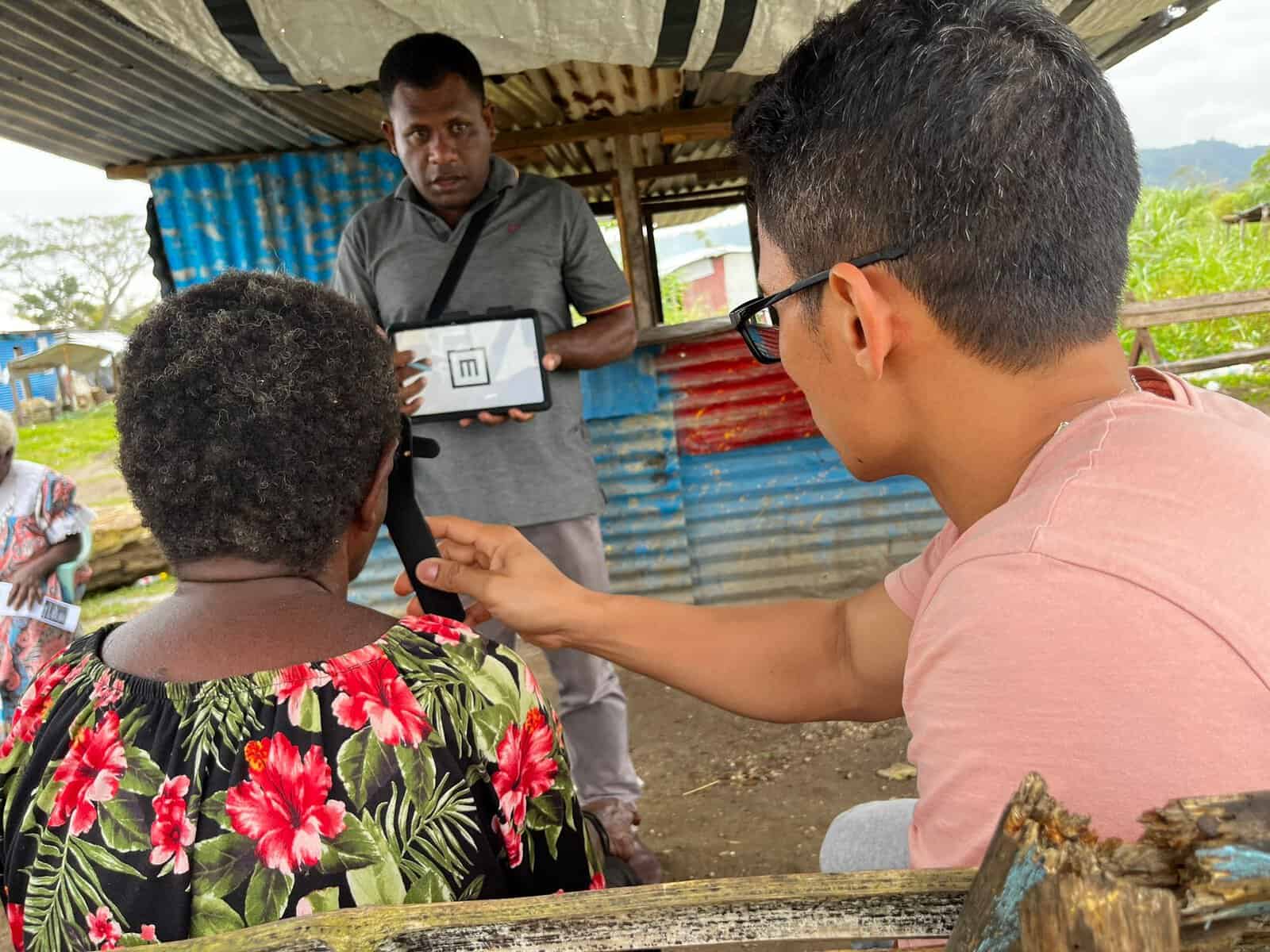
ACROSS the Pacific, more than one million people live with avoidable blindness. And cataracts are the leading cause. A 20-minute surgical procedure can fix the problem, and the impact is felt immediately.
“One surgery can transform a life,” said Dr Audrey Aumua, Chief Executive Officer of The Fred Hollows Foundation NZ.
“When patients have their bandages removed and can see for the first time, in maybe five or ten years, the power of this intervention is unmistakable – whether it’s seeing their wife’s face again, or a grandchild for the first time.”
It’s the kind of impact founder Fred Hollows envisioned when setting up the Fred Hollows Foundation in 1992.
The Fred Hollows Foundation NZ works in the Pacific region, supporting local partners to restore and preserve sight, train eye care workers, and strengthen local eye health systems.
Aumua believes that eye care in the Pacific is not being taken seriously enough.
“When I started in this role, governments weren’t prioritising eye health, yet eye health is one of the most cost-effective and efficient public health interventions because of the impact and the quality of life,” Aumua said.
“The lack of interest in eye care came mostly as a byproduct of governments not understanding the root of the problem. Data was needed to show the true state of things.”
That is why the Foundation launched the State of Eye Health Research Programme, involving a series of surveys and assessments to give governments the evidence on eye health they need.
The results have been striking. In some Pacific Island countries, the prevalence of avoidable blindness reaches almost six per cent.
If no action is taken, those numbers will climb and the consequences will have wider societal impacts. When a grandparent loses their sight, family members often have to assume the role of caregivers – particularly women and girls. The emotional toll can be immense.
The lack of trained eye care specialists in the region is also a major cause for concern.
“Some countries have only one eye doctor and a couple of eye nurses,” Aumua said. “Fiji has the most eye doctors in the Pacific, but that’s still not enough.”
It’s a problem they are committed to helping address.
Training is one of the main services provided by the Foundation, primarily through working with regional institutions like the Fiji National University and Divine Word University in Papua New Guinea. So far, they have been able to train 426 eye doctors and nurses across the region.
Training personnel is one thing, but countries need to take ownership – Vanuatu did. After the Foundation helped conduct a Rapid Assessment of Avoidable Blindness survey in 2023, the Vanuatu Government made a decision to appoint a national
eye care coordinator and include eye health indicators in its government health corporate plan.
“That is the perfect scenario. You give them the evidence, you give them the data, and they make decisions,” Aumua said.
“Other countries are not so well placed. Nauru is still without its own eye doctor, and smaller nations like Niue and Tokelau rely on regional outreach teams.”
The challenges facing eye health in the Pacific extend beyond workforce shortages and funding. Climate change is creating additional pressures. Rising heat and UV exposure strain the eyes, and extreme weather events disrupt already-chronically vulnerable health systems – particularly in remote and isolated countries.
“When a weather event devastates an economy, health systems have to take a pause and reorient,” Aumua said.
“Routine services like eye care get pushed further down the priority list.”
When asked what tool is most underutilised in restoring and maintaining healthy eyesight, Aumua said political will tops the list.
“When governments and health leaders prioritise eye health, that becomes the most powerful tool we have.
The technology and services exist; what matters is the commitment to make them available to the people who need them.”