Looking back, moving forward

August 21, 2026 • Web Admin •
Share this story:
Looking back, moving forward

AS Pacific leaders prepare to gather in Palau for the 55th Pacific Islands Forum Leaders Meeting (PIFLM55), it pays to look at the past and forward to the future in order to better decide what course of action to take today.

A little over half a century—55 years to be exact—has passed since the Pacific Islands Forum (then known as the South Pacific Forum) first convened in Wellington, New Zealand in 1971. It was, some would say, the product of a wave of sentiment in favour of decolonisation sweeping the globe during the 50s and 60s. In those two decades, over 40 countries gained full-fledged independence – predominantly, former British and French territories in Asia and Africa. Following suit, Pacific nations also started looking to chart an independent course.

With this background, founding members Australia, Cook Islands, Fiji, Naoero (formerly known as Nauru), New Zealand, Tonga and Western Samoa held the inaugural forum meeting in New Zealand’s capital. Today, membership has expanded to include the Federated States of Micronesia, French Polynesia, Kiribati, New Caledonia, Niue, Palau, Papua New Guinea, the Republic of the Marshall Islands, Solomon Islands, Tuvalu and Vanuatu.

Talanoa or dialogue is an important aspect of Pasifika identity and is one of the principal reasons for Forum meetings – a space where Pacific leaders regularly convene to discuss progress, address regional challenges and how to overcome them. The Forum also maintains dialogue partnerships with 21 countries and organisations, including China, Japan, India, the European Union, the United States and France.

In a sense, the relationship between territories/colonies and their former masters has been redefined and the Pacific Islands Forum is a manifestation of this change in dynamic. Forum meetings have historically been the setting for significant decisions and policy directions to be taken including:

  • SPARTECA (1980/1981): Gave Pacific Island exports preferential access to Australian and New Zealand markets.
  • UN Observer Status (1994): Strengthened the Forum’s international standing.
  • Waigani Convention (1995): Protected the Pacific from hazardous waste imports.
  • Biketawa Declaration (2000): Established principles for democratic governance and authorised regional responses to political crises.
  • Boe Declaration (2018): Expanded the Forum’s concept of securityto include climate change, human security, cybersecurity and transnational crime.
  • PACER and PACER Plus: Created frameworks for regional trade liberalisation and economic cooperation, with PACER Plus entering into force in December 2020.

Pacific Island countries have a tendency to underestimate themselves in terms of our impact on the global stage, but recent events have shown that when the region speaks with the collective voice, the world listens. This was clearly exemplified when just over a year ago on July 23, 2025, the International Court of Justice (ICJ) handed down a landmark advisory opinion on climate change. It was a battle that spanned the better part of six years, and was primarily led by young people from the region. “Young people have the power, have the voices as well, to take [on] any countries or big emitter companies to be held accountable for their actions,” Mario Liunamel of the Vanuatu Climate Action Network (VCAN) said at the time. It’s the type of regional solidarity that is going to be increasingly needed in the days ahead if the region is to successfully overcome pressing challenges.

Given the current complex geopolitical realities confronting the region, the Leaders Meeting centred on the theme “Building Economies: Life. Action. Unity”—will be just as critical in charting a path forward through not only perennial challenges, but also finding ways to address new and emerging ones.

Why Palau?

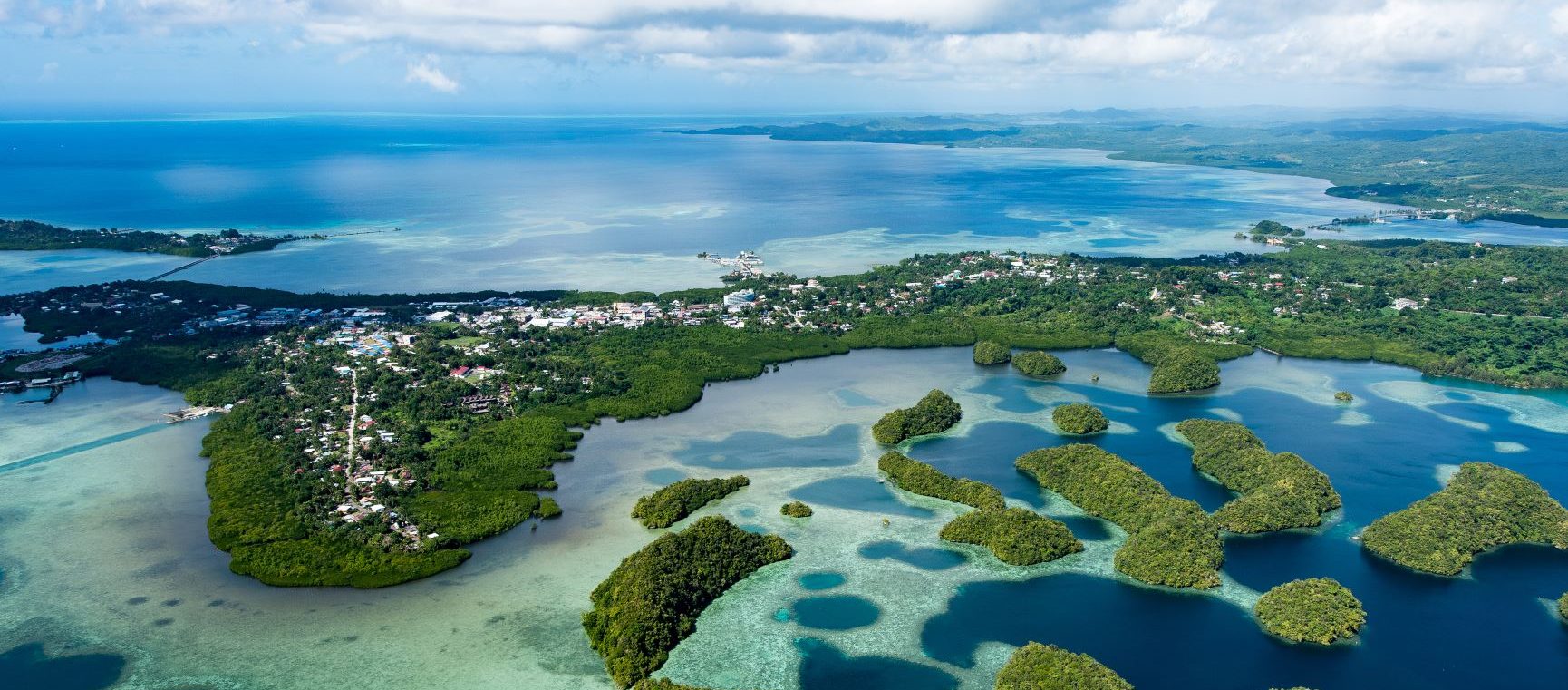
Palau is no ordinary host. As chair of the Alliance of Small Island States (AOSIS), its UN ambassador represents 39 island nations in climate negotiations. The country’s leadership in marine conservation—from its pioneering shark sanctuary to its national marine sanctuary—has set global benchmarks. Its commitment to sustainable tourism and environmental diplomacy aligns perfectly with the Forum’s regional objectives.

Strategically located in Micronesia, Palau exemplifies the geopolitical significance of the Pacific. Its long- standing commitment to regional cooperation, active participation in Troika discussions and role in laying groundwork for substantive Forum- level dialogue make it an ideal host for the forum. ‘Building Economies: Life. Action. Unity’ resonates deeply with Palau’s own priorities. Sustainable economic development, environmental stewardship and collective action are not abstract concepts here – they are lived realities. Visitors to Palau will be able to get a firsthand feel of a country that puts its money where its mouth is by turning conservation into an economic asset, and diplomacy into a platform for global influence.

Issues shaping the Pacific

As with any regional event of this magnitude and importance, pressing international issues will be on the agenda for discussion by Pacific leaders. The 2050 Strategy for the Blue Pacific Continent provides the blueprint, but the task now is to move it from a document that’s nice in theory to something that has tangible benefits for the people of Kiribati, Tuvalu and the Solomon Islands. Ocean governance remains the cornerstone of regional identity and survival, requiring sustainable fisheries management and a blue economy that benefits Pacific communities without compromising marine ecosystems.

  1. Climate Leadership: Pacific leaders are expected to continue pushing for stronger global climate action while advancing local adaptation and resilience. The ICJ advisory opinion provides a powerful foundation. The question now is how to convert legal authority into tangible finance and action.
  2. Regional Security: The Forum’s expanded security concept—encompassing human security, climate security, cyber resilience and maritime security—faces new tests. Geopolitical competition among major powers adds complexity. Balancing traditional and non-traditional security threats will be a central discussion.
  3. Economic Resilience: Diversifying economies, attracting responsible investment, strengthening tourism recovery, supporting micro, small and medium enterprises (MSMEs) and improving fiscal sustainability are all on the agenda. Pacific leaders will discuss how to build economic systems that withstand global shocks.
  4. Ocean Governance: The ocean is a major unifying factor for Pacific Island countries and so policy formulation around ocean governance is extremely important. This is a central reason behind the 2050 Strategy for the Blue Pacific Continent. Launched in 2022 at the 51st Pacific Islands Forum Leaders Meeting in Suva, unlike the previous document The Pacific Plan, this revised version was entirely Pacific-led and conceived. It was the culmination of a two-year negotiation and consultation process that received both input and endorsement from the highest levels of Pacific leadership. Putting policy together on paper is easy, but translating that into tangible real, lasting peaceful benefits for Pacific people is the real measure of success. As Transform Aqorau noted in his paper on PIF’s role in ocean governance, “The challenge for the future is to keep the oceans peaceful for mankind’s benefit.”
  5. Trade and Investment: Expanding regional trade, improving connectivity, developing infrastructure and encouraging responsible foreign investment aligned with Pacific priorities will be discussed. PACER Plus implementation and new partnerships with dialogue partners are likely to feature prominently.
  6. Climate Finance: Another critical issue. Despite the ICJ’s advisory opinion and global commitments, the flow of finance for adaptation, resilience, and loss and damage remains woefully short of what is really needed. Pacific leaders will be pushing for a more equitable and accessible system that removes bureaucratic hurdles and empowers communities on the front lines of climate change. The forum will be a powerful platform to advocate for a reformed financial architecture that recognises the unique circumstances of small island developing states.
  7. The Drug Threat: Transnational drug cartels are increasingly using the Pacific as a soft transit pathway for their criminal enterprise. It is fast becoming a major security and health concern for the region. Almost 20 tonnes of illicit drugs have been seized on the so-called “superhighway” between Latin America and Australia and New Zealand. Shifting focus to a “What hurts one hurts us all” approach will be crucial to winning this existential fight.

Future outlook

Geopolitical competition looms large, with the Pacific becoming a stage for strategic rivalry. A recent missile test by China and subsequent reactions by Pacific nations, our traditional regional partners being a case in point. The challenge for Pacific leaders is to manage these competing interests without being subsumed by them. The principle of “Pacific-led” solutions, which defined the creation of the 2050 Strategy, must be guarded jealously.

This means ensuring engagement with external partners is based on mutual respect, transparency and alignment with the region’s own priorities. The theme “Unity” should not just be a nice-sounding slogan; it is something that is going to be a requirement. Issues like deep-sea mining, trade liberalisation under PACER Plus, and regional leadership require careful navigation and a spirit of compromise that the Talanoa dialogue process embodies.

Economic resilience is the final piece of the puzzle – diversifying away from traditional aid dependency, supporting tourism, digital connectivity, and building conditions that encourage local entrepreneurship while supporting systems resilient to climate disasters and global shocks.

The decisions made in Palau will help shape the Pacific’s future. The challenge for leaders will be turning the ambitions of the 2050 Strategy into meaningful action, while keeping unity and collective responsibility at the heart of regional decision-making. The future may be uncertain, but the Pacific has an opportunity to shape it together.

Looking back, moving forward

August 21, 2026 • Web Admin •
Share this story:
Looking back, moving forward

AS Pacific leaders prepare to gather in Palau for the 55th Pacific Islands Forum Leaders Meeting (PIFLM55), it pays to look at the past and forward to the future in order to better decide what course of action to take today.

A little over half a century—55 years to be exact—has passed since the Pacific Islands Forum (then known as the South Pacific Forum) first convened in Wellington, New Zealand in 1971. It was, some would say, the product of a wave of sentiment in favour of decolonisation sweeping the globe during the 50s and 60s. In those two decades, over 40 countries gained full-fledged independence – predominantly, former British and French territories in Asia and Africa. Following suit, Pacific nations also started looking to chart an independent course.

With this background, founding members Australia, Cook Islands, Fiji, Naoero (formerly known as Nauru), New Zealand, Tonga and Western Samoa held the inaugural forum meeting in New Zealand’s capital. Today, membership has expanded to include the Federated States of Micronesia, French Polynesia, Kiribati, New Caledonia, Niue, Palau, Papua New Guinea, the Republic of the Marshall Islands, Solomon Islands, Tuvalu and Vanuatu.

Talanoa or dialogue is an important aspect of Pasifika identity and is one of the principal reasons for Forum meetings – a space where Pacific leaders regularly convene to discuss progress, address regional challenges and how to overcome them. The Forum also maintains dialogue partnerships with 21 countries and organisations, including China, Japan, India, the European Union, the United States and France.

In a sense, the relationship between territories/colonies and their former masters has been redefined and the Pacific Islands Forum is a manifestation of this change in dynamic. Forum meetings have historically been the setting for significant decisions and policy directions to be taken including:

  • SPARTECA (1980/1981): Gave Pacific Island exports preferential access to Australian and New Zealand markets.
  • UN Observer Status (1994): Strengthened the Forum’s international standing.
  • Waigani Convention (1995): Protected the Pacific from hazardous waste imports.
  • Biketawa Declaration (2000): Established principles for democratic governance and authorised regional responses to political crises.
  • Boe Declaration (2018): Expanded the Forum’s concept of securityto include climate change, human security, cybersecurity and transnational crime.
  • PACER and PACER Plus: Created frameworks for regional trade liberalisation and economic cooperation, with PACER Plus entering into force in December 2020.

Pacific Island countries have a tendency to underestimate themselves in terms of our impact on the global stage, but recent events have shown that when the region speaks with the collective voice, the world listens. This was clearly exemplified when just over a year ago on July 23, 2025, the International Court of Justice (ICJ) handed down a landmark advisory opinion on climate change. It was a battle that spanned the better part of six years, and was primarily led by young people from the region. “Young people have the power, have the voices as well, to take [on] any countries or big emitter companies to be held accountable for their actions,” Mario Liunamel of the Vanuatu Climate Action Network (VCAN) said at the time. It’s the type of regional solidarity that is going to be increasingly needed in the days ahead if the region is to successfully overcome pressing challenges.

Given the current complex geopolitical realities confronting the region, the Leaders Meeting centred on the theme “Building Economies: Life. Action. Unity”—will be just as critical in charting a path forward through not only perennial challenges, but also finding ways to address new and emerging ones.

Why Palau?

Palau is no ordinary host. As chair of the Alliance of Small Island States (AOSIS), its UN ambassador represents 39 island nations in climate negotiations. The country’s leadership in marine conservation—from its pioneering shark sanctuary to its national marine sanctuary—has set global benchmarks. Its commitment to sustainable tourism and environmental diplomacy aligns perfectly with the Forum’s regional objectives.

Strategically located in Micronesia, Palau exemplifies the geopolitical significance of the Pacific. Its long- standing commitment to regional cooperation, active participation in Troika discussions and role in laying groundwork for substantive Forum- level dialogue make it an ideal host for the forum. ‘Building Economies: Life. Action. Unity’ resonates deeply with Palau’s own priorities. Sustainable economic development, environmental stewardship and collective action are not abstract concepts here – they are lived realities. Visitors to Palau will be able to get a firsthand feel of a country that puts its money where its mouth is by turning conservation into an economic asset, and diplomacy into a platform for global influence.

Issues shaping the Pacific

As with any regional event of this magnitude and importance, pressing international issues will be on the agenda for discussion by Pacific leaders. The 2050 Strategy for the Blue Pacific Continent provides the blueprint, but the task now is to move it from a document that’s nice in theory to something that has tangible benefits for the people of Kiribati, Tuvalu and the Solomon Islands. Ocean governance remains the cornerstone of regional identity and survival, requiring sustainable fisheries management and a blue economy that benefits Pacific communities without compromising marine ecosystems.

  1. Climate Leadership: Pacific leaders are expected to continue pushing for stronger global climate action while advancing local adaptation and resilience. The ICJ advisory opinion provides a powerful foundation. The question now is how to convert legal authority into tangible finance and action.
  2. Regional Security: The Forum’s expanded security concept—encompassing human security, climate security, cyber resilience and maritime security—faces new tests. Geopolitical competition among major powers adds complexity. Balancing traditional and non-traditional security threats will be a central discussion.
  3. Economic Resilience: Diversifying economies, attracting responsible investment, strengthening tourism recovery, supporting micro, small and medium enterprises (MSMEs) and improving fiscal sustainability are all on the agenda. Pacific leaders will discuss how to build economic systems that withstand global shocks.
  4. Ocean Governance: The ocean is a major unifying factor for Pacific Island countries and so policy formulation around ocean governance is extremely important. This is a central reason behind the 2050 Strategy for the Blue Pacific Continent. Launched in 2022 at the 51st Pacific Islands Forum Leaders Meeting in Suva, unlike the previous document The Pacific Plan, this revised version was entirely Pacific-led and conceived. It was the culmination of a two-year negotiation and consultation process that received both input and endorsement from the highest levels of Pacific leadership. Putting policy together on paper is easy, but translating that into tangible real, lasting peaceful benefits for Pacific people is the real measure of success. As Transform Aqorau noted in his paper on PIF’s role in ocean governance, “The challenge for the future is to keep the oceans peaceful for mankind’s benefit.”
  5. Trade and Investment: Expanding regional trade, improving connectivity, developing infrastructure and encouraging responsible foreign investment aligned with Pacific priorities will be discussed. PACER Plus implementation and new partnerships with dialogue partners are likely to feature prominently.
  6. Climate Finance: Another critical issue. Despite the ICJ’s advisory opinion and global commitments, the flow of finance for adaptation, resilience, and loss and damage remains woefully short of what is really needed. Pacific leaders will be pushing for a more equitable and accessible system that removes bureaucratic hurdles and empowers communities on the front lines of climate change. The forum will be a powerful platform to advocate for a reformed financial architecture that recognises the unique circumstances of small island developing states.
  7. The Drug Threat: Transnational drug cartels are increasingly using the Pacific as a soft transit pathway for their criminal enterprise. It is fast becoming a major security and health concern for the region. Almost 20 tonnes of illicit drugs have been seized on the so-called “superhighway” between Latin America and Australia and New Zealand. Shifting focus to a “What hurts one hurts us all” approach will be crucial to winning this existential fight.

Future outlook

Geopolitical competition looms large, with the Pacific becoming a stage for strategic rivalry. A recent missile test by China and subsequent reactions by Pacific nations, our traditional regional partners being a case in point. The challenge for Pacific leaders is to manage these competing interests without being subsumed by them. The principle of “Pacific-led” solutions, which defined the creation of the 2050 Strategy, must be guarded jealously.

This means ensuring engagement with external partners is based on mutual respect, transparency and alignment with the region’s own priorities. The theme “Unity” should not just be a nice-sounding slogan; it is something that is going to be a requirement. Issues like deep-sea mining, trade liberalisation under PACER Plus, and regional leadership require careful navigation and a spirit of compromise that the Talanoa dialogue process embodies.

Economic resilience is the final piece of the puzzle – diversifying away from traditional aid dependency, supporting tourism, digital connectivity, and building conditions that encourage local entrepreneurship while supporting systems resilient to climate disasters and global shocks.

The decisions made in Palau will help shape the Pacific’s future. The challenge for leaders will be turning the ambitions of the 2050 Strategy into meaningful action, while keeping unity and collective responsibility at the heart of regional decision-making. The future may be uncertain, but the Pacific has an opportunity to shape it together.