PACIFIC leaders talk jobs. Young people hear promises, but an economist hears a different problem: the region is creating work, but not the kind that turns growth into careers.
“The disconnect between job creation and youth unemployment is not simply a matter of too few jobs,” says Ruth Nikijuluw, a World Bank economist based in Jakarta.
“It is a mismatch between the jobs being created, the skills people have, and the long-standing habit of placing the public sector at the centre of economic life.
“Growth in the Pacific, it’s happening. But unfortunately, the growth is being supported by some sectors that are not labour absorptive.”
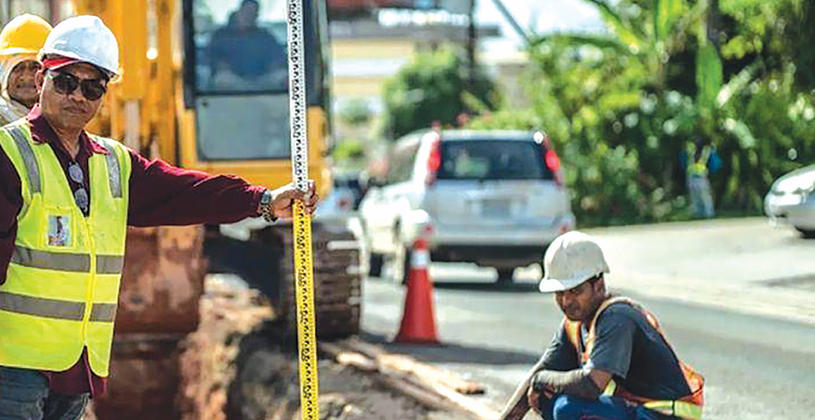
Construction, she explains, can spur activity after disasters, but it does not employ large numbers of local workers. Other new jobs are appearing in small retail and food vending, useful but low-value work.
“It absorbs workers, but not at the higher value-added level.
“That shift matters because many Pacific economies still carry an old expectation: that the best job is a government job.”
Nikijuluw does not dismiss the state’s role, but she argues it cannot be the centre of job creation forever.
“Government is supposed to be the sector which can encourage other sectors in the economy, especially the private sector. They are the ones who create jobs in the market.”
The result is a labour market that looks busy from a distance but broken up close. Employers say graduates often arrive without the practical skills they need.
Schools, in her telling, are not talking enough to businesses. “The graduates from high school don’t have the skills that they actually need to run the business,” she says.
“The answer is not only more enrollment, but better alignment: apprenticeship, internship, and early exposure to work before graduation. The private sector can come and present these are the kinds of jobs we have at our company.
“We also have been actively advocating the importance of apprenticeship or internship programs.”
Her constructive critique goes deeper than the curriculum. She argues that the skills gap begins early, long before young people finish school. Confidence, presentation, and communication are built in primary years, not just in university.
“It’s something that is built even from the early years of education. Now is the time for us to look at what exactly we teach the kids at school.”
The region’s heavy reliance on labour mobility schemes is another piece of the puzzle.
Nikijuluw calls them a vital lifeline, especially when shocks hit, and remittances arrive from overseas. But she is careful not to confuse lifelines with strategy.
“It should complement, but it shouldn’t substitute. If overseas opportunities become the main plan, Pacific countries become vulnerable to policy changes abroad. “It will put the Pacific countries at risk if that is their only job strategy.”
There is a powerful human edge to that argument. In many places, the people leaving for overseas schemes are mostly men, while working-age women remain at home without jobs.
She sees untapped economic potential there. “Women are like working-age women, but they don’t work. The question is how to build an environment that enables them to participate.
In the Pacific, the answer starts with a harder truth than most political slogans allow. If the region wants better jobs, it has to stop mistaking movement for progress and growth for inclusion.