THE war in Iran has sent shockwaves to the other side of the globe, affecting Pacific aviation, tourism, energy prices and development finance.
The latest war in the Middle East began on 28 February, but the conflict has expanded with the US and Israeli bombardment of Iran, drone and missile attacks by Tehran on neighbouring Gulf states, and the Israeli invasion of Lebanon. More than 3 million people are displaced in Iran, and a further 1.2 million in Lebanon, as humanitarian agencies divert resources towards the immediate crisis.
At time of writing, negotiations over a ceasefire and the reopening of the Strait of Hormuz have not resulted in an end to fighting.
Despite their distance from the conflict, Pacific Island states are not exempt from cascading and compounding impacts on global supply chains, energy systems and military networks.
Beyond this, Pacific governments and communities are concerned that the global response to wars in Ukraine and the Middle East will see the diversion of resources towards rearmament and military spending, rather than for food security and climate action. Over time, Pacific development partners may need to re-allocate shrunken overseas aid programmes towards debt relief, fiscal recovery and emergency programmes, meaning that limited funds will prioritise short-term resilience rather than longer-term initiatives on health, education, livelihoods and climate action.
Here are six ways that the current warfare in the Middle East are compounding existing development challenges, which will affect the region beyond the end of the conflict.
Energy prices
Pacific Island nations use oil for 80 per cent of their energy requirements. Currently, much aviation and diesel fuel used across the Pacific Islands travels a long route from source to petrol pump.
Crude oil from the Middle East is shipped from the Arabian Gulf through the narrow Strait of Hormuz, then across the Indian Ocean to oil refineries in Singapore, Korea and Malaysia. From there, oil tankers transport refined fuel to Australia, New Zealand and Fiji, which is a hub for transhipment to other island states using smaller tankers. However, by late March, the number of tankers reaching these Asian refineries from Gulf states had dropped by more than a quarter, and tankers heading onwards to the Pacific Islands in late March fell from 27 to 17.
Beyond oil tankers, the war has impeded other cargo shipped through the Strait of Hormuz. Supply of liquefied natural gas (LNG) has also been reduced by around 20 per cent, and the restriction on shipping has affected a diverse range of vital commodities, such as urea and sulphur (used in agricultural fertiliser) and helium (vital for the manufacture of semi-conductor computer chips).
Fatih Birol, the executive director of the International Energy Agency (IEA), said the current energy crisis is equivalent to the combined force of two oil shocks in the 1970s and the fallout from the Russian invasion of Ukraine in 2022. As the IEA began releasing 400 million barrels of crude and refined oil reserves, Birol said that shipping restrictions in the Strait of Hormuz and attacks on Gulf oil facilities was “the greatest threat to global energy security in history.”
Even with a ceasefire and the opening of the Strait of Hormuz, the war will have a long tail of economic impacts, given reduced supplies and increased cost. This is a special concern for Pacific Island nations which are reliant on imported energy: they are at the end of the supply queue. Larger nations have bigger storage facilities and greater bargaining power to purchase resources from other countries to replace reduced supply from Gulf states.
Pacific states are nearly 90 per cent reliant on shipping for trade and transport, so more expensive fuel for maritime transport will also mean increased costs for goods and services in coming months (for example, cement and building materials are brought in by ship, so increased prices for bunker fuel will flow on to the housing and construction markets).
Aviation and tourism
Airlines flying from Europe have re-routed flights to avoid the conflict zone and Middle East airports that handle millions of passengers each year. Following a drone strike next to an airport terminal in Dubai, the United Arab Emirates (UAE) announced the temporary suspension of operations at Dubai International Airport in March. It’s one of the key hubs for international aviation and tourism, which catered for 95 million passengers in 2025.
On 4 March, just days after the start of Israeli and US attacks on Iran, the Cook Islands News reported that “tourism operators have been encouraged to demonstrate flexibility regarding cancellations or credits for future stays for visitors affected by flight disruptions from Europe and the United Arab Emirates.”
The increased cost of aviation fuel around the world in coming months will affect tourism numbers and inter-island transport.
Pacific responses
Across the region, Pacific governments are grappling with the cascading and compounding development challenges fuelled by the far-off conflict. Regional organisations—including the Pacific Islands Forum, Pacific Community and Pacific Fusion Centre—are assessing immediate impacts, but also looking at the way this crisis may set back longer-term development priorities.
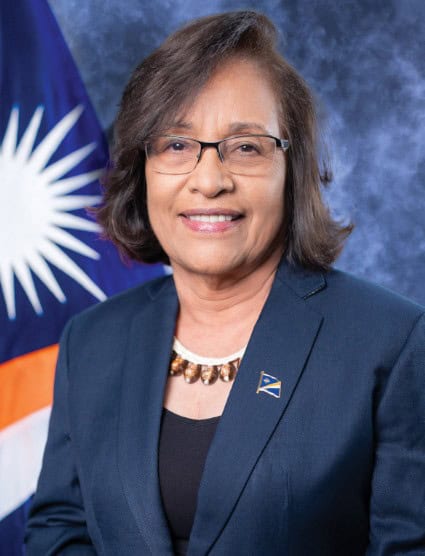
Some smaller Pacific states—lacking extensive storage for fuel supplies—have taken drastic measures to reduce usage. On 26 March, Marshall Islands President Hilda Heine declared a 90-day state of economic emergency, noting that “the Republic of Marshall Islands relies heavily on imported goods, including food, fuel, building materials and other basic needs.”
Under the Disaster Risk Management Act 2023, the RMI President’s executive order states that “the livelihoods of the people of the Marshall Islands are at risk, and immediate action is required to mitigate the impending threat of negative economic impacts.” The new policy—lasting for 90 days—requires government agencies to implement energy conservation measures, cut expenditure on fuel and limit the use of government vehicles.
Tuvalu has sent government workers home to cut costs, while in Nauru, President David Adeang urged the public to use fuel and electricity wisely and switch off unnecessary appliances.
“We are working diligently to maintain essential services and ensure stability throughout the country,” Adeang said.
“Small actions taken collectively will make a significant difference in protecting our national reserve.”
Israel and Palestine
After decades of vibrant regional diplomacy on climate, the oceans and sustainable development, the world pays attention to Pacific interventions into international law, such as Vanuatu’s successful campaign for an advisory opinion on climate change from the International Court of Justice. But Israel, Iran and countries across the Gulf are also paying attention to the way Pacific countries vote on contentious Middle East questions at the United Nations General Assembly (UNGA).
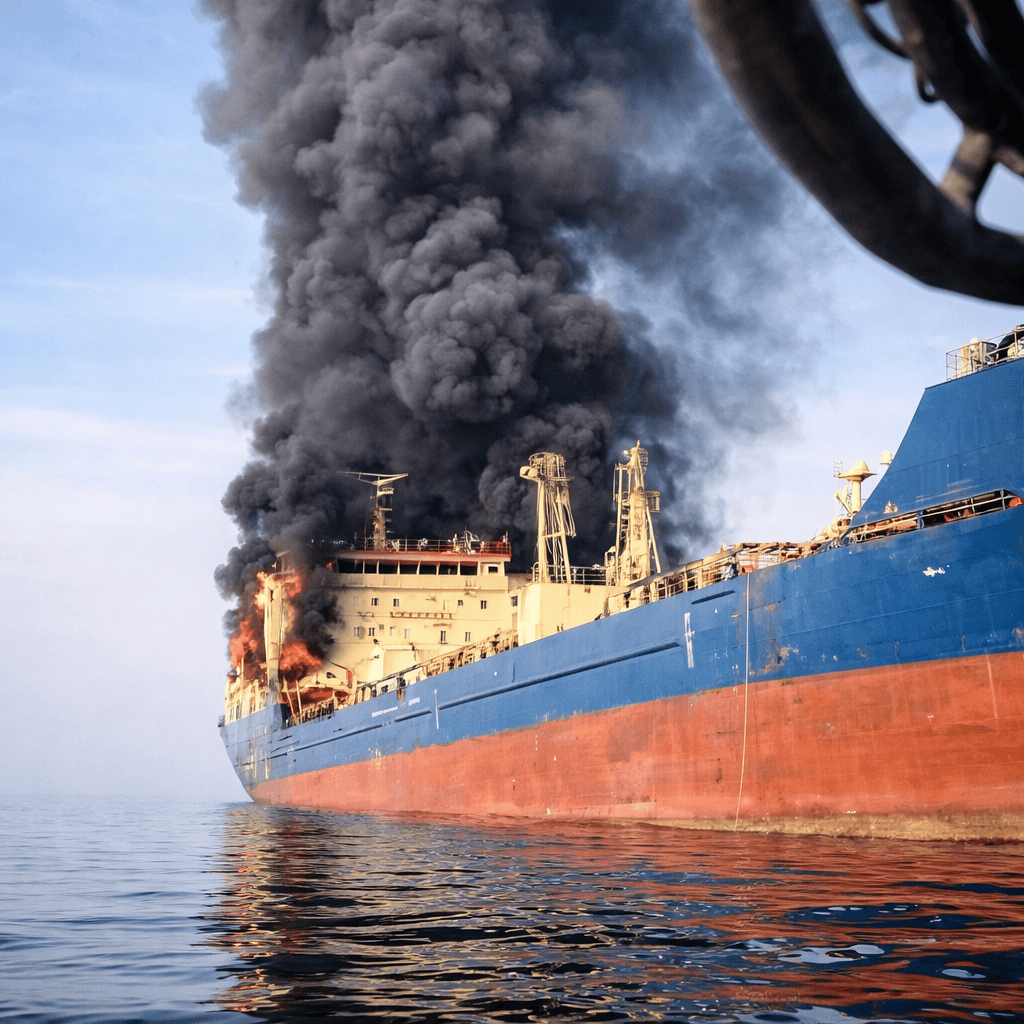
As the war started on 28 February, early Iranian attacks on shipping included targeted hits on vessels using Pacific flags of convenience. The Skylight—a Palau-flagged oil tanker—was attacked and set ablaze while anchored near Oman. The Marshall Islands–flagged oil tanker MKD VYOM was heading for Saudi Arabia but was hit by a projectile as it sailed off the coast of Oman. Then the US-owned oil tanker Safesea Vishnu, carrying a Marshall Islands flag, was attacked by Iran in Iraqi territorial waters near Khor Al Zubair port.
Iranian authorities have explicitly noted the alignment of the US Compact States with Washington. A statement from the Islamic Revolutionary Guard Corps (IRGC) in early March said that “an oil tanker with the trade name Louise P with the flag of the Marshall Islands, one of the assets of the terrorist America, was hit by a drone in the middle of the Persian Gulf.”
Some Pacific states—the US Freely Associated States and now Fiji—regularly vote against Palestinian rights at the UNGA, in line with Israel and the United States. Both Papua New Guinea and Fiji have also relocated their embassies from Tel Aviv to Jerusalem, sparking widespread criticism in the Middle East. This action undercuts the longstanding international call for the status of Jerusalem to be determined as part of a two-state solution, with West Jerusalem serving as the capital of Israel and East Jerusalem as the capital of a future Palestinian state.
For island states, their diplomatic stand on Palestine will likely gain greater international attention after Israel’s massacre and starvation of Palestinians in Gaza, provocations in the West Bank and invasion of Lebanon.
Relations with Gulf States
As the United States and Israel attacked Iran, the Iranian government retaliated with drone and missile attacks on US military bases, Western corporations and civilian infrastructure in the six states of the Gulf Cooperation Council (GCC): the UAE, Saudi Arabia, Bahrain, Kuwait, Oman, and Qatar.
The involvement of the GCC nations in the war has implications for Pacific Island states, as these Arab states have expanded diplomatic ties with Forum member countries over recent years. In 2013, the UAE signed a partnership agreement with Tonga, Fiji, Kiribati, Samoa, Tuvalu and Vanuatu. Under this partnership, the Abu Dhabi Development Fund manages a $USD50 million government grant to support renewable energy projects in these countries.
Between 2008–23, UAE President Sheikh Mohamed pledged $USD121 million to island states through the UAE International Aid Agency, with $USD61 million deployed in 12 Forum island countries. It’s a tiny sum compared to major donors like Australia and the European Union, but a reflection of the “friends to all” policy of many island nations.
Henryk Szadziewski, an associate at the centre for Pacific Island Studies at the University of Hawai’i at Mānoa, has documented these growing diplomatic ties with GCC governments.
“Fiji, Solomon Islands, and Vanuatu have diplomatic relations with all six GCC members. Kiribati, Nauru, Palau, and Tonga, with five GCC members,” he said.
“Cook Islands, FSM, Marshall Islands, PNG, Samoa, and Tuvalu all have diplomatic links with at least half of the GCC membership.”
Szadziewski notes that “investment in renewable energy projects by the UAE and donations to the Pacific Resilience Facility by Saudi Arabia are regional expressions of shaping the discourse on the Gulf’s credentials on climate mitigation.” However, the massive costs of post-war reconstruction in the Gulf States may mean that fewer resources will be available for renewable energy and climate programmes.
Ripping up the rules
For many years, Western powers have proclaimed their support for “the rules-based order.” However recent conflicts in Ukraine, Gaza, Sudan and Iran have seen international law torn asunder. Major powers are now using the golden rule: “Whoever has the gold, makes the rules.”
Legal scholars and human rights experts have raised concern that the United States and Israel strikes on Iran since 28 February are an act of aggression in violation of the United Nations Charter. UN agencies have begun to document potential war crimes by the United States, Israel and Iran, such as the deliberate targeting of schools, hospitals and civilian infrastructure.
But the way that the United Nations has been pushed aside by major powers is a longer-term problem for the Pacific Islands Forum, which has relied on UN institutions and other multilateral organisations to advance the Blue Pacific agenda.
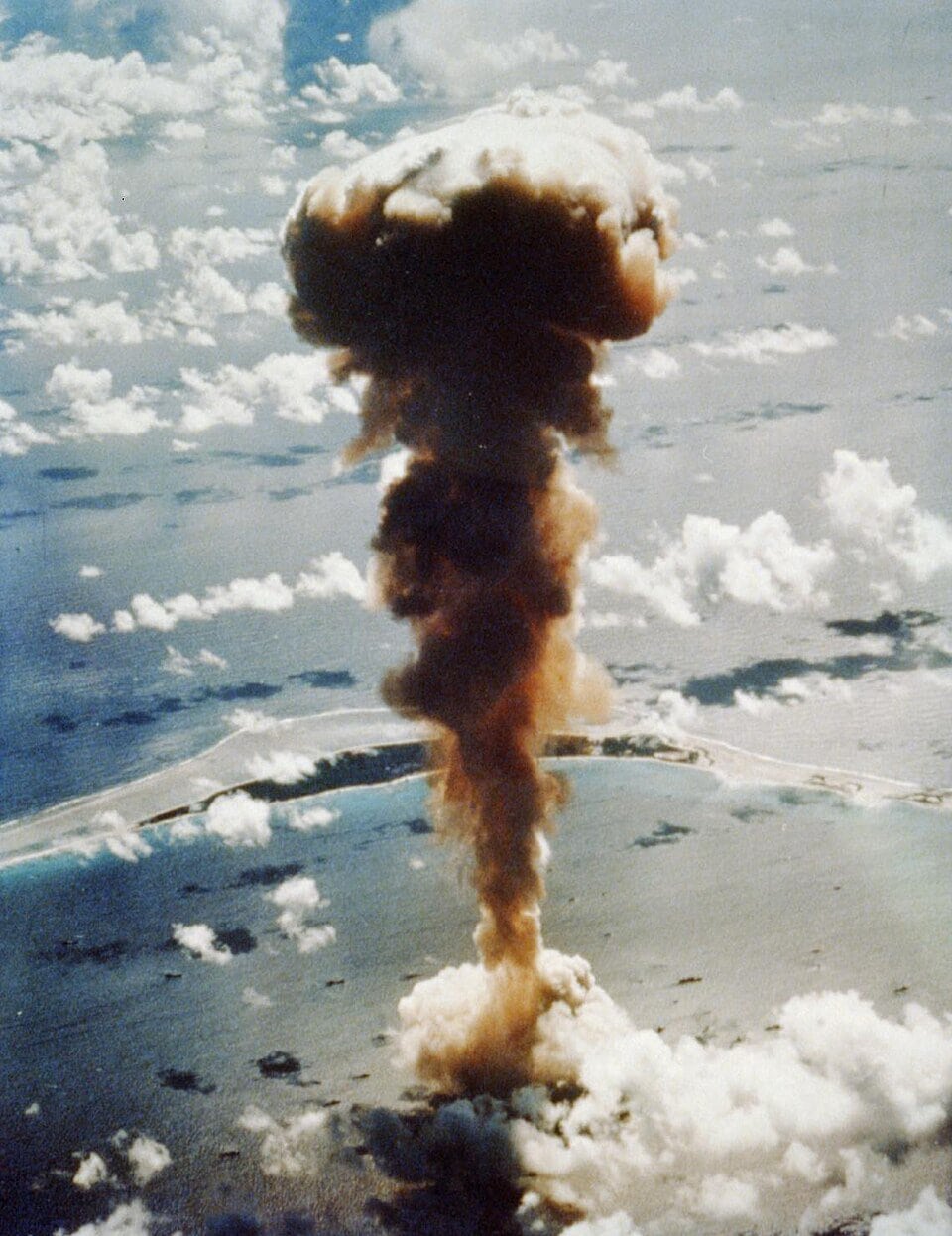
The list is extensive: Vanuatu’s ICJ case; lobbying by the RMI and Solomon Islands for a levy on shipping fuel at the International Maritime Organisation; RMI’s role at the UN Human Rights Council highlighting nuclear legacies; or the successful campaign to create Sustainable Development Goal 14 on the Ocean and Seas. Fiji and other states contribute police and military forces to UN peacekeeping operations.
The Forum has framed the Pacific as an “Ocean of Peace”. But to preserve that peace in a time of conflict, Pacific governments and communities may need more active diplomacy to champion demilitarisation, decolonisation and development.