FIJI changed forever on May 14, 1987 when Lieutenant-Colonel Sitiveni Rabuka strode into Fiji’s Parliament at the stroke of 10 and removed the elected government of Dr Timoci Bavadra.
Since that day, this Pacific country of under one million people has endured four more coups under the guise of being for the people.
Rabuka led a second coup in September 1987, George Speight removed Mahendra Chaudhry in 2000, and Frank Bainimarama ousted Laisenia Qarase in 2006.
Two coups often go unmentioned – Bainimarama’s removal of President Ratu Sir Kamisese Mara in 2000, and the failure of Governor-General Ratu Sir George Cakobau to swear in Siddiq Koya as Prime Minister in 1977. The two palace coups of 1977 and 2000 have all but been written out of Fiji’s history.
The Truth and Reconciliation Commission (TRC), constituted by Parliament to look at the root causes of these events through the eyes of the people, has had a tough time. Turnout at public hearings has been low but criticism of the TRC has been loud, especially among those who feel they were victims.
The fact that the Commission uses the word ‘survivor’ and ‘witness’ instead of ‘victim’ has been criticised, especially by those who consider themselves victims or representatives of those they describe as the victimised.
“This approach collapses the distinction between victims who suffered egregious harm and perpetrators who orchestrated or executed violent acts, including intimidation, assault, torture, and even rape,” said Shamima Ali of the Fiji Women’s Crisis Centre.
“While restorative justice is important, equating perpetrators with victims erases historical truth, dilutes responsibility, and denies victims the recognition and justice they rightfully deserve.”
For truth and reconciliation to work, however, the Commission wants people—those affected—to say what these words mean.
Language has been chosen to reflect that most communities feel they have been victims at some time in Fiji’s history, yet they have survived.
What were the events that led to the coups, and how do they affect the personal and national psyche? That is where experts believe truth-telling begins. It is in those answers that a way forward can be developed and the cycle of violence broken.
Therein lies the quandary for politicians who have failed to front the Commission.
To lay themselves bare and answer these soul-searching questions removes the label of ‘victim’ and recognises that all communities have suffered or feel they have been persecuted at some stage. There is no monopoly on this; hence the TRC’s approach.
For politicians, the loss or removal of victimhood also means the term can no longer be used as a political weapon. To uncover the difficult truths of Fiji’s history also shows how political parties, industry, trade unions, faith organisations, chiefs, soldiers, teachers, and civil society have been complicit in actions that have damaged relations.
The truth—or at least the facts—may not be easy to handle. But Fiji has this one opportunity to work together for the common good and break the cycle that has held the country back for too long.
That is the truth
Behind Rabuka’s revelation
WHEN Sitiveni Rabuka fronted a Citizens’ Constitutional Forum discussion in 2012, he was openly forthright.
The former Prime Minister, military commander, and coup leader spoke about the assault on his daughter that left her within an inch of her life.
“When I walked into her hospital room, what I saw made me want to go out and kill her husband,” Rabuka said.
His words were not reported; such was the nature of media censorship at the time.
“It took time for me to get over it but I’ve forgiven him. It wasn’t easy,” Rabuka told the Constitution Review Commission headed by constitutional scholar and expert, Professor Yash Ghai The constitution Ghai proposed was burned on the orders of Commodore Frank Bainimarama and his Attorney-General, Aiyaz Sayed-Khaiyum.
Over 20 years later, Rabuka—who was aided by his former son-in-law—is back in power after fending off a challenge for leadership from Bainimarama.
Rabuka’s ability to forgive speaks to his constant apologies to the nation for his 1987 coups that changed Fiji forever.
The constant seeking of forgiveness, however, does not always work with an audience that may not have been born when he overthrew Dr Timoci Bavadra’s government.
Mandate allows Commission
FIJI’S Truth and Reconciliation Commission has been mandated by an Act of Parliament to promote social cohesion through healing and reconciliation.
At the core of its work is the facilitation of open and free engagement in truth-telling regarding the political upheavals during the coup periods from the year 1987.
The Commission has also been tasked to promote closure and healing for the survivors of these events. But what does that mean?
Essentially, the TRC must find out what the people want in a truth and reconciliation process.
But many people are under the impression that the Commission will apportion blame and mete out sentences to those considered to be perpetrators.
Social media posts and the approach of the media indicate that people want retribution for real or perceived injustices committed during political unrest.
And they want answers, people to blame, confessions, prosecution, and compensation.
“We are victims in all this,” said a journalist who spoke to Islands Business.
“People want and deserve answers.”
The TRC’s mandate is not to provide the answers, but to place Fiji on a path towards discussing the root causes of political instability.
That is not a comfortable place for many Fijians.
In the hot seat
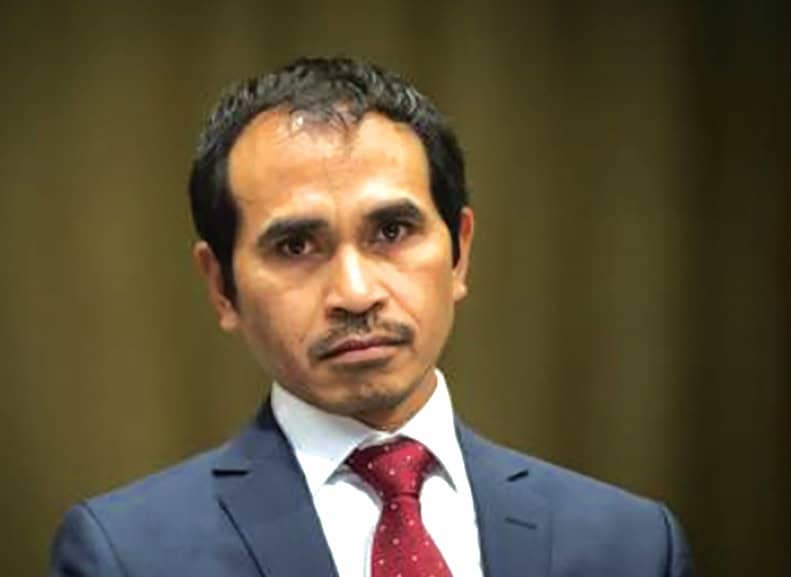
JOAQUIM Da Fonseca is a distinguished Timorese diplomat and peace-builder, with more than 20 years of experience in reconciliation and transitional justice in post-conflict and transitional societies.
He was involved in Timor-Leste’s reconciliation and justice processes since 1999, beginning with early truth and reconciliation initiatives under the United Nations Transitional Administration in East Timor.
Da Fonseca served as Ambassador to the United Kingdom and the Netherlands, as well as Permanent Representative to the United Nations and other international organisations in Geneva.
Prior to his appointment, Da Fonseca served as Coordinator and Senior Adviser at the National Commission for Reconciliation and helped design a new national reconciliation mechanism addressing internal conflict between 1974 and 1999.
He replaces Austrian Dr Marcus Brand.