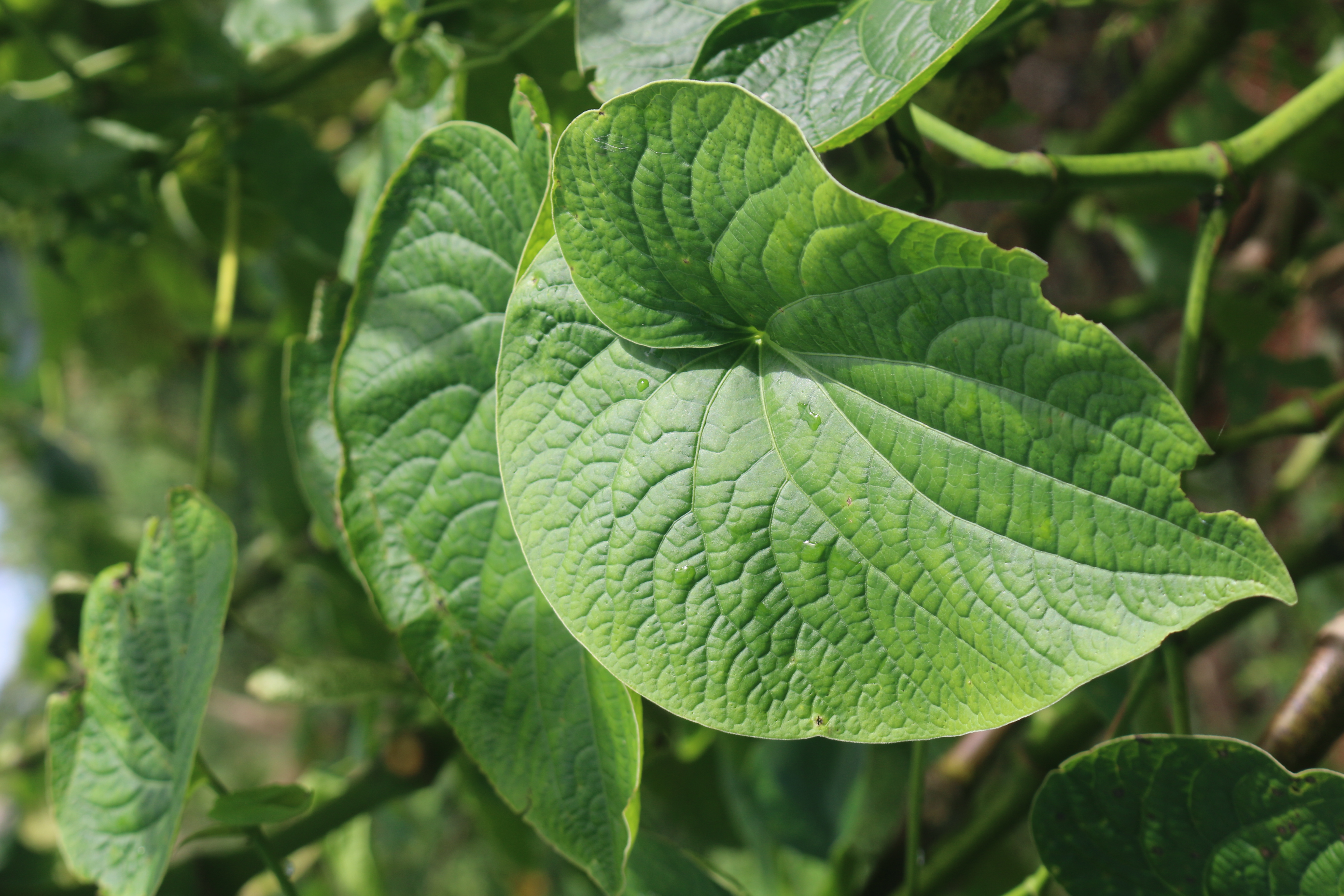
UNLIKE Fiji, Vanuatu, Tonga, and several other Pacific societies, Kiribati has no ancient tradition of cultivating or drinking kava. The country’s low coral atolls, thin soils, limited freshwater, and dry climate are poorly suited to growing Piper methysticum. Until the late 20th century, kava was largely unfamiliar to most I-Kiribati. Its arrival illustrates how Pacific traditions continue to travel and evolve. Anthropologist Kazuhiro Kazama traces the spread of kava largely through Kiribati’s connections with Fiji. Banabans living on Rabi Island learned to cultivate and drink yaqona (kava) in Fiji and carried the practice back through family networks. Missionaries, government officials, students, and other I-Kiribati who studied or worked in Fiji also returned with an appreciation for the beverage. Residents of Tabiteuea recalled that a Banaban returning from Fiji brought kava there in the early 1980s. Powdered kava subsequently moved into Kiribati through small-scale trade, personal shipments, and gifts exchanged among relatives. Kazama’s study describes how this once-obscure beverage became established with remarkable speed.
A canoe plant that put down cultural roots
The history of kava in Kiribati encapsulates the enduring idea of the “canoe plant.” The plants carried by Pacific voyagers were never merely agricultural commodities. They travelled with people as sources of sustenance, medicine, ceremony, memory, and social order. Each time they reached a new island, they entered a different environment and became part of a new cultural world. Kava could not physically take root in the difficult soils of most Kiribati atolls. Yet it put down deep cultural roots. Dried and powdered kava travelled along the same human pathways that had always carried Pacific plants and knowledge: migration, kinship, hospitality, exchange, and return journeys. In Kiribati, the canoe plant continued its voyage even when the living plant itself could not thrive. What arrived was not simply a commodity, but a social practice that I-Kiribati communities could reshape and make their own.
A distinctively I-Kiribati kava circle
Kava succeeded because I-Kiribati communities did more than reproduce customs learned elsewhere. They adapted the beverage to their own social rhythms. In many parts of Fiji and Tonga, kava is associated with highly developed protocols governing preparation, presentation, seating, rank, speech, and the order in which people receive a cup [WC1]. These formal traditions give kava dignity and express important ideas about respect, leadership, kinship, and collective identity. Kiribati developed a different, but no less meaningful, way of drinking. Kazama observed that Kiribati kava sessions were generally less hierarchical and less formally structured. People gathered to drink, converse, sing, smoke, and play guitars or ukuleles. Guests still received particular hospitality, and some elements of Fijian practice were retained, but elaborate rules of rank, seating, and service were often relaxed. Participants could skip a serving, request a smaller cup, leave the gathering, or lie down nearby without disrupting the occasion. This informality helped make the kava circle an accessible and comfortable social space for everyone. Its strength came not from ceremony alone, but from the time people spent together. Conversation moved freely among family affairs, village news, politics, history, humor, and song. The result was a distinctively I-Kiribati kava culture: communal, musical, relaxed, and grounded in companionship. Kava gave rise to new third spaces centered on conversation, hospitality, and shared time. These gatherings strengthened relationships among families, villages, churches, returning migrants, and the wider Pacific community.
An echo in American kava bars
There is a striking echo of this pattern in the modern American kava bar. American kava culture did not inherit the precise chiefly and ceremonial structures found in Fiji or Tonga. Instead, many kava bars developed as informal gathering places where people from different backgrounds could share shells, play music, talk, and form friendships. Like the informal circles that developed in Kiribati, American kava bars function as new third spaces: places outside the home and workplace where people can spend time without a formal invitation or particular social status. People gather around kava, conversation, games, music, and the familiar faces of regulars. Over time, strangers become acquaintances, acquaintances become friends, and the bar becomes a community. These spaces frequently minimise social distinctions. A newcomer may sit beside a longtime regular, a business owner, a tradesperson, a student, a traveller, or someone simply looking for a renewed sense of community. What holds the room together is not rank or background, but participation in a shared social ritual. This resemblance does not mean that American kava bars are directly copying Kiribati. Rather, both demonstrate the quality that has allowed kava to cross cultural boundaries: its ability to retain its communal character while adapting to different social environments. The formal ceremonies of Fiji and Tonga preserve invaluable systems of protocol, identity, and respect. The relaxed circles of Kiribati and the informal third spaces of American kava bars reveal another expression of the same heritage – kava’s capacity to foster fellowship in a wide variety of cultural settings.
Social benefits in Kiribati
The rapid acceptance of kava created a new form of evening social life in Kiribati. It provided a setting in which people could relax, sing, exchange stories, welcome guests, and discuss community affairs. Long sessions around the kava circle encouraged sustained conversation and reinforced relationships through the repeated acts of preparing, serving, receiving, and sharing. Kiribati’s 2015–2016 national health survey found that 26.1 per cent of adults had consumed kava during the preceding year. The survey also shows how firmly kava had entered everyday life within only a few decades.
The tradition travels again
The story did not end in Kiribati. I-Kiribati communities also carried their developing kava practices into the Solomon Islands through migration, settlement, family relationships, and regional trade. The I-Kiribati community on Wagina, for example, descends largely from families relocated from the Phoenix Islands during the colonial period. As people continued to move among Wagina, Honiara, Kiribati, Fiji, and other parts of the Pacific, kava travelled with them as a social custom and as a connection to a broader Oceanic world. The origins of today’s Solomon Islands kava sector are complex. Kava was historically known in some culturally distinct parts of the wider Solomon Islands archipelago, while the modern industry has also been influenced by plants and knowledge arriving through Vanuatu, Fiji, churches, migrants, traders, and agricultural entrepreneurs. I-Kiribati communities form part of this larger story, particularly in helping establish informal social consumption in places where kava had not previously been a widespread everyday beverage. A rapidly growing Solomon Islands kava culture is now emerging alongside an expanding agricultural industry. Farmers in Malaita, Western Province, Guadalcanal, and other areas have adopted kava as a promising crop. It is being planted in rural communities, traded through new domestic networks, consumed in a growing number of social settings, and exported to Kiribati, Fiji, and other markets. A 2021 report described a kava cultivation boom spreading through rural Solomon Islands. In 2025, the country reached another milestone with a historic commercial shipment of kava to Fiji. This creates a remarkable circular movement. Kiribati received kava through Fiji, Banaban migration, education, kinship, and trade. I-Kiribati then carried their adapted social traditions into the Solomon Islands. Solomon Islands farmers now grow kava for Kiribati and other Pacific markets. The canoe plant continues to move, not in a straight line from one original culture to passive recipients, but through an interconnected ocean of exchange. A living culture in motion By 2024, Kiribati reportedly imported approximately 280 metric tons of kava from Vanuatu alone, an extraordinary volume for a country where the beverage was almost unknown only a few generations earlier. Kava had moved from an imported curiosity to one of Kiribati’s most prominent social beverages. The story is not without its complexities. Kiribati officials have raised concerns that prolonged or excessive kava sessions can place pressure on household finances, family responsibilities, and daily productivity. Similar concerns have been expressed in Fiji, Vanuatu, and other kava drinking societies. These issues are not inherent to kava itself, but reflect broader patterns of consumption, social expectations, and individual behavior. They are best addressed through moderation, responsible service, and inclusive community practices, while continuing to recognise kava’s wider cultural and social contributions. Kiribati ultimately demonstrates that kava culture is neither static nor confined to places where the plant has grown for centuries. Like the voyaging peoples who carried canoe plants across the Pacific, kava can cross oceans, enter unfamiliar environments, and find a home among new people. It can preserve its fundamental character while becoming part of another society’s music, hospitality, language, and everyday rhythms. Kava’s journey from Fiji to Kiribati, onward with I-Kiribati communities to the Solomon Islands, and into newer settings such as American kava bars demonstrates its remarkable versatility. Wherever kava travels, it helps create spaces in which people can slow down, sit together, and remain in conversation. The customs surrounding the circle may change, but its essential purpose—connection, hospitality, fellowship, and community—thrives.
Fiji land an option
KIRIBATI became the world’s largest consumer of Vanuatu kava in 2024, importing a staggering 280 tonnes at a cost of around $FJD33.6 million. That’s an average spend of $FJD290 per person with the island republic’s population estimated at around 116,000. Arable land is in short supply on every Kiribati atoll, but that doesn’t mean it cannot produce its own kava. In 2014, under President Anote Tong, Kiribati bought the 5500-acre Natoavatu Estate in Northern Fiji for an estimated $USD8.77 million. Using recommended planting techniques, a grower can plant 1200 plants per acre and harvest four kilograms per plant at around $FJD100 per kilo. Based on these figures, a Kiribati state-run enterprise could cover its imports from Vanuatu using a mere 58 acres of its Fijian landholdings. The current president, Taneti Maamau, has not appeared keen to use the land purchased during his predecessor’s tenure. But the fact remains that 5500 acres exist in Fiji for the use of the Kiribati people, primarily for food security. It is a tremendous opportunity to diversify a national economy for the benefit of two Pacific countries and create employment opportunities. Maamau’s reluctance may be linked to recent reports that kava abuse has led to social problems, including the failure of men to be productive in the fishing grounds. Kiribati’s Minister for Women, Youth and Sports, Ruth Cross Kwansing, has raised concerns about kava’s effects on society, recently telling the ABC the impact of high kava consumption was being felt at homes. “If fathers aren’t home with their children and their wives, then obviously they’re not looking after their families and their children,” she said. “If they’re spending all the money on kava, then where’s the funds that the family needs for food and basic essentials?” She said men were exhausted from late-night kava drinking and not able to cut toddy or go out fishing and were not productive at home.