WITH the rapid advance of climate change and rising sea levels, the Pacific’s infrastructure is in dire need of review and rehabilitation to better prepare for potential natural disasters.
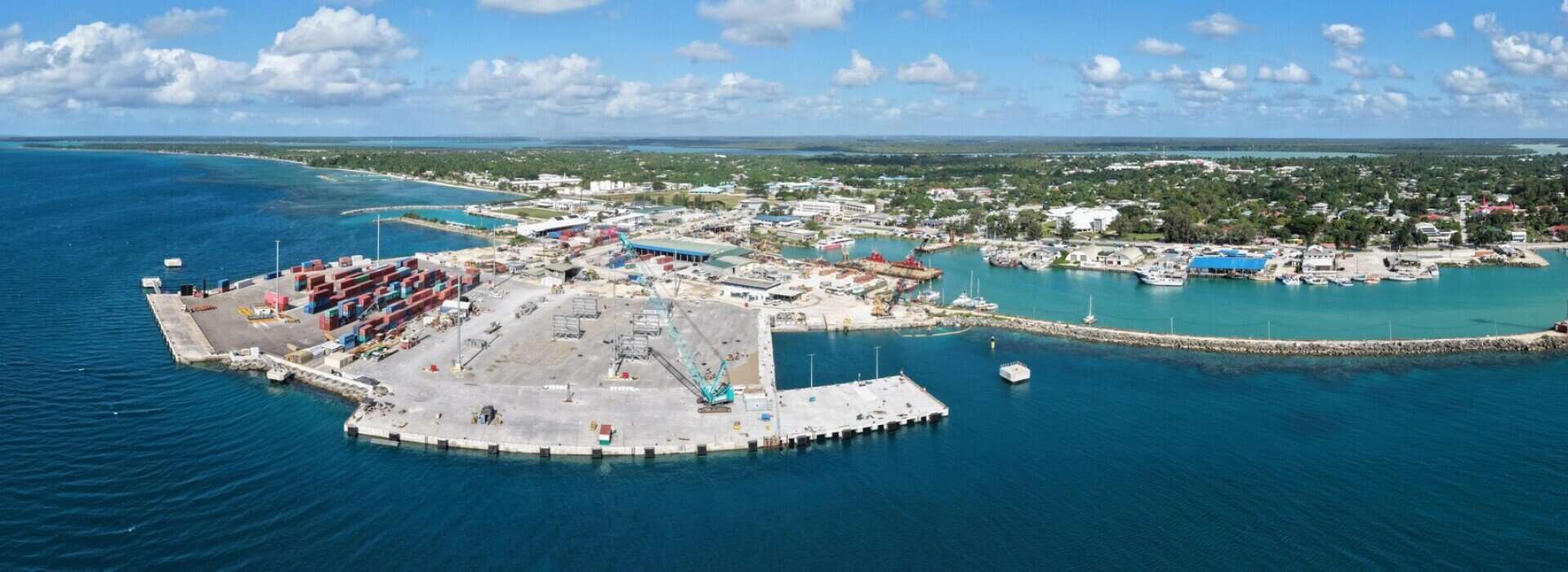
In Tonga, the main Queen Salote International Wharf, opened in 1967 and upgraded in 1999, falls short in many aspects of being a facility capable of withstanding extreme conditions.
As the country’s major maritime facility and only international port handling 85% of incoming cargo,
improvement was critical. For island nations like Tonga, maritime trade is an essential lifeline. There is a tremendous reliance on imported goods which are transported by ship because air freight is expensive and sometimes unreliable.
Key products which transition through the ports are vital and include food, fuel, and medicine. In times of disaster, it is essential that the ports remain open to keep the people alive. The Tongan Government upgraded the Port of Nuku’alofa to expand its capacity and increase resilience against rising sea levels, cyclones, and other natural disasters.
Tonga is extremely vulnerable to the adverse impacts of climate change and disaster hazards. In 2022, the devastating undersea eruption of Hunga Tonga– Hunga Haʻapai caused tsunamis, widespread damage, and atmospheric shockwaves in the kingdom and globally.
Loss of the wharf in a natural disaster would cripple the tiny island nation’s already vulnerable economy.
With sea levels set to rise by 2070, the Government of Tonga needed to upgrade the port to protect it from climate change – but on a limited budget.
And because of the country’s reliance on the Port of Nuku’alofa, it was essential that disruption during the upgrade be kept to a minimum. Despite its upgrade in 1999, the port had poor lighting facilities, limited capacity for larger vessels, low-lying container yards and access roads, and a height of less than three metres above mean sea level.
A climate and disaster risk assessment provided a rehabilitation design which would cost $USD45 million.
Funding was made possible through an Asian Development Bank grant. Part of the port was closed immediately as it was so badly damaged that it posed a risk to construction workers, the shipping industry, and the public.
Developers approached the project by consulting locals on weather and tide patterns as part of their climate and disaster risk assessment. The assessment also involved a literature review, site investigation, condition assessment, stakeholder consultation, and multi-criteria assessment.
After studies and consultation, developers proposed to demolish and rebuild one wharf while extending the second by 45 metres. The changes also included deployment of two new channel navigation markers.
Concrete from the demolished wharf was incorporated into coastal protection.
Local material was used in the construction of wharf yards and buildings, pouring money into the local economy and supporting Tongan companies and workers.
Rehabilitation of port infrastructure includes four cargo docks, a new seawall, the reorganised container yard, and the port road upgraded with new lighting and pedestrian access. Green and smart solutions will enhance compliance with international regulations.
Key considerations to the project were the upskilling of the local labour force, training on port operations and environmental awareness for all stakeholders.
Port security and gender equality will also be included in development plans and training towards the end of the project. Similar concepts are being designed for Fiji and the Solomon Islands. The Tonga project should be completed by the end of this year.