BEFORE he was installed as Tui Nayau—overlord of Fiji’s eastern-most Lau Group of islands—Roko Tevita Kapaiwai Lutunauga Uluilakeba Mara appeared over the horizon.
Twelve years earlier, he had disappeared over the same horizon, spirited away on a Tongan patrol boat into self-imposed exile.
Just over 200 years before the installation on Nayau Island, another Kapaiwai was born. A nephew of the Vunivalu of Bau—Tanoa Visawaqa, father of Ratu Seru Cakobau, the chief who led Fiji’s cession to Britain— Kapaiwai Mara would live a life of notoriety.
The first Kapaiwai was a rebel who attempted to overthrow his cousin. He would attack and disappear over the horizon, sailing as far as Tonga to seek refuge before returning to launch a guerilla war in Fiji.
In 2011, the new Kapaiwai was a career soldier in the Republic of Fiji Military Forces and held the rank of lieutenant colonel. With Brigadier Pita Driti and Colonel Mohammed Aziz, he conspired to remove military
strongman, Commodore Frank Bainimarama.
But for (then) Major Manasa Tagicakibau, who informed on the three, Bainimarama would have been toppled in 2011.
Tagicakibau was rewarded with a diplomatic posting, Aziz begged for forgiveness and was promoted, Driti was jailed, and Kapaiwai fled before he could face trial.
When he returned from Tonga after more than a decade serving his kinsmen—King Tupou V and later Tupou VI— Kapaiwai, known locally as Roko Ului, would become an overlord.
But in all the media coverage of the event, there was barely a whisper about the symbolism of his return or his actions as head of the Third Battalion, Fiji Infantry Regiment. After the 2006 coup, this unit was used to crack down on dissenters.
As Roko Ului was prepared by the kingmaker, Vaka ni Nayau, Bainimarama waited to face court on charges of abuse of office. Bainimarama has served jail time for perverting the course of justice.
But he will never serve time for removing Ratu Sir Kamisese Mara—Roko Ului’s father—as president in 2000. Fiji’s 2013 Constitution protects Bainimarama, current Prime Minister Sitiveni Rabuka, and Roko Ului from their roles in Fiji’s five coups.
And so, as the sun rose over Nayau, ancient traditional ceremonies and religious rituals fused as one of Fiji’s ancient kingdoms installed its overlord.
Anointed by Archbishop Peter Loy Chong—head of Fiji’s Roman Catholic church and fierce opponent
of Bainimarama—Roko Ului became for all intents and purposes, a king.
Reverend Dr Semisi Turagavou, President of the Methodist Church in Fiji, led the service and placed
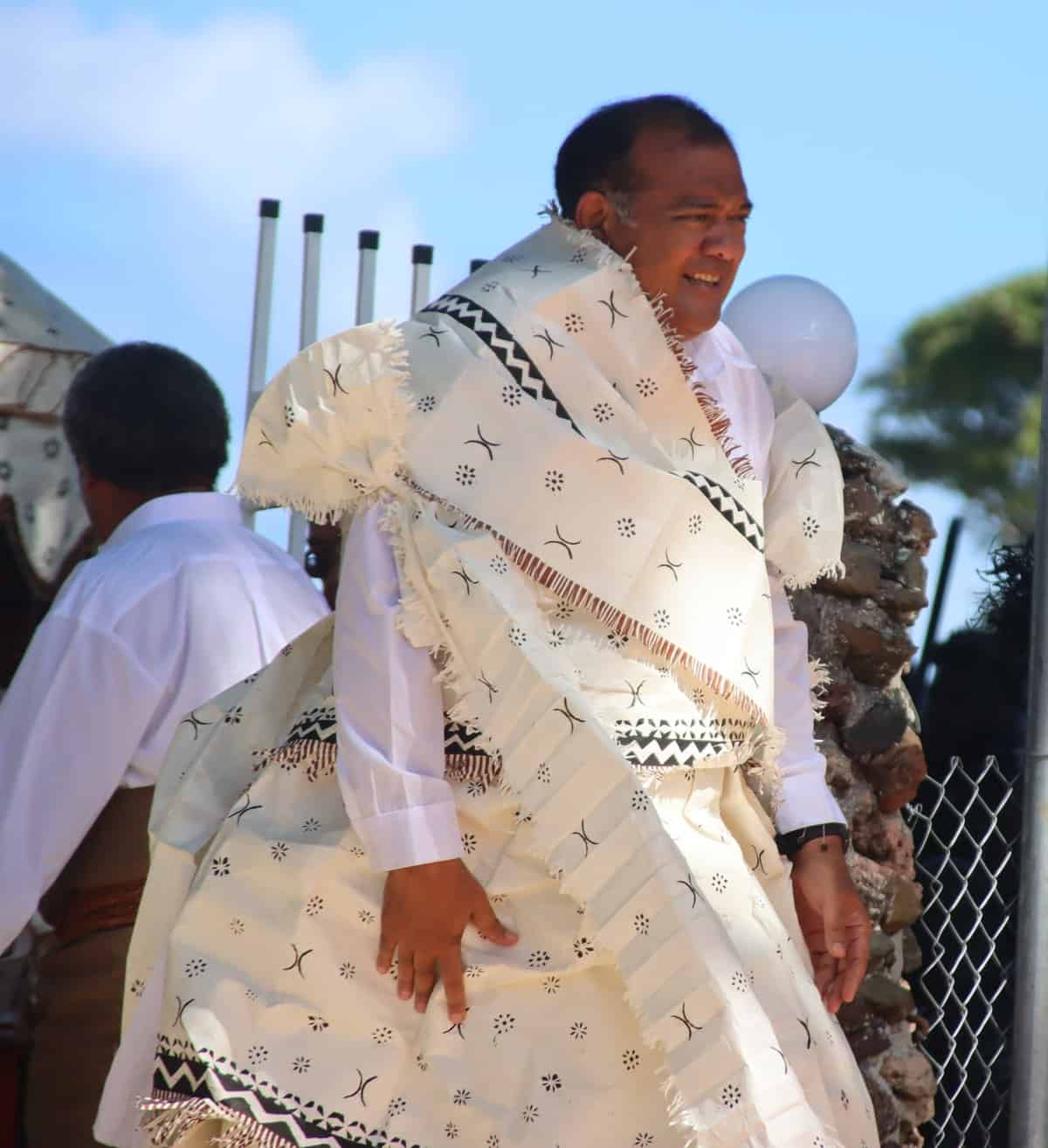
a masi (traditional cloth) crown on the chief’s head before presenting him with a Bible, symbol of his divine appointment.
After the service, ceremonial yaqona (kava) was presented in a coconut shell which—as an island chalice—conveyed the spiritual power from the people to their anointed leader.
As Roko Tevita—more commonly known as Roko Ului—drank, he became Tui Nayau, overlord of the island, a position last held by his late father, Ratu Sir Kamisese Mara, Fiji’s first prime minister, who died in 2004.
Roko Ului’s bloodline connects the Tui Nayau to the ancient kingdom of Rewa through his late mother, the Roko Tui Dreketi, Ro Lady Lala Mara.
Ratu Sir Kamisese and Ro Lady Lala were also related to the kingdom of Bau at the highest level. Both were related by blood to the original Kapaiwai, warrior and dissident. And in the Pacific, the Mara family—and Ro Lady Lala—shared blood ties to the royal households of Tonga and Samoa.
But as the sun rose over Roko Ului’s islands, it blinded the people to a nation’s sordid past.
It appears that a convenient and collective myopia has descended on a nation which, having suffered so long, needed the relief provided by the pageantry of the installation.
Now that the pomp and ceremony is over, it is time for people to face the harsh reality: that too often they use tradition as an escape.