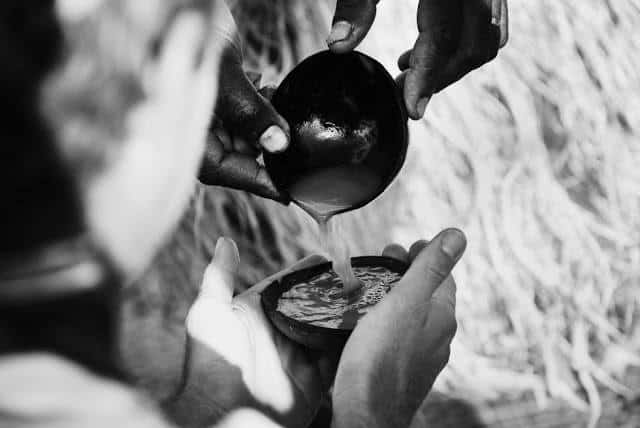
A GROWING global need for yaqona (kava), and the threat of a disease with the potential to destroy vast swathes of the crop in Fiji, could push Papua New Guinea into the position of the world’s major supplier.
Fiji has been the region’s largest exporter and consumer of kava, with exports worth more than $USD30 million in 2020. But Fiji is small at 18,275 square kilometres, compared to Papua New Guinea’s enormous 452,860 square kilometres.
With Papua New Guinea being 25 times bigger than Fiji, it’s possible that its kava production could be worth around $USD750 million. Some experts believe kava has the potential to become a billion-dollar industry if there is greater take-up of the crop for use in pharmaceutical products and boutique drinking establishments.
Already, Papua New Guinea’s International Trade and Investment Minister, Richard Maru, has spotted the potential to outgrow Fiji and Vanuatu and boost the livelihoods of thousands of small farmers.
“Kava has led to the empowerment of communities [in Fiji and Vanuatu] through the supply chain, creating sustainable incomes and improving livelihoods,” he said. Maru said kava was fast becoming a thriving cash crop for farmers in Fiji and Vanuatu.
A small number of Fijian companies have started to invest in farms in Papua New Guinea to export the drink to Fiji in powdered form. Now, Fijian processors have started to import from Papua New Guinea because the local crop has been hit by Kava Dieback Disease in major kava-producing areas.
The disease is caused by the Cucumber Mosaic Virus, is carried by aphids, and basically attacks plants, causing them to wither and die. There is no known cure for or protection against the disease. “We have no choice,’’ one producer told Islands Business on condition of anonymity, fearing a backlash from the Ministry of Agriculture.
“Our farmers are losing their crops. Production is down, demand is huge, and we’ll reach the point where people will not be able to afford the cost of a bowl or packet. That would be disastrous. “So, we’re going outside of Fiji in order to maintain our supply.’’
That’s where the opportunity exists for Papua New Guinea. With thousands of hectares and clean planting material available from Vanuatu and the Solomon Islands, the opportunities are endless.
Papua New Guinea has a number of varieties in its kava consuming regions, which are mainly in the north around Madang, the Western Province, and the outer island of Manus.
Varieties that have been domesticated include the Madang Short and Tall, and the Manus Pink, Tall, and Daru.
In some regions, kava is known as waild koniak (wild cognac), referring to its potency, which often translates into the ability to calm, soothe or put a drinker to sleep.
What will truly propel Papua New Guinea into the global market will be exposure of the product to regional drinkers, increased cultivation and changes to trade regulations.
Producers and exporters in Papua New Guinea are alert to the possibilities and want government support in order to boost capacity and capability in the industry. Bilaki Waizepa from Ocean Kava said the crop had real potential but government help would be essential to transform it into a major industry.
“We are calling on the government to come and assist us … to help us to do downstream processing so that we can feed the pharmaceutical markets in the US,’’ Waizepa told Radio New Zealand International.
In Fiji, the market is now highly technical, with machinery imported from China to allow the production of kava powders, instant products, capsules, and infused drinks.
For now, biosecurity laws prevent Papua New Guinea from exporting kava in powder form to Fiji, restricting exports to dried roots and chips. However, with skilful negotiation, that may change.
With government support, a mechanised kava industry in Papua New Guinea—equipped with machines to convert roots into powder—could unlock major market potential in the United States and Europe.
Papua New Guinea is perfectly placed – with clean varieties, a massive land area, proximity to Asia, and an absence of diseased crops.