For the first time in Pacific history, Fiji hosted the Convention on the Elimination of All Forms of Discrimination Against Women (CEDAW), marking a major milestone for the region.
The event brought together leaders, policymakers, and advocates committed to promoting gender equality and protecting the rights of women and girls across the Pacific.
Throughout the week, the event also featured talanoa sessions: open, inclusive dialogues that focused on gender equality, giving space for Pacific voices to share lived experiences, cultural insights, and local solutions.
Tuvalu, Solomon Islands, and Fiji each presented their national reports to the CEDAW Committee.
Leading the Tuvaluan delegation, Prime Minister Feleti Teo highlighted their country’s determination to uphold CEDAW commitments, while confronting deep-rooted challenges shaped by cultural traditions, geographic isolation, and the existential threat of climate change.
“Tuvalu remains committed to implementing CEDAW, and we have made meaningful progress,” Prime Minister Teo said. “But we also acknowledge the existence of structural and societal challenges that slow our efforts.”
Since its last report to the Committee, Tuvalu has made significant legislative and policy strides. These include raising the legal age of marriage to 18, criminalising domestic violence through the 2014 Family Protection and Domestic Violence Act, and ensuring workplace protections under the 2017 Labour Act.
A landmark 2023 constitutional review now explicitly prohibits discrimination based on sex. Women’s
representation in senior government roles has grown to 37%, and 53% of magistrates are now female.
“My delegation to this dialogue is dominated by women, not because I wanted more women, but because they deserve to be here in their own right as holders of key executive positions,” Teo said.
Despite progress, the Prime Minister highlighted persistent gender-based violence, with 44% of Tuvaluan women reporting intimate partner abuse. Only one in three survivors seek help, and there are currently no women in Parliament. Cultural resistance to temporary special measures aimed at increasing women’s political participation remains high.
Tuvalu’s vulnerability to climate change was also described as a critical barrier to achieving gender equality. “Climate change is not just an environmental issue, it is a human rights issue in Tuvalu,” said Teo. “It threatens the rights to food, water, health, and economic security, especially for women,” he said.
Women across Tuvalu are leading grassroots climate resilience efforts, from mangrove planting to coral restoration. Tuvalu has also taken bold legal steps internationally, seeking advisory opinions from both the International Court of Justice and the International Tribunal for the Law of the Sea, efforts led by women legal leaders within the government.
Justice and digital access
A member of Tuvalu’s delegation shared updates on improving women’s access to justice, particularly in remote islands.
“We are strengthening the justice system to ensure outreach reaches outer islands at least twice a year,” the delegate explained. “Women in remote areas now access legal aid remotely through local police, court registries, or during legal outreach visits.”
Internet connectivity via Starlink and new ICT infrastructure is also expanding opportunities for women in rural areas to access digital services, participate in consultations, and engage in advocacy work. On the issue of climate-induced migration, Tuvalu’s delegation clarified that relocation is not seen as a primary solution.
“Our people do not want to leave their God-given homeland,” said a senior delegate. “We want to protect our islands and preserve our culture, migration, if necessary, must be done with dignity and choice.”
As Tuvalu continues to confront the intersecting challenges of climate vulnerability and gender inequality, its message to the global community was clear: stronger partnerships and international support are essential.
“Achieving gender equality and protecting women’s rights cannot rest solely on government shoulders,” Teo concluded. “It requires collective efforts, regional collaboration, and a deep respect for the voices of our women and communities.”
Solomon Islands highlights groundbreaking progress on gender equality
“For the first time, we developed our own CEDAW report with very minimal external technical support,” said Cedric Alependava, Head of the Solomon Islands Delegation and Permanent Secretary for the Ministry for Women. He called it a huge milestone, made possible by a small but determined group of women in government, supported by young female volunteers across the country.
With 700,000 people living across more than 900 islands, Solomon Islands faces big challenges from tough geography to deeply rooted cultural traditions. But through literacy reviews, policy planning, community workshops, and lots of listening, the country is creating a gender equality plan that reflects local voices while also meeting global standards.
The CEDAW process, the team said, has become more than just a report, it’s become a tool to build confidence, grow women’s leadership in government, and spark real conversations between local provinces and the national government.
And history was made in April 2024, when three women were elected to Parliament, not through by-elections or appointments, but by public vote. “This is a big step forward,” Alependava said, “but we know there’s still more to do.”
To help more women get into politics, the government is now looking at temporary special measures, like gender quotas and changes to the election system to level the playing field. The delegation also suggested that holding national and provincial elections at the same time could help increase voter turnout and cut campaign costs, both wins for women hoping to lead.
Solomon Islands’ CEDAW presentation outlined extensive legislative and policy reforms, including: The passing of the Education Act 2023, with clear implementation pathways for provincial schools, early childhood centers, and education governance bodies; a Gender Equality and Social Inclusion Policy (2025–2035) adopted by the Ministry of Public Service, promoting inclusive, non-discriminatory work environments; ongoing reviews of the Island Marriage Act, Labour Act; and a proposed bill on human trafficking and a few others.
The delegation also shared that gender equality is starting to become part of everyday work across government departments, where gender-focused planning is now being built into daily operations.
A big step forward is also happening in the climate space.
For the first time, Solomon Islands is including gender in its national climate reports like the Third National Communication and the upcoming Biannual Transparency Report. These reports now acknowledge how climate change hits women and girls harder, especially in rural and coastal
communities.
But challenges are still there. The team pointed out that it’s still tough to make sure women in remote areas are fully involved in decision-making, and gender stereotypes remain a barrier. There’s also more work needed to improve how the country collects and uses sex-disaggregated data that is, data
broken down by gender to guide policy.
“Being here today shows our government’s strong commitment to aligning our laws and policies with CEDAW,” said Alependava. He also thanked the CEDAW Committee and other Pacific partners for supporting the journey.
Fiji affirms bold, inclusive vision for gender equality
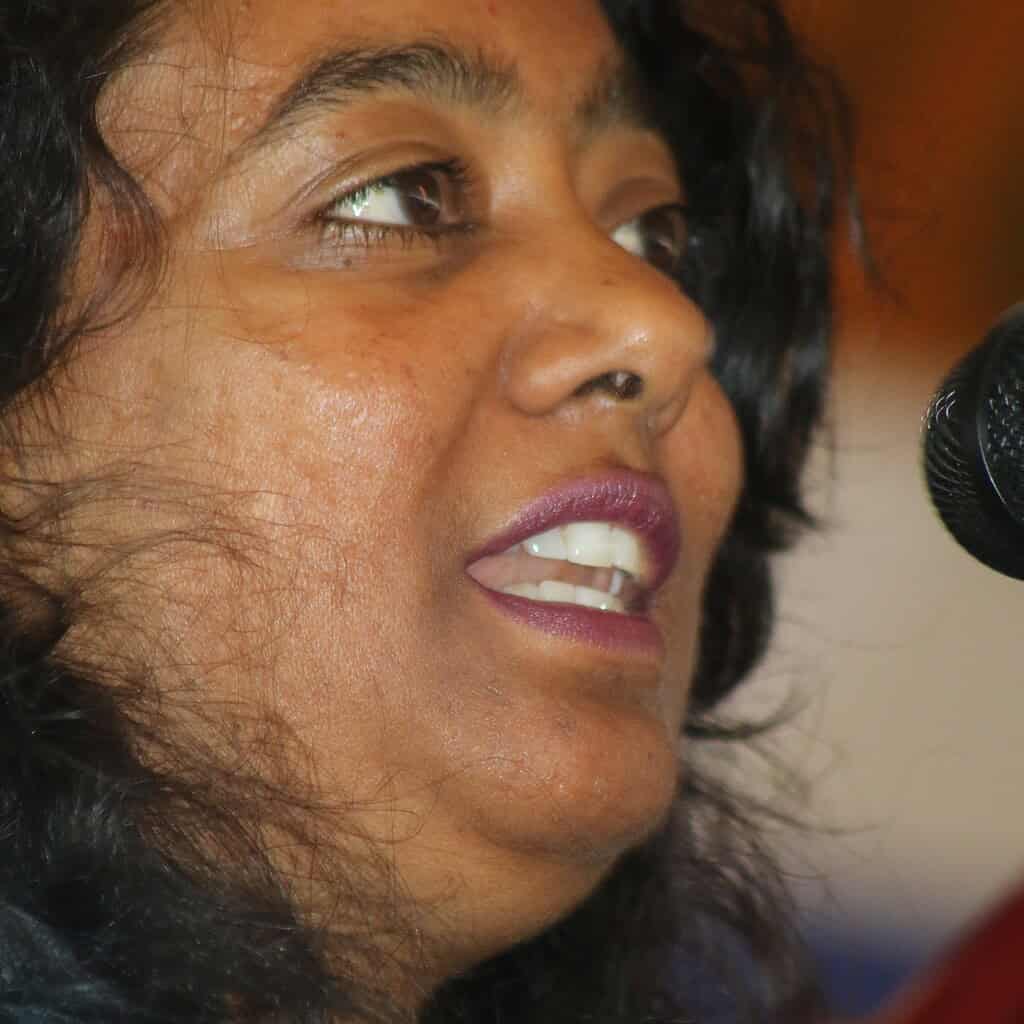
Under the leadership of Minister for Women, Children and Social Protection Sashi Kiran, the Republic of Fiji delivered its 6th State Report before the CEDAW Committee, showcasing a deep, whole-of-government commitment to gender equality and the empowerment of all women and girls.
In her opening speech, Minister Kiran said Fiji’s National Development Plan shaped by nationwide consultations shows that even though there’s been progress, gender equality is still uneven in many areas of life. “We’re not just here to report,” she said, “we’re here to reflect, learn, and renew our promise to make sure no woman or girl is left behind.”
The Fijian delegation presented a modern, data-based approach to tackling gender issues, focusing on fair budgeting and major policy reforms. With women comprising 49.3% of Fiji’s population, the government has made the pursuit of gender parity central to its national agenda supported by the
Ministry of Women.
Key highlights from Fiji’s report included: gender-responsive budgeting across 53 programs and all ministries; a marked increase in women’s representation in the Fiji Police Force from 1% in top leadership in 2016 to 19% in 2024; a 28% increase in women beneficiaries of agricultural programs; the launch of Fiji’s first National Action Plan to Prevent Violence Against Women and Girls, positioning patriarchy as a root cause of violence; and the expansion of social protection schemes with a gender lens such as disability, pension, and rural maternal support programs.
The review also spotlighted major investments in healthcare, including Fiji’s first Maternal and Child Health Policy (2025), enhancements in contraceptive supply chains, and a new cervical cancer screening initiative. With HIV cases on the rise, the government has declared a national outbreak and responded with an urgent multi-sectoral surge strategy.
In education, most children in Fiji go to primary school, and 91% of girls are enrolled in secondary school. Women also make up the majority of university graduates. Initiatives like vocational training centres and the “Girls in ICT” program aim to build women’s economic resilience and narrow the digital divide.
On women’s political participation, Fiji has rolled out district-level leadership workshops, women’s practice parliaments, and electoral reform consultations. Fiji’s delegation also outlined their proactive efforts to combat technology-facilitated gender-based violence, including through accession to the Budapest Convention on Cybercrime and local awareness campaigns grounded in traditional values such as veidokai and veilomani.
Minister Kiran also highlighted climate change as a critical gender issue. “Fiji is acutely aware of the disproportionate impact of climate change on rural and coastal women,” she noted, citing the enactment of the Climate Change Act with strong gender inclusion provisions.
As the first country in the Pacific to host the CEDAW technical cooperation, Fiji used the platform to express gratitude and highlight its commitment to transparent dialogue, intersectional progress, and ongoing partnership with civil society, development agencies, and the broader international community.
“Fiji’s journey toward gender equality is ongoing,” Minister Kiran concluded. “We are guided by the strength of our women, past and present, and we remain committed to building a just, inclusive future for all.”