PAPUA New Guinea (PNG) is a land of great beauty and vast but unrealised potential. With over 850 languages, rugged highlands and vast coasts, it is one of the most culturally and linguistically diverse nations on earth.
Its land and oceans boast huge reserves of natural resources, yet the country remains caught in the paradox of poverty amid plenty, with the World Bank still classing it as a middle-income country. As PNG looks toward economic transformation, its construction sector is emerging as a potential engine for growth. Unlocking its full potential will require overcoming challenges.
The numbers are promising. Between 2023 and 2027, PNG plans to invest $USD4.9 billion in infrastructure development. Major focus areas will be energy grids, water systems and the ICT sector.
Urban centres under strain from the rural-urban drift will also be in dire need of development. International capital, equipment or expertise to scale up. Only a handful, like Global Construction Limited or Dekenai Construction, have the financial muscle to bid for larger contracts.
The lack of capacity is even much more pronounced when it comes to specialised sectors like energy and maritime financiers, including the World Bank and the Asian Development Bank (ADB), are pouring millions into projects, upgrading roading infrastructure and building rural health clinics.
But there is a catch – despite this influx of funding, local contractors struggle to claim their pie. Between 2018 and 2022, they secured just 30% of major internationally funded contracts.
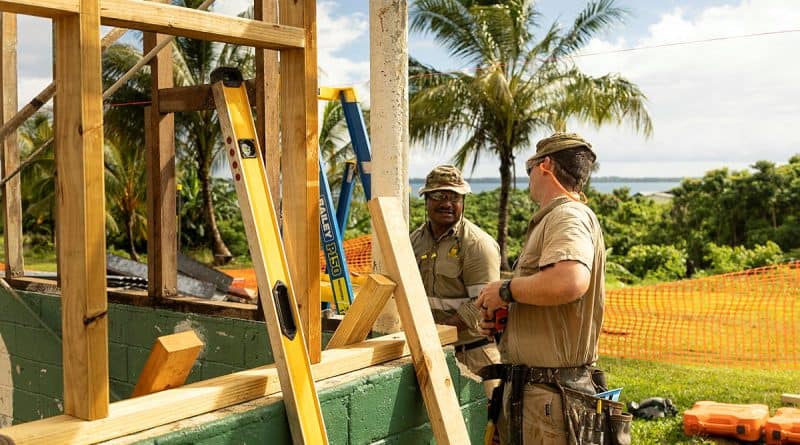
The rest went to foreign companies, leaving many in PNG asking who actually benefited from the projects. Many of PNG’s 147 registered contractors operate on small margins, with an average annual turnover of under $USD500,000. They can handle feeder road repairs or small-scale building projects. The multimillion-dollar highway upgrades or hydroelectric dam refurbishments are often beyond their capabilities, and they are outmatched by bigger international competitors with deeper pockets.
A staggering 71% of PNG’s contractors fall into the same category – capable of taking on the small jobs but lacking the capital, equipment or expertise to scale up. Only a handful, like Global Construction Limited or Dekenai Construction, have the financial muscle to bid for larger contracts.
The lack of capacity is even much more pronounced when it comes to specialised sectors like energy and maritime construction, where local expertise is scarce. With only seven contractors operating in energy and three in maritime, there is a risk that PNG could outsource critical infrastructure—and the jobs
and skills that come with it—to foreign firms.
For local contractors, the path to growth has many obstacles. Bureaucracy and red tape are stifling lengthy bid processes, complex loan application procedures and sky-high costs for importing machinery make it difficult to compete. Women, who make up less than 10% of the labour force, face even greater
hurdles, with few opportunities to advance into skilled or leadership roles.
Progress, though slow, is being made. All contractors in PNG now implement environmental and social safeguards, and many are making deliberate efforts to hire women and youth.
The solutions will not be easy, but they are fairly clear. They involve breaking large projects into smaller, locally manageable contracts to give smaller firms like Dickson Lama a fighting chance.
Other solutions include building capacity through training programs and partnerships with international firms, joint ventures with large foreign companies and levelling the field through a standardised certification system to ensure quality while giving local firms credibility.
PNG’s construction sector stands at a crossroads: the demand for infrastructure has never been greater, and funding is flowing. But without deliberate efforts to empower local businesses, the benefits of this boom may bypass the very people it’s meant to uplift.