THE Pacific is often caught between two global powers: China and the United States–Australia alliance.
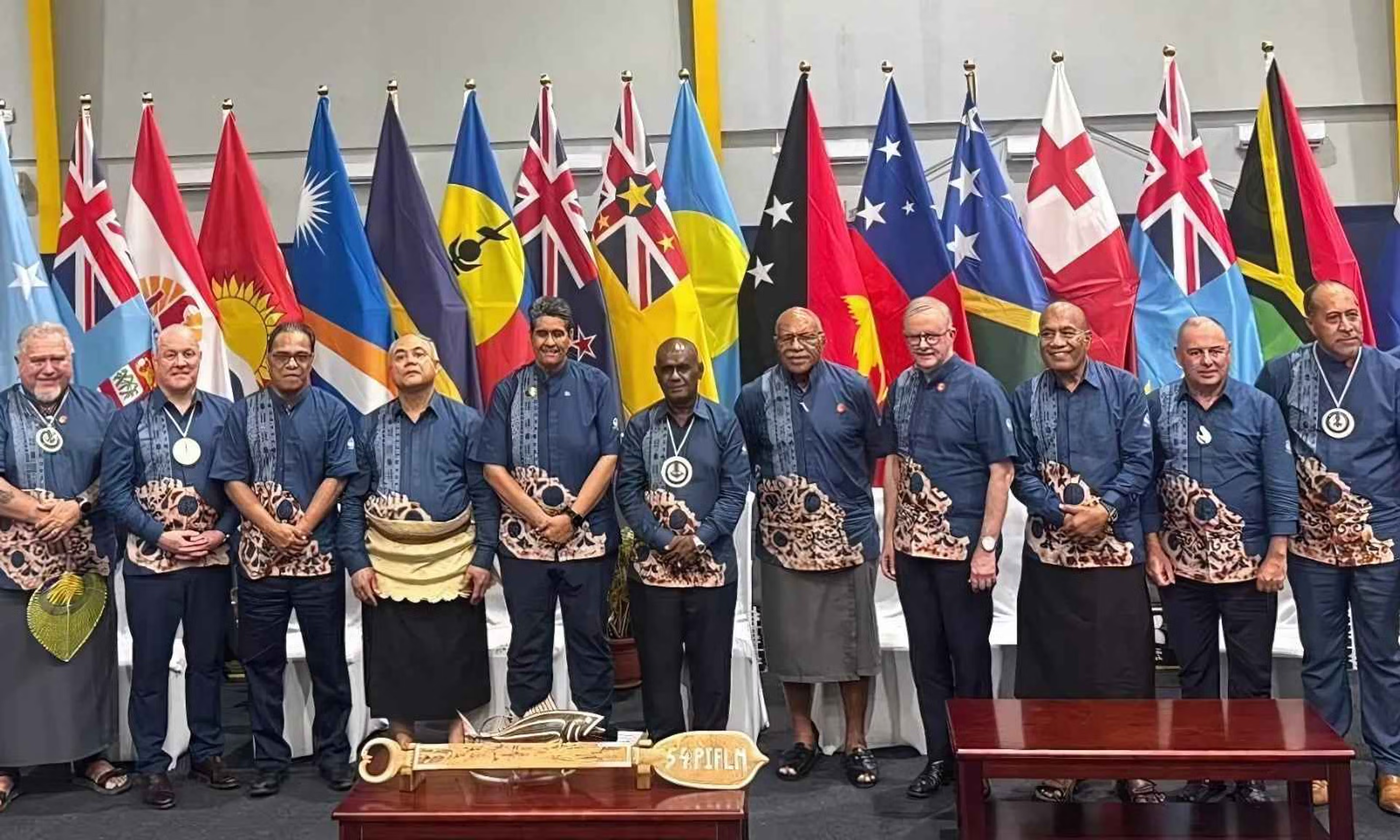
These relationships are usually framed in binary terms – friend or enemy, democracy or authoritarianism, influence or resistance. But the Pacific is more than a place of competition. We bring wisdom and values grounded in faith, culture, and relationship. The concept of the “Ocean of Peace” was first articulated by Fiji, and is now being developed by the Pacific Islands Forum Secretariat into a Declaration for endorsement at the Pacific Islands Forum Leaders Meeting in Honiara in September.
It recognises the twin pillars of peace and security outlined in the 2050 Strategy for the Blue Pacific Continent and stands alongside the Boe Declaration as a complementary vision.
The Pacific Conference of Churches has sought to ground this vision in relational ethics and just transformation through the Do Kamo framework, calling us to love our neighbour (Mark 12:31) and reject any thinking that divides and dehumanises.
At the heart of Do Kamo, a Kanak indigenous concept of being in a permanent process of becoming authentically human, is the belief that to be human is to be connected – to land, ocean, ancestors, and community. The Pacific Conference of Churches’ reflection on the Ocean of Peace reminds us that real peace is not the absence of war, but the presence of right relationships. We must move away from
security built on weapons and fear, and instead build peace through justice, healing, and respect. One of Do Kamo’s values, “Balanced Reciprocity,” calls for mutual exchange and ethical coexistence.
The Pacific’s idea of being “friends to all and enemies of none” is not just diplomacy – it is a moral way of being.
Jesus calls us not only to love our neighbours but even our enemies (Matthew 5:44). When we refuse to reduce people to categories or enemies, we make space for justice and peace. That means not confusing a country’s government with its people. The Chinese community in the Pacific, for example, has long-standing ties that go back generations.
Too often, when international tensions rise, local Chinese communities face discrimination and suspicion. This forgets the deep roots and contributions they’ve made in our islands. Pacific history includes many stories of migration and resilience: Solomon Islanders and Ni-Vanuatu blackbirded to Queensland, Chinese indentured labourers in Samoa, Indian Girmitiyas in Fiji, Banabans forcibly resettled in Rabi. These
shared struggles have shaped our communities and our nations. Do Kamo teaches that to become truly human is to honour these connections.
Peace is not simply the absence of conflict. Too often, peace is defined by the powerful, measured by military strength or trade deals. But that kind of peace comes at a cost. In Australia, the White Australia Policy once excluded Chinese, Pacific Islanders, and others from migrating.
Indigenous Australians were displaced, and children removed from their families. In the United States, Native Americans and Mexicans lost their lands and rights. Black Americans continue to face racial injustice, seen in movements like Black Lives Matter. In China, the Uyghurs and Tibetans face surveillance and repression.
Even Pacific allies must be held accountable. France still controls Kanaky and Ma‘ohi Nui, delaying their full self-determination. Nuclear testing in the region has left deep scars. These aren’t just political issues – they are spiritual wounds. Peace built on strength and dominance brings deep pain to those considered expendable.
In othering, no one wins. When people are seen as “the other,” negotiations become about power, not partnership.
The success of diplomacy is too often judged by whether both sides are equally unhappy, instead of whether justice has been done. Through a Do Kamo lens, the Ocean of Peace could offer a better way: peace as restored relationship, as dignity for all.
Today, military aid and sports diplomacy get big investments. But what about support for civil society, youth, and faith communities? These are where real peacebuilding happens. Do Kamo calls for leadership that serves the common good, not political agendas.
Australia’s bid to co-host COP31 with a Pacific country shows this struggle. Many Pacific nations are asking: will the chosen co-president have to follow Australia’s lead, or will Australia truly listen to the Pacific? Around this issue, different governments and organisations are competing to be the “voice” for the vulnerable. But Pacific civil society and faith communities must ensure that any representation is grounded in justice and not just appearance.
So, what would better diplomacy look like? It would honour Pacific wisdom. It would support not only
traditional art and culture but also Indigenous science and digital storytelling. It would fund spaces where Pacific people speak for themselves, not perform for others.
Do Kamo also teaches us to value the unseen – the spiritual ties that link us across generations. Our ancestors’ wisdom and our grandchildren’s future must shape our diplomacy today. Trade and security deals must be guided not just by money or influence, but by what is right.
It must also confront the existential threat of climate change. We need practical commitments to a just transition for a maritime region to become a fossil fuel-free Pacific. This means transforming energy systems, economies, and infrastructure in a way that upholds the dignity of workers and protects our most vulnerable. At the same time, we must remain firmly committed to being nuclear-free – both in
weapons and energy. Our ocean must be free from war games that ignore the vast and fragile non-human life below the waves. The Ocean of Peace is not only about geopolitics above
the water – it is about ecological justice beneath it.
To love your neighbour is to resist division. It is to insist that belonging is not based on race, power, or politics. The Pacific offers the world a different path – one shaped by shared struggle, humility, and hope.
Realists may dismiss this. They say power is what matters. But this kind of realism often values control over community, and short-term gain over long-term peace. The Pacific cannot afford this kind of thinking. Our people and our planet are too precious.
Do Kamo says that to be authentic is to keep growing in relationship and responsibility. This is not idealism – it is wisdom rooted in faith. Relationships built on care and respect last longer than those built on weapons and fear.
We must also reject political shortcuts. Sometimes, our governments face pressure to choose deals that meet immediate needs but ignore long-term justice. Faith communities and faith-based organisations must keep calling leaders to discernment – not just decisions that are strategic, but ones that are spiritually sound.
The Pacific must lead through relationships, not rivalry. Let civil society, youth, and faith communities be supported, not sidelined. Let Indigenous knowledge and modern creativity shape a future of dignity.
In the end, Jesus did not say, “Love your allies.” He said, “Love your neighbour.” Especially when they are different. Especially when they are misunderstood.
The Ocean of Peace can be more than a dream or regional rhetoric. It is an invitation: Come not with power, but with humility. Not as saviours, but as neighbours.