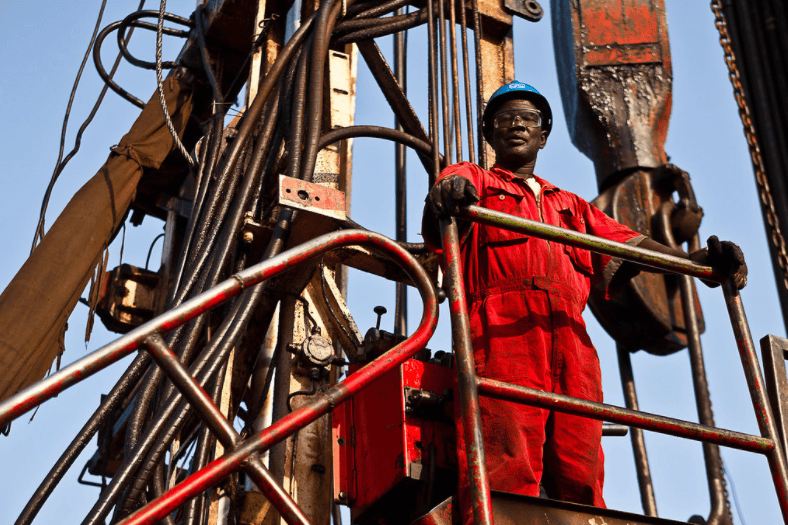
THE oil and gas sector makes up for around 5% of Papua New Guinea’s formal workforce of just under 400,000 people.
As a significant contributor to the country’s economy, it has attracted interest from huge foreign investors willing to pump money into the economy in the calculated risk that the returns will be worthwhile.
The Papua New Guinea (PNG) National Statistics Office said the oil and gas sector in 2023 contributed 49% of the country’s 3% growth in Gross Domestic Product, which is around USD 26 billion.
“PNG is uniquely positioned as a resource-rich nation close to major markets in Southeast Asia, China, and India,’’ Prime Minister James Marape said in January.
PNG is also close to Indonesia, Singapore, and Malaysia, which pump out huge amounts of goods onto Pacific supermarket shelves.
Effectively, Marape believes that his country can leverage the success of Southeast Asian economic powerhouses using PNG’s proximity and what he believes is an abundance of resources.
Indonesian and Malaysian companies have benefited from that proximity by acquiring vast swathes of PNG forests for lumber, processing the timber offshore, and depriving locals of much-needed employment opportunities.
Ironically, Marape wants PNG to use the oil and gas industry as an opportunity to become a hub for manufactured products and downstream processing. That would mean manufacturing petrol and petroleum products at home for sale, domestically and internationally.
That would have a huge impact on employment opportunities and boost industries that support oil and
gas – among them transport, aviation, accountancy, health services, catering, and housing.
“We want to go beyond just exporting resources,’’ Marape said.
“By establishing special economic zones and fostering partnerships with global investors, we aim to produce finished goods and export to Southeast Asia and beyond.’’
Marape made it clear that PNG wanted to benefit as much as possible from its own resources. This has been done in the fisheries sector—with a special economic zone in Madang—which has attracted investment from the Philippines and China.
But some experts warn that while the gas and oil reserves are healthy, they do not have sufficient volume to make the country a global powerhouse. The industry will produce billions of dollars and thousands of jobs, but PNG will remain at 41st place in the list of countries which produce these energy sources. But the list excludes, of course, all countries with no data, such as Kuwait, Venezuela, Syria, South Sudan,
Turkmenistan, North Korea, and Yemen.
Rohan Fox—an independent economist and development professional who worked as a lecturer at the University of Papua New Guinea—believes even 41st place might be overstating PNG’s importance.
In a paper produced for the Australian National University, Fox said PNG’s reserves of gold, copper, oil, and gas seem at first glance to justify the label of a resource-rich country.
“Indeed, we are often told that upcoming resource projects will transform the economy,’’ Fox wrote.
He continued: “The phrase resource-rich is vague, so it’s worth defining what we mean. I suggest two ways to think about resource richness. First, absolute abundance: a country has such large total reserves that it becomes a major player in global markets, gaining economic and geopolitical influence. Second, high per-capita resource wealth: a country has enough natural wealth per person to lift living standards
significantly, provided the benefits are shared and managed wisely.”
Fox said that World Bank data on total resource rents—the economic value extracted from oil, gas, minerals, and forestry after production costs—showed PNG’s figure was below the global average of USD 1370 (due to the concentration of resources in a few countries), but far above the global median
of USD 238.
So, the resource-rich label is misleading and creates expectations of national prosperity. The reality, Fox said, was more modest: meaningful economic benefits for some individuals or regions, but less for
society as a whole.
For PNG, a country where people expect and want more, the challenge for the government will be to manage public expectations.
The oil and gas sector will provide much-needed revenue and create a swath of jobs while benefiting specific communities. However, it is better than nothing.