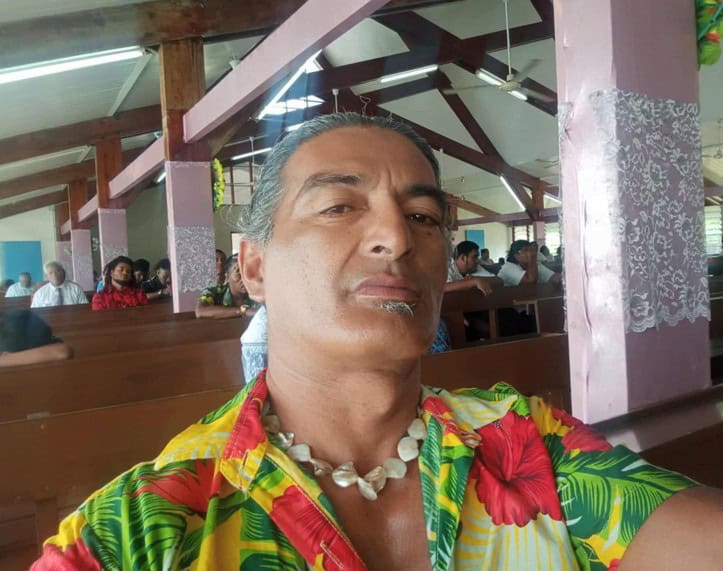
IN Tuvalu’s capital, Funafuti, the rhythm of life has been broken.
For Taafaki Semu, a 51-year-old logistics agent born and raised on the island, the signs are everywhere: in the weather that no longer follows the wisdom of the elders, in the floods that cut off roads for days, and in the quiet anxiety that now shadows daily life.
“Our rhythm of life has been broken,” Semu explains. “We still wake, work, and gather with family and
community, but we live with a constant awareness: the sea is rising, the land is shrinking, and the weather no longer follows our wisdom.”
This awareness turns to fear during high tides and storms. When westerly winds blow, waves surge over roads, and lagoon water floods into villages, sometimes knee-deep. The inundation brings more than water – it brings stones and sand, blocking access for days.
“If someone needs the hospital or the police, they must wait,” Semu says.
“Even visiting family becomes impossible until the water and debris clear.”
In a place where community and connection are central to culture, these disruptions are more than inconveniences; they are erosions of a way of life.
The threat extends beyond daily logistics to the very identity of the Tuvaluan people. Ancestral lands and burial sites, sacred spaces that hold generations of history, are now on the front line of climate change.
“Our land is who we are. When the sea claims it, we feel powerless,” Semu reflects.
“Yet I believe our rights do not disappear. Whether the land is underwater or above, Tuvalu’s sovereignty remains. Our land may drown, but our identity and our rights as Tuvaluans must endure.”
In response, some families are raising their homes with sand and soil. Others are leaving under groundbreaking climate migration agreements, like the Falepili Union Agreement with Australia. Semu sees both the necessity and the difficulty of this planned migration.
“I am grateful to Australia for opening its arms… It gives us a chance to adapt before disaster strikes,” he acknowledges.
But he is also clear-eyed about the challenges: “Life in Australia will not be easy… In Tuvalu, life is simpler.
We own our homes, our motorbikes, and our boats.”
He stresses that polluting nations must share the burden: “They created this crisis, and they should contribute funds so Tuvaluans can rebuild their lives abroad without further suffering.”
Amid the uncertainty, education has become a vital tool for resilience. Schools in Tuvalu now integrate climate awareness into their curricula, and government programs work to prepare the next generation.
“Education is our main tool,” Semu notes.
“Middle school children are taking part in a climate programme where they ask questions, listen, and even sing songs about climate change. This education is helping to plant seeds for the future.”
When asked what keeps him hopeful, Semu points to faith, community, and a growing global awareness.
“My faith keeps me hopeful. My community gives me strength. And I believe there is hope because people around the world are starting to listen.” Still, the reality remains stark.
“Tuvalu may be small, but it is strong. As long as we hold on to our culture, our families, and our sovereignty, we will not disappear completely.”
For now, Taafaki Semu and his community live day by day, caught between the ocean and the lagoon, with nowhere to run except toward an uncertain future.