Australia’s bold move to ban social media for children under 16 years, a world-first law, has sparked a global debate. The policy is now a topic of conversation and consideration in many countries, including those in the Pacific Islands region.
Last November, Australian Prime Minister Anthony Albanese told parents: “We’ve got your back,”
as part of an effort to safeguard children online. The Australian government has given social media platforms 12 months to prepare before the law takes effect, arguing that unfettered access to social media is having a negative impact on the mental health of children and young teenagers.
Albanese said: “I don’t know about you, but I get things popping up on my system that I don’t want to see, let alone a vulnerable 14-year-old.” The law was also prompted by a series of incidents, including the tragic suicide of a 14-year-old Australian schoolgirl in 2018. Her family campaigned for greater awareness and stronger protections for children against cyberbullying.
In the wake of her death, the Australian government and various advocacy groups began pushing for more effective measures to protect children and young people from online harm.
Once the law is enforced, platforms like TikTok, Snapchat, Instagram, Reddit, and X, could face fines of up to AU$50 million for non-compliance. However, in Australia, many are asking precisely how the law will be enforced. There have been suggestions that the government will rely on some form of age-verification
technology to implement the restrictions.
The extent of child sexual abuse online
While social media has been used for communication and educational purposes, concerns have arisen regarding the rise in cyberbullying, suicide, and exposure to inappropriate content in the Pacific Islands region.
The Pacific Environmental Scan Report published by the Australian government last year identified a range of examples of online sexual abuse against children, confirming this is a growing area of risk for Pacific Island countries, as it is to countries worldwide. It stated that national studies collectively show that the most common perpetrators of child sexual abuse in Pacific Island countries are male family members and friends.
It notes a more recent survey of 84 welfare workers in the Pacific region who are directly managing cases involving children in Fiji, the Solomon Islands, Papua New Guinea, Vanuatu, Tonga, Samoa, and Kiribati. The survey found that half of their workload was related to children, and one-third of those cases involved child sexual abuse.
The scan further noted that in 2023, over 18,000 reports of online child sexual abuse by technology companies to CyberTipline were attributed to Pacific Island countries, although it stated that more information was needed on the nature of these cases.
It said stakeholders identified local production of child sexual abuse materials (CSAM) across the Pacific, continuing: “Consistent with the experience of countries outside the Pacific, CSAM images and videos were identified as being shared on popular social media platforms such as Facebook, Instagram, and TikTok, and on fully end-to-end encrypted messaging platforms such as Signal and Telegram. While the scale of local CSAM production was not possible to determine from the discussions, there was consensus that the problem was greater than indicated from the small number of identified cases and would increase over time.”
The Pacific Community’s (SPC) Human Rights and Social Development Division Deputy Director, Tara Chetty, says while the smart use of technology “offers an incredible opportunity to empower girls and boys, unfortunately, perpetrators of violence also use technology as a new set of tools to cause harm.
From using everyday devices like our phones to hi-tech software powered by artificial intelligence, the intention of TFGBV [Technology-Facilitated Gender-Based Violence] is to coerce, intimidate, silence, and control.”
She adds: “Tech-facilitated gender-based violence is now increasingly recognised in the Pacific as a serious issue – because we know that online harm directly leads to real world harm and significant negative impacts.”
Could the Pacific follow Australia’s lead?
So, could Fiji and other Pacific nations consider similar measures for their populations?
Jope Tarai, a Fijian scholar based at the Australian National University with expertise in digital politics, believes Fiji should take a different approach than Australia. “I think Fiji and more specifically, other island countries, should perhaps build their institutions and structures first, before they follow legislation. Legislation should be the last process because legislating means you’re trying to regulate something,” he says.
Fiji should embark first on research and development, which is effective to get grounded contextual insights from users in Fiji about what the risks are.”
He stresses the need for research and education first, saying Fiji’s context is different from Australia, where debate has centered on parental guidance and responsibilities. “But for Fiji’s context, we don’t only have parental guidance and responsibilities; we have guardianship responsibilities,” he continued, referring to the role of extended family and community members in overseeing the upbringing and welfare of Pacific children.
Differing perspectives on a potential ban
Melania Tora is Fiji’s newly crowned Miss Hibiscus Queen, and an active advocate for mental health awareness. She does not support a social media ban for children. “I think it would be more beneficial to just teach kids how to conduct themselves on social media. We can’t keep them off social media and I don’t think it’ll solve much.
“I think we would benefit from some proper guidelines, both legal and in the community and the education system,” Tora added. She argued that the solution starts at the family level, saying that while parents shouldn’t feel pressured to monitor every second their child spends online, they do need
to take responsibility for setting boundaries around screen time and social media usage.
“Parents are already juggling many responsibilities, but establishing limits can help guide their children’s digital habits,” she added.
Empower Pacific is an NGO that focuses on providing mental health support and empowering individuals and communities to improve their well-being. Its Counsellor, Salanieta Wilson, believes that while a social media ban could work in the Pacific, it could also limit information sharing, restrict access to opportunities, and stifle creativity and growth.
“In the context of the Pacific, we feel that emphasis should be laid on parental and guardian supervision in monitoring the use of the internet by their children and provision of technological devices and access to children under their care.
“As the reality is, one way or the other, children under the age of 16 will find a way to have access to these social media sites. Hence, monitoring, supervision, and the control of access to these sites should be managed through parents and guardians,” she says.
Local responses and personal responsibility Papua New Guinea’s Minister for Communication and
Information Technology, Timothy Masiu, last month said that young children must be banned from accessing Facebook and other popular social media sites.
“I will bring up a Bill to NEC [the National Executive Council] and to Parliament to ban Facebook, WhatsApp, Instagram, and other sites that are destroying the fabric of the society,” he told parliament.
“We need to bring strong laws, so why are we afraid? We have to secure the future of the young generation and the future of this country.”
PNG university student Jacquline Hiawalyer believes “a ban is a much-needed initiative, it will protect children from the dangers online.”
Hiawalyer says cyberbullying is “rampant” in Papua New Guinea. “Many young people have lost their lives to suicide, and this is the power of social media!”
She told Islands Business that a social media ban could reinforce positive cultural cues. “Much of our culture demands young people to be responsible, to work hard and have respect for one another. A social media ban will encourage young people to uphold these values.”
In the large urban village of Lami just outside Fiji’s capital, young mother Vani Kaivu also supports a social media ban for under 16s. “At this young age, their minds are still developing, and they have much to learn from the world beyond what they find online.
“We live in a tech-focused society, and many children are becoming too reliant on devices. This can lead to serious issues like cyberbullying, low self-esteem, anxiety, and even suicide.”
Another resident and mother of three young children under nine years of age, Salome Naikula, says she and her husband have made it a priority to limit their children’s exposure to gadgets.
“We only allow them to use a phone when we’re home after work, and they share my husband’s phone to watch videos,” she explains.
She says before allowing them to use the phone, “We disable certain apps like YouTube and Play Store. They only have access to Kids YouTube. We closely supervise their screen time to ensure that the distractions of the digital world do not overly influence their minds.”
Online child sexual exploitation and abuse is a relatively new crime type to the Pacific. As a result, most Pacific Island law enforcement agencies do not yet have the same tools, training and support as countries that have dealt with these online crimes for many years. The Pacific scan report identified that many Pacific Island countries have well established approaches to respond to in-person child sexual assault, and are investing in the types of capabilities, such as digital forensics, that will assist in responding to online sexual crimes against children.
As responses in other countries evolve, Pacific Island legislators, social sector workers and parents are watching Australia’s ban rollout and considering how best to protect their young people while balancing the opportunities that digital connectivity offers.

STUDENTS SPEAK
Should Fiji also consider banning social media for children under 16 years old, and why?
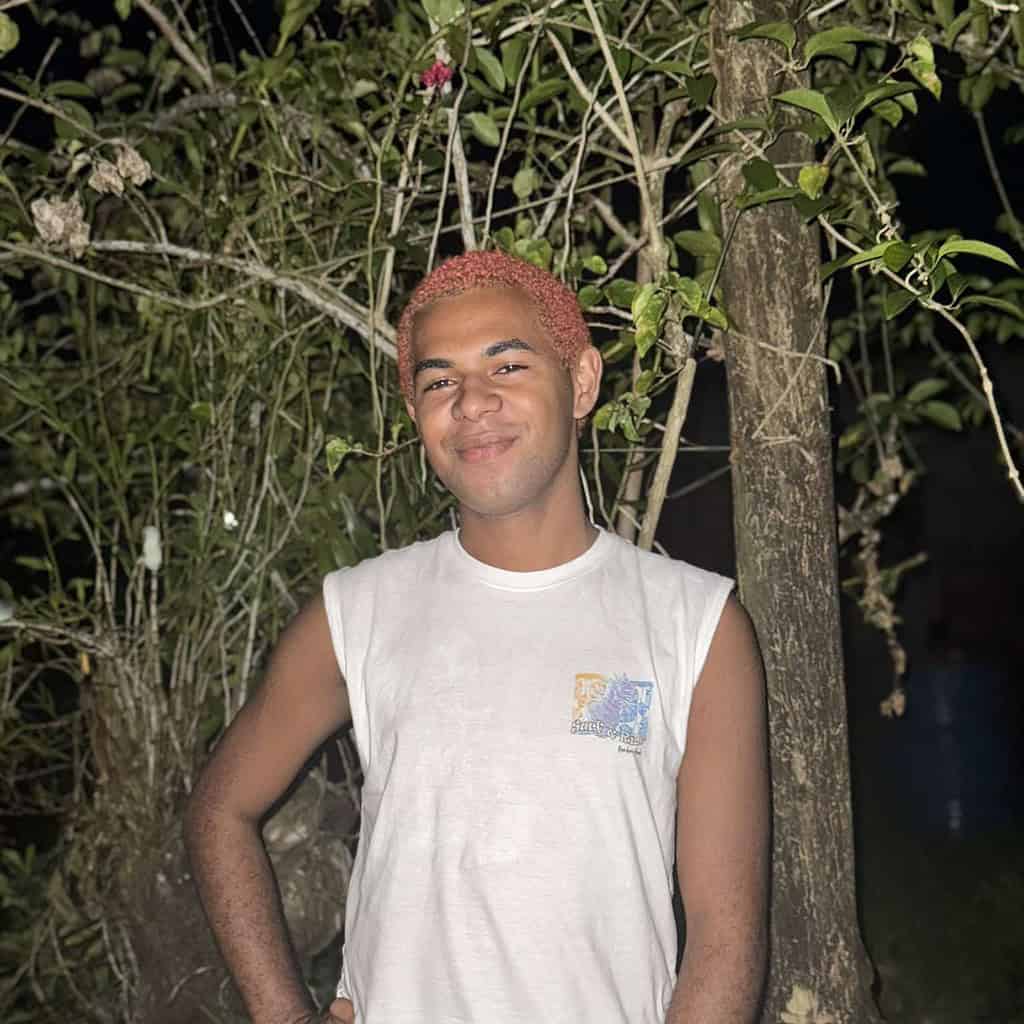
Sereana Tuiqali: With the rise in harmful content on social media, it may be wise for our country to consider banning social media for children under 16. As a young woman, I speak up for my sisters affected by this and for a better future for our country.
How would you feel if social media were banned for children under 16 in Fiji, like the recent move in
Australia? Do you think it’s a good idea?
Sereana Tuiqali: It might reduce the pressure and negative impacts that online platforms can have on mental health, especially for younger teens.
Ropate Koroi: Schools and parents should educate us on using social media responsibly instead of a ban.