IN a further blow to United States (US) influence in the region, the Trump Administration will withdraw key diplomats accredited to eight Forum member countries before the end of their normal term.
Days before last Christmas, US media reported that up to 30 US ambassadors would be recalled from their posts in January 2026. These include three ambassadors in the Pacific Islands: Suva-based Ambassador Marie Damour (who is accredited to Fiji, Kiribati, Nauru, and Tuvalu); Ambassador to Papua New Guinea Ann Marie Yastishock (who also serves Solomon Islands and Vanuatu); and Ambassador Laura Stone, based in the Republic of the Marshall Islands.
The US State Department declined to confirm when the three ambassadors might be replaced, but a spokesperson told Islands Business: “This is a standard process in any administration. An ambassador is a personal representative of the President, and it is the President’s right to ensure that he has individuals in these countries who advance the America First agenda.”
However, the decision cuts short the normal term of three or four years for a posting (for example, Ambassador Laura Stone only arrived in Majuro in July 2024). All three are career diplomats appointed by the Biden Administration and confirmed by the US Senate. The likely replacement of foreign service officers by political appointees is a hallmark of Trump’s diplomatic practice, surrounding himself with business cronies and “America First” ideologues, while spurning the expertise of career public servants.
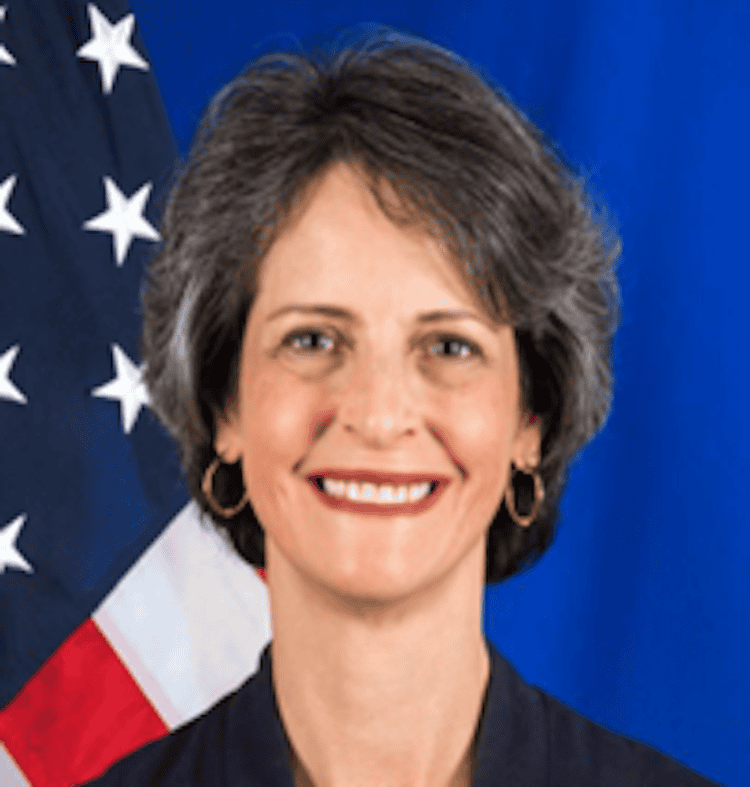
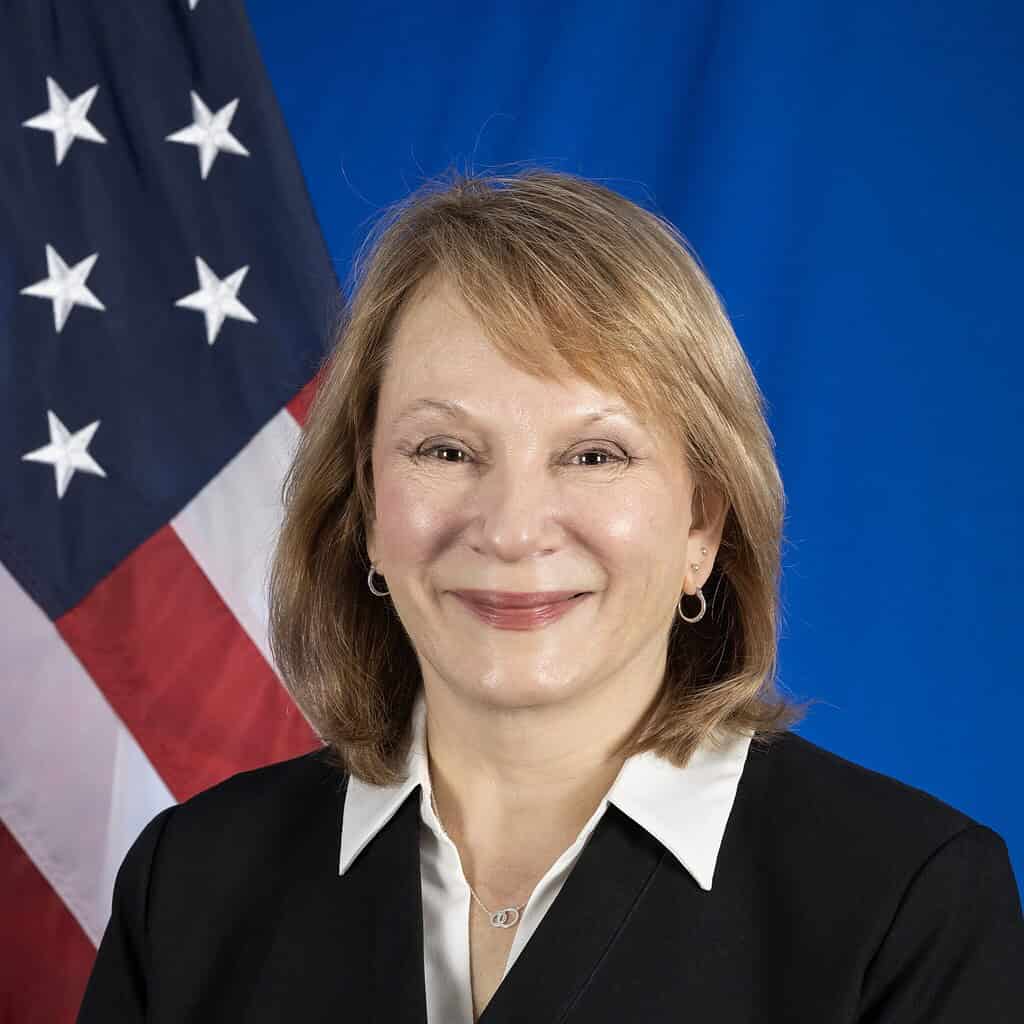
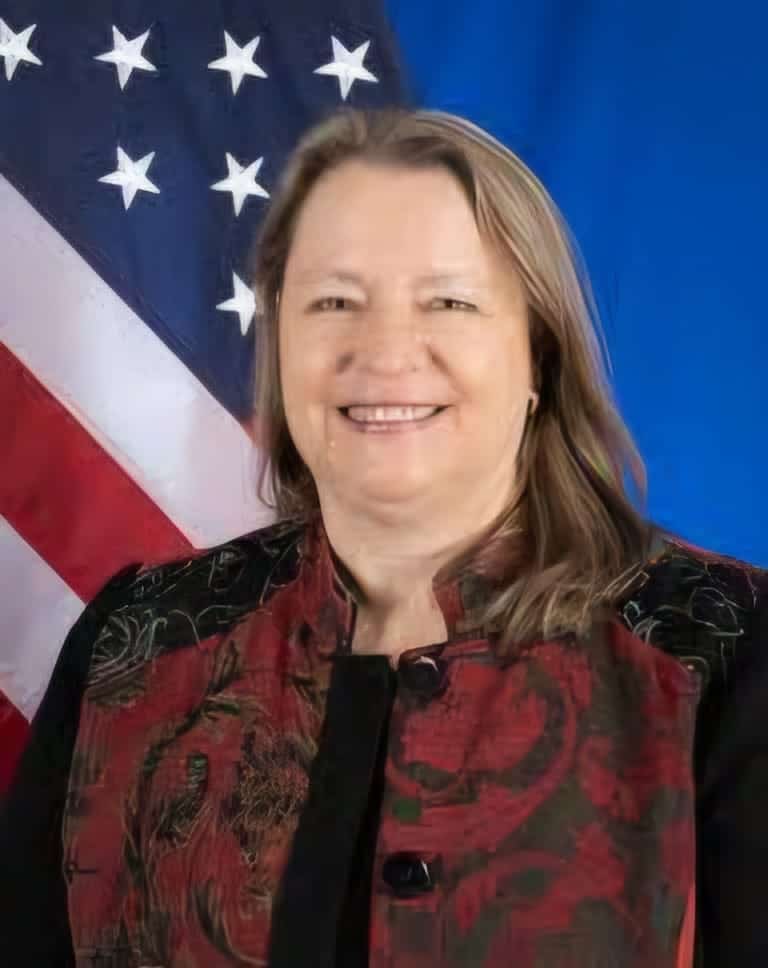
the top) Stone, Yastishock, and Damour
This doesn’t mean that the Trump Administration will ignore the region, as the strategic competition with China remains a central focus of administration policy. But “America First” policy is open about its disdain for local priorities and agendas.
The latest US National Security Statement (NSS), issued in November 2025, largely ignores the Pacific Islands, and reverses the focus on the region that was a feature of the Pacific Partnership Strategy issued by the Biden Administration in 2022.
Giving greater focus to US agendas in the islands was a central theme of an October 2024 Heritage Foundation report The Pacific Pivot: An American Strategy for the Pacific Islands, which was prepared as a checklist for action by the second Trump Administration. The report critiques Biden’s 2022 Pacific Partnership Strategy as too focussed on Pacific Islanders, arguing “the document conveys these objectives in a manner that ranks the interests of the Pacific Islands above American interests. A stronger strategy would prioritize the articulation of US interests and how said strategy advances them, rather than striving to ‘best meet the needs of the Pacific Islands’.”
The Heritage Foundation report goes on to stress: “Competition with China is the single-most important driver of US reengagement in the Pacific Islands…. The US must adopt a clear-eyed approach about putting American interests and objectives in the Pacific Islands first, while prioritizing engagement in areas of common interest.”
For a decade, successive US administrations have boasted that the United States would be intensifying its engagement in the region, establishing new embassies and extending a range of programmes. The Biden Administration re-opened embassies in Solomon Islands and Tonga in 2023, and Vanuatu in July 2024 (albeit with a non-resident ambassador), also announcing plans for another mission in Kiribati. But this month’s removal of diplomats accredited to eight Forum Island Countries undercuts recent expansion of the US diplomatic network in the region.
The flip-flops of US policy has clear strategic effects. In the Pacific Islands, the People’s Republic of China already has more diplomatic posts than the United States, and since 2019, three Forum members have switched diplomatic ties from Taipei to Beijing, a setback for US Indo-Pacific policy.
Lack of follow-through
Last September, US Deputy Secretary of State Christopher Landau travelled to Port Moresby and Majuro “to underscore the United States’ commitment to strengthening partnerships and alliances in the Indo-Pacific region.” But despite the rhetoric, successive US administrations have failed to follow through on past commitments, even as they expand military agreements with Forum Island States.
The current shift to US unilateral interventionism will likely reinforce long-held Forum concerns that American policy lacks predictability, certainty, and follow-through. In an own-goal, US disengagement also leaves other major powers such as China and Russia as influential members in organisations that Washington is deserting, from the Global Counterterrorism Forum to the International Energy Forum and the International Renewable Energy Agency.
The withdrawal will also weaken US influence in Pacific networks, as Washington often used its membership of agencies to block action by other members (sharply highlighted by the US role in SPREP, where US officials have joined their French and UK counterparts to limit action on the legacies of Cold War nuclear testing).
American imperialism has often swung between a focus on the Western hemisphere and a more globalist, liberal internationalism. In both cases, however, US administrations have intervened in developing countries using local, regional, and international institutions. The Trump Administration’s rapid dismantling of its soft power institutions—for development assistance, diplomacy, and information flows—now leaves the United States more reliant on brute force, economic sanctions, and subversion.
In an interview with The New York Times on January 8, President Trump was asked if there were any limits on US global power.
He replied: “Yeah, there is one thing. My own morality. My own mind. It’s the only thing that can stop me. I don’t need international law.”