BUILDING in the Pacific can cost more than the materials listed on a supplier’s invoice. For island countries, construction projects face long supply chains, limited shipping services, small markets, and shortages of skilled workers – challenges that can add cost and time before a project is completed. The Asian Development Bank (ADB) says construction projects across the Pacific face risks linked to remote locations, natural hazards, underdeveloped ports, unreliable shipping, heavy reliance on imported materials and labour shortages. For countries spread across thousands of kilometres of ocean, getting materials to a project site can be a project in itself.
The cost of materials
Fiji’s latest figures show that construction materials remain considerably more expensive than they were several years ago. The Fiji Bureau of Statistics’ Building Material Price Index stood at 139.5 in the September quarter of 2026, up 1.5 per cent from the previous quarter. The index uses the average of the four quarters of 2014 as its base of 100. On an annual basis, the overall index rose from 100 in 2019 to 138.5 in 2025. Some categories have risen considerably more than others. Wood and related materials reached an index of 172.8 in 2025, while cement and related materials stood at 137.0 and electrical products at 143.6. The figures do not mean that every building material has risen by the same percentage. They show how the overall alternative shipping price level for a representative basket of construction materials has moved. For builders, however, the effect can accumulate across a project. A building may require timber, cement, steel, electrical products, plumbing equipment, tiles, paint and other materials. When several of those inputs become more expensive, the pressure eventually shows up in construction costs. And in the Pacific, the price of the material itself is only part of the calculation.
Getting them to the site
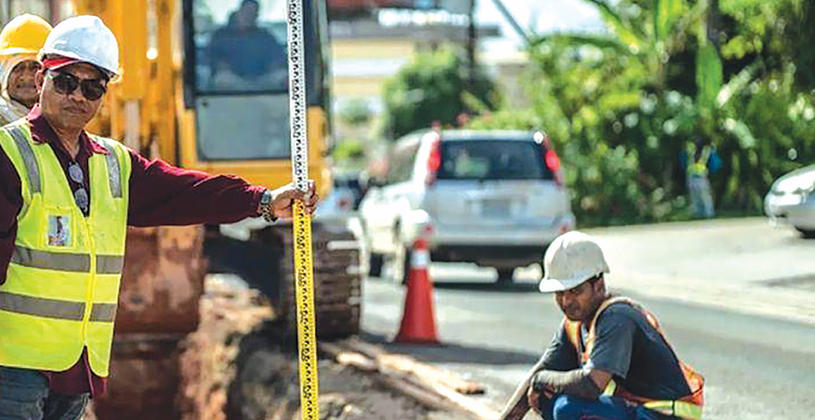
ADB’s assessment of Pacific construction supply chains found that projects rely heavily on imported materials and often face long lead times. Port capacity can delay unloading and cargo clearance, while vessel size limitations can make it difficult to move construction materials to smaller island destinations. Break-bulk cargo can also be vulnerable to damage during rough seas, while unreliable shipping makes transport planning more difficult. Fuel prices, currency movements, tariffs and taxes can add further uncertainty. For contractors, that means a project budget must account not only for the cost of buying materials but also for moving them through the supply chain and getting them where they are needed. ADB says some contractors manage these risks by planning procurement well in advance, hedging against fuel and foreign-exchange costs and using alternative shipping methods such as barges, although these can be costly. The challenge can be greater outside major centres, where construction materials may have to travel further after arriving in a country’s main port. Then there are the workers. Even when the materials are available, countries need people with the skills to build. Fiji’s 2026 National Skills Gap Assessment says labour shortages are now constraining national growth, with demand for technical trades including electricians, plumbers, joiners and construction workers outpacing supply. The assessment also identifies shortages in specialised and professional roles. The Government says around 15,500 Fijians migrated overseas for employment opportunities between January 2023 and February 2024, putting additional pressure on the domestic workforce. It also says about 6,460 work permits were issued for workers in critical industries between August 2023 and January 2025, including construction. The issue is not unique to Fiji. ADB says skilled local labour is scarce in parts of the Pacific as workers migrate overseas, leaving contractors to rely on workers from outside the country. That can raise project costs while also highlighting a longer-term question for Pacific countries: how can infrastructure investment help build the local workforce at the same time?
Turning projects into training
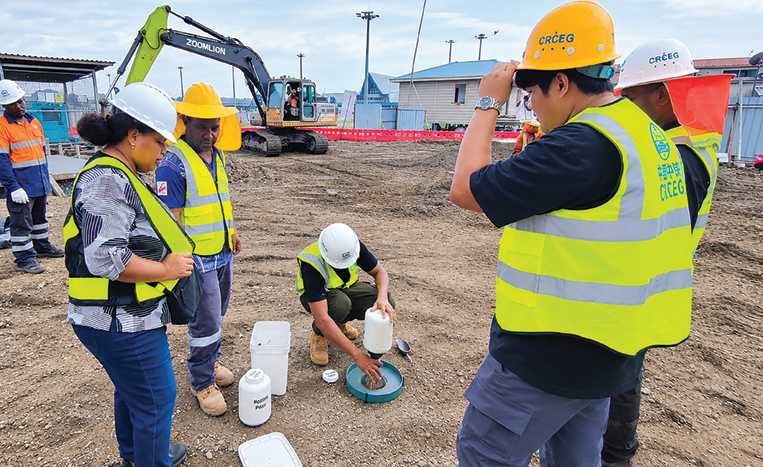
Some of the answers are already being built into major development projects. From January 1, ADB-financed internationally advertised works contracts require at least 50 per cent of total person-days to be performed by local workers. The requirement covers unskilled, semi-skilled and skilled workers. ADB says the threshold can be adjusted where countries face extreme labour shortages, including in small island developing states. ADB also encourages contractors to provide on-the-job training, knowledge transfer and training for local contractors, subcontractors and small businesses. The World Bank has introduced a similar measure. For internationally procured civil works contracts financed by the Bank from September 1, companies must ensure that 30 per cent of labour costs are local. The Bank says the requirement is intended to support domestic job creation and skills development. These measures are significant for Pacific countries because a major infrastructure project can provide more than a road, wharf, school or water system. It can also give workers experience that stays in the country after the project ends.
Building the skills base
Fiji is also expanding technical training to address shortages. The Government’s 2026 skills assessment calls for education and training systems to be better aligned with industry demand, while strengthening partnerships between government, industry and training institutions. This matters particularly for construction, where the demand is not limited to general labour. Projects require carpenters, electricians, plumbers, welders, machinery operators, surveyors, engineers, supervisors and other technical workers. If contractors cannot find those skills locally, they may have to look overseas. But if local people can be trained and brought into major projects, the same investment can gradually increase the country’s construction capacity. ADB’s local participation framework specifically identifies skills development, knowledge transfer, apprenticeships and training for local businesses as ways infrastructure projects can create longer-term benefits.
More than just building
For Pacific countries, the construction challenge is therefore about more thana building’s final price. It is about how much it costs to buy the materials, ship them across the ocean, move them to the project site and find the people with the skills to put everything together. The region’s infrastructure needs are growing, while governments are also trying to make buildings, roads, ports and other assets more resilient to natural hazards. That makes reliable supply chains and a strong local workforce increasingly important. The challenge is not simply to build more. It is to make sure that major projects also leave behind better skills, stronger local businesses, and greater capacity to build the next project.