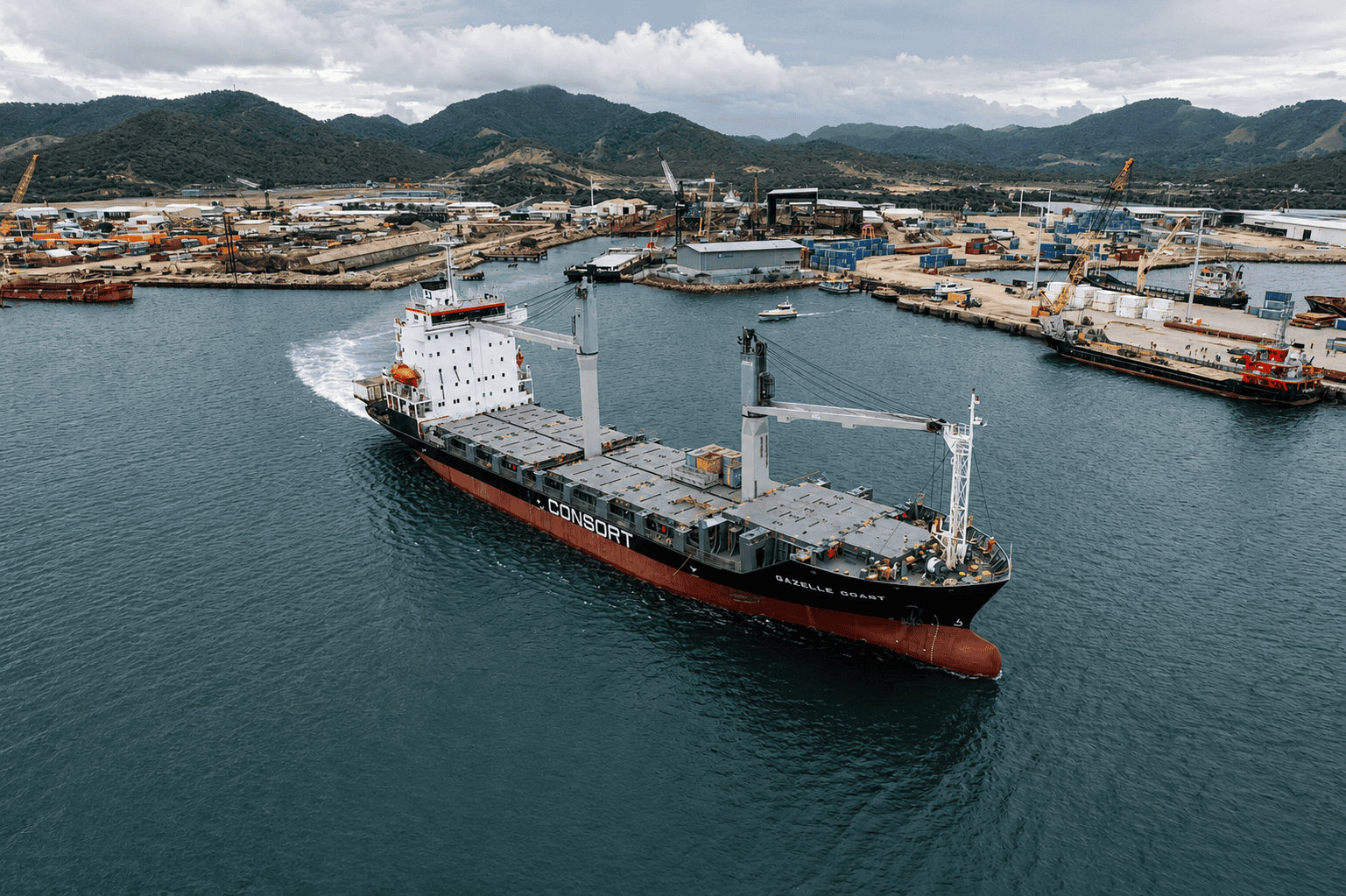
WHETHER you’re talking about ports in massive metropolitan centres—like Shanghai and Los Angeles, or the small wharves serving remote island communities—Pacific ports form the backbone of global trade and local livelihoods. In 2026, these critical gateways face a convergence of challenges that are reshaping how they are planned, managed, and financed.
Congestion, aging infrastructure, labour shortages, cybersecurity threats, and tightening environmental regulations are testing port operators across the Pacific. For smaller island ports, the pressures they face are even greater – balancing limited resources with the need to maintain reliable services for populations that depend almost entirely on imported fuel, food, and essential goods.
“We operate within one of the world’s busiest and most interconnected trading regions, yet we face diverse and intensifying pressures,” Jane Mclvor, Executive Director at the Association of Pacific Ports, said. “The challenge is creating resilient, efficient, and adaptable systems capable of supporting growing trade while responding to geopolitical uncertainty,
climate risks, and evolving shipping
technologies.”
Learning from disruption
Events over the past few years have shown the Pacific’s central role in global commerce. Trade tensions, geopolitical conflicts, extreme weather events, and shifting manufacturing patterns have all influenced shipping routes and cargo flows across the region. It has become increasingly clear that for ports, resilience depends on flexibility, strong communication throughout the supply chain, and close collaboration between governments, terminal operators, and shipping lines. Diversifying supply chains, improving infrastructure capacity, and strengthening contingency planning have become essential strategies for maintaining reliable trade. “The disruptions taught us that no port operates in isolation when one gateway faces congestion or closure; the ripple effects are felt across the board,” McIvor said.
The economic lifeline
For Pacific economies—be they major industrial nations or small island states—ports are the economic lifelines of communities. They facilitate the movement of essential goods, exports, energy products, and manufactured goods while supporting industries
including agriculture, mining, tourism, and fisheries. During emergencies, they serve as critical hubs for disaster response and
humanitarian assistance. Reliable, efficient operations at these points of entries strengthen economic resilience by supporting stable supply chains, reducing transportation costs, and ensuring communities and businesses remain connected to regional and global markets. “When a port functions well, it’s invisible to most people,” McIvor said. “When it fails, everyone notices – empty supermarket shelves, and stranded exports.”
Priorities for the future
Pacific port authorities across the Pacific have identified several key priorities going forward:
● Infrastructure investment remains critical, particularly in berth capacity, intermodal connections, cargo-handling equipment, and
terminal modernisation. Many ports are playing catch-up after years of underinvestment, while others are expanding to handle larger vessels and growing cargo volumes.
● Digital transformation is accelerating through automation, artificial intelligence, electronic documentation, and real-time data
sharing. Ports that embrace these technologies can reduce delays, improve security, and provide greater visibility to supply chain
partners.
● Climate resilience is increasingly integrated into infrastructure planning. Rising sea levels, stronger storms, flooding, heat events, and changing ocean conditions require infrastructure that is more robust and adaptable than ever before.
● Cybersecurity is also starting to be a major focus area, with ports recognising that a digital attack could paralyse operations as effectively as a physical one. Workforce development and operational efficiency round out the priority list.
The climate imperative
Managing the effects of climate change is also a must, as experts predict that cyclones and other extreme weather events will increase in intensity in the years ahead. Port authorities are being proactive by incorporating climate risk assessments into master planning, investing in resilient engineering standards, and strengthening emergency preparedness. Many are also emphasising environmental stewardship through habitat restoration, shoreline protection, and sustainable development practices. According to Mclvor, “Climate resilience has become a strategic investment that protects both infrastructure and the economic vitality of surrounding communities. “We’re no longer asking if we need to adapt – we’re asking how quickly we can do it.”
The green transition
The global shipping industry’s move towards cleaner operations represents one of the most significant changes facing ports today. Opportunities include investing in shore power, electrified cargo-handling equipment, renewable energy, alternative marine fuels, and more efficient terminal operations. However, the pace of technological change creates uncertainty regarding infrastructure investment, fuel availability, and regulatory compliance. Large international hubs and smaller regional ports alike must balance
environmental objectives with financial realities. “The transition to lower-carbon shipping is inevitable,” a maritime analyst said. “But the timeline and the technology are still uncertain. Ports are being asked to invest in infrastructure for fuels that may or may not become the standard.”
Strength through cooperation
Regional cooperation has become increasingly important as supply chains become more interconnected. Pacific ports benefit from sharing best practices, technical expertise, workforce training, and innovation while working together on common challenges. Organisations like the Association of Pacific Ports provide valuable forums for collaboration between ports of all sizes across Asia, Oceania, and the Americas. Strong partnerships help improve operational standards, strengthen regional connectivity, and ensure the Pacific remains one of the world’s most efficient and resilient trading regions. “No single port can solve these challenges alone,” a regional cooperation advocate said. “We rise or fall together.”
A decade of transformation
Looking ahead to the next decade, governments and industry leaders are being urged to focus on building smarter, more resilient, and more sustainable ports. Strategic infrastructure investment, digital transformation, workforce development, climate adaptation, and stronger public-private partnerships top the agenda. Working together across the Pacific will be essential to addressing shared
challenges and supporting innovation. Equally important is maintaining policy and regulatory frameworks that encourage investment while facilitating trade. By taking a long-term, collaborative approach, Pacific ports will continue to serve as vital engines of economic growth, international commerce, and regional prosperity across the entire Pacific. “The next ten years will determine whether Pacific ports remain competitive or fall behind,” McIvor said. “The decisions we make today will shape trade for generations to come.”