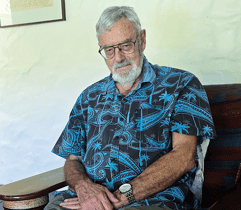
Veteran food technologist Dr Richard Beyer on why the private sector, niche products, and knowing what we’re good at are the real keys to Pacific food security.
From NASA to Tuvalu
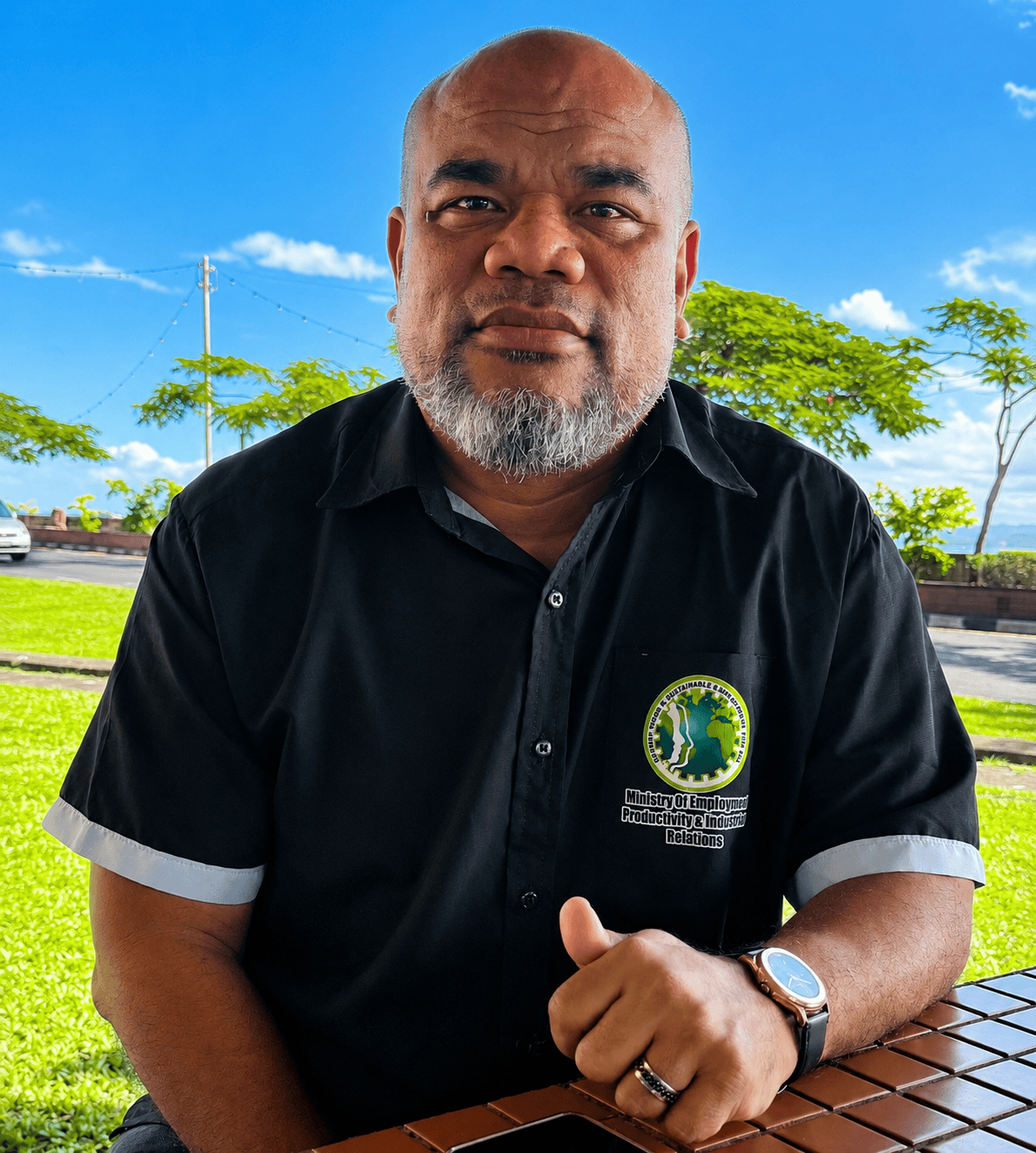
DR RICHARD Beyer has had a storied career, at one time supplying freeze-dried meals to NASA, and producing cling film from casein (milk protein). He’s spent over two decades in Pacific agriculture, including a stint as Fiji’s Permanent Secretary for Agriculture. These days, you’re just as likely to find him in Tuvalu, making coconut balls.
“I’ve just been making some coconut balls in Tuvalu, and they’re very, very good,” Beyer says.
“And I made coconut paste, which we’re going to put in a toothpaste tube. That’s the sort of thing – novelty stuff, small volume, high price.”
For Beyer, that small-scale, high-value approach is exactly where the Pacific should be focusing its food security efforts – especially now.
A world under pressure
The world is changing. The war in Iran has sent shockwaves through global food supplies. Before hostilities even began earlier this year, food security was already at a crisis point.
A World Bank report from last year painted a grim picture of worsening food insecurity driven by compounding fragility, conflict, and climate shocks. The World Food Programme’s 2026 Global Outlook reports a 20 per cent increase in the number of people facing acute food insecurity since 2020.
Sixteen countries are now classified as hunger hotspots, with Afghanistan, Somalia and Syria re-entering the list. Climate change and biodiversity loss, according to a recent United Nations Development report, are only exacerbating these pressures.
Private sector holds the key
But for Beyer, the solutions for the Pacific may be closer to home.
“The private sector is absolutely key,” he says flatly. He’s not someone who just sits on the sidelines shouting advice. He’s gotten out there and done extension training for Kai Ming Ginger and Ben’s Trading, among others.
“I trained their extension officers. All these big operations do their own extension work. And that is the future of farming.”
Why the private sector? Because too often, in Beyer’s experience, there is an inefficient use of resources, especially when we ignore our local strengths.
“Food security is making the absolute total value out of any crop you’ve got,” he explains. “It’s minimising waste, and making use of every little bit of a plant that there is.”
The potato mistake An example: potatoes.
“One of the biggest mistakes one of the previous governments made was putting a lot of money into potatoes,” Beyer says.
“I said, we’ve had five varieties of potatoes – but we grow the best dalo in the world. That’s it. The best dalo in the world. We should concentrate on what we do well. Duruka, butternut, and Tahitian chestnut—better known by its local name, ivi—these are options we have, but we’re walking past them,” he says.
Learning from others
What about learning from others already doing it well? Beyer points to Grace Road – the Korean-backed agricultural operation in Fiji that has been praised for farming outputs. “Yes, we can learn from them,” Beyer says carefully.
“They haven’t made it easy for us to learn from them. And that should be, in my view, a requirement. It should be a condition of their settling here – that they open up to locals for training groups. Because their farming techniques are really very, very good, and they have a lot to offer should the opportunity present itself.”
Not self-sufficiency, but smart trade
So, what does a food-secure Pacific look like? Not total self-sufficiency, Beyer says. At least, not yet. “We could trade self-sufficiently,” he explains.
“There are some things we can’t make. We can’t bring in cereals, for instance.” Instead, he advocates for niche products produced at the community level with a high price point – coconut balls, coconut paste in a tube, value-added goods that travel well and fetch a premium.
The optimist
Looking ahead – beyond the war in Iran, Beyer comes across as optimistic.
“Once this is over, I think we will bounce back quite well. And then money will flow again. Then it’s up to us to do it.”