AROUND the Pacific, there is increasing pressure on governments to protect the rights of communities affected by climate displacement. However, the adverse effects of climate change and natural disasters are doubly hard for communities previously uprooted by past government policies, ranging from labour migration to the health and environmental effects of nuclear testing.
The history of nuclear displacement in the Republic of Marshall Islands (RMI), and the renewed threat to exiled Marshallese communities from the adverse effects of climate change, has important lessons for today’s debates about climate mobility.
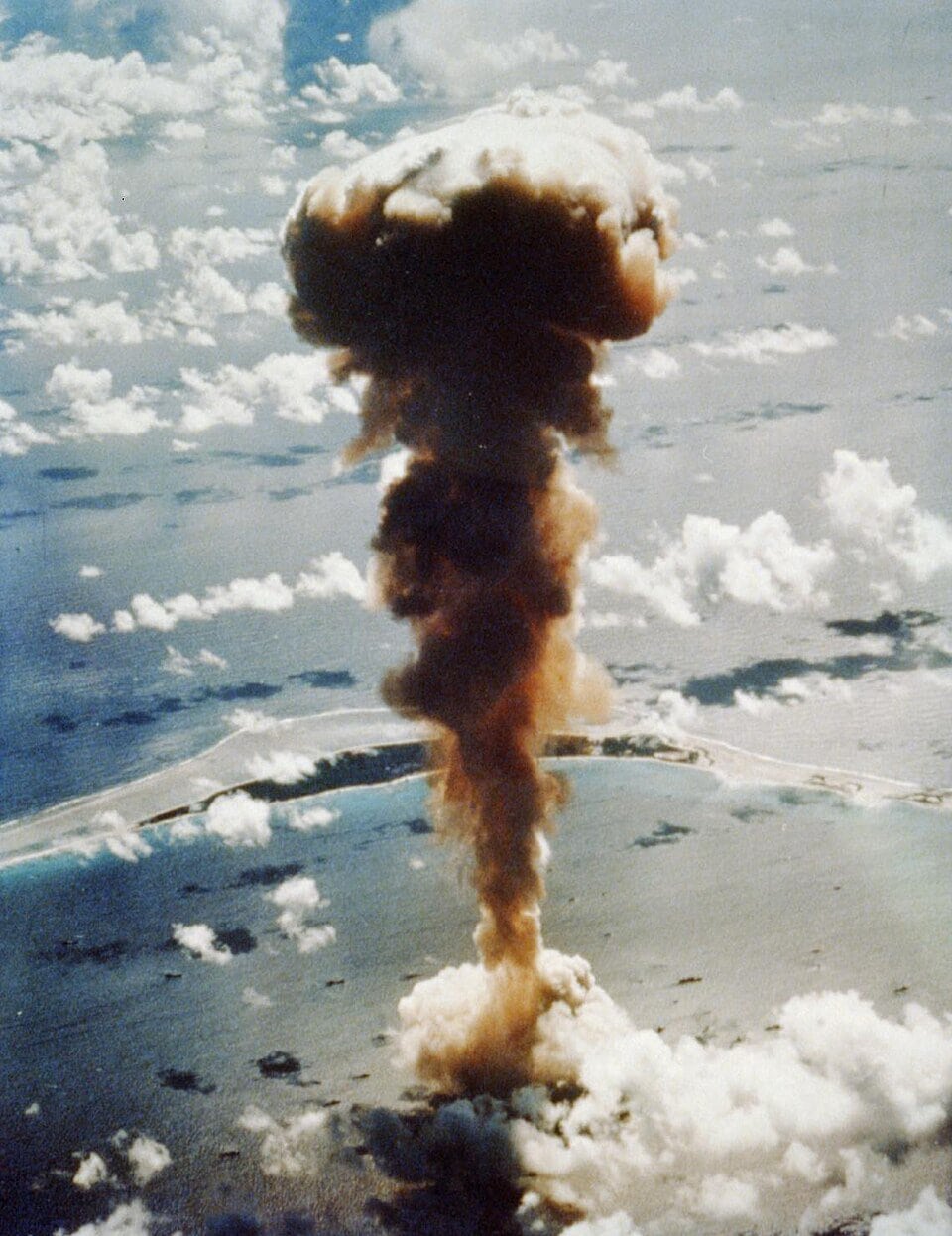
Between 1946 and 1958, the United States (US) conducted 67 nuclear tests on Bikini and Enewetak atolls in the Marshall Islands. In 1946, US Commander Ben Wyatt asked the people of Bikini Atoll to leave their islands temporarily, to allow the testing of atomic bombs “for the good of mankind and to end all world wars”. That year, 167 people were relocated to Rongerik Atoll before the US military conducted two atomic tests at Bikini.
In subsequent years, hundreds of other islanders from RMI’s northern atolls were uprooted from their home islands because of increased risk to health from radioactive contamination of their land, food, and water supplies. Today, however, some face double displacement as sea-level rise and other effects impact their lives.
Temporary displacement
Despite pledges that their 1946 relocation would be temporary, the people of Bikini were moved again from Rongerik to Kwajalein Atoll in 1948 after a UN investigation found the community was starving. They were later moved to Kili Island, but the uninhabited island also had limited opportunities for fishing and agriculture, and some islanders were moved again to Jaluit in 1956. However, after a cyclone destroyed the new settlement on Jaluit, the Bikinians were forced to return to Kili in 1958.