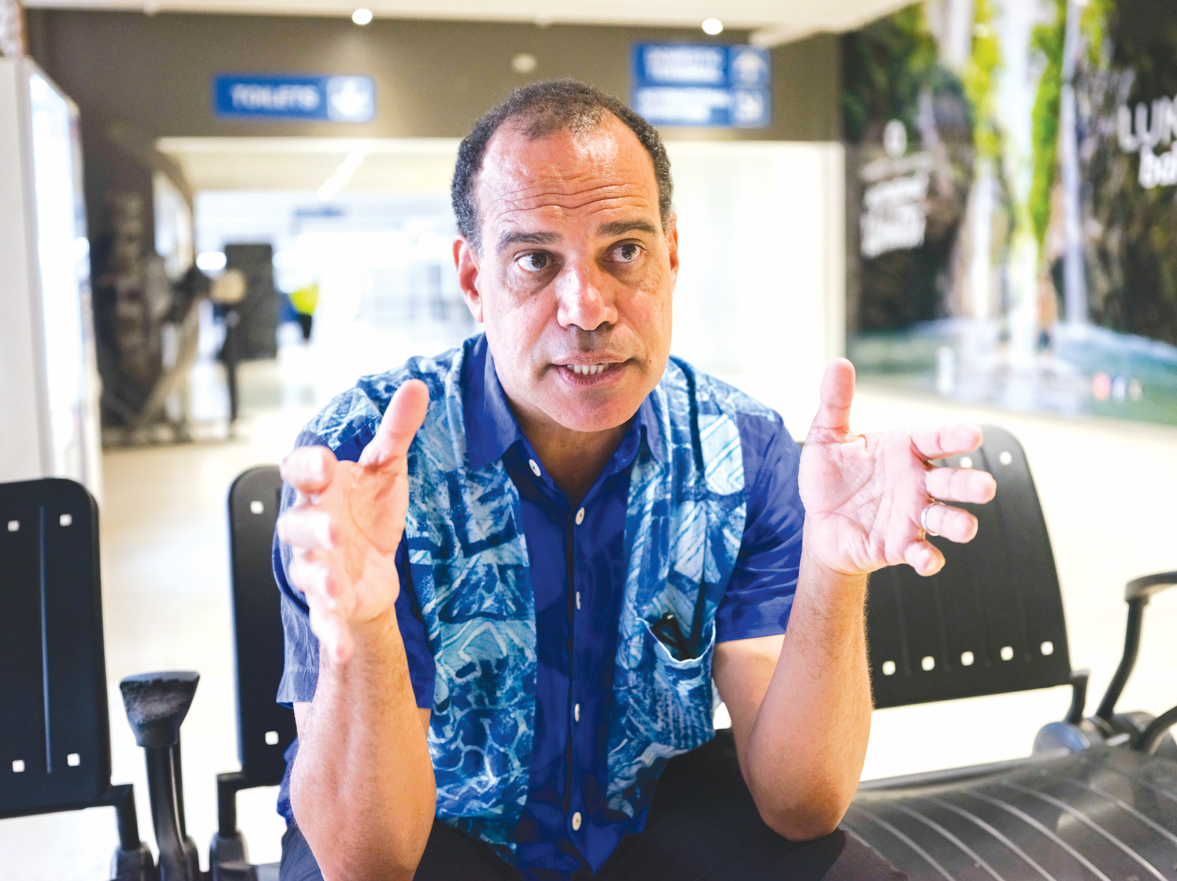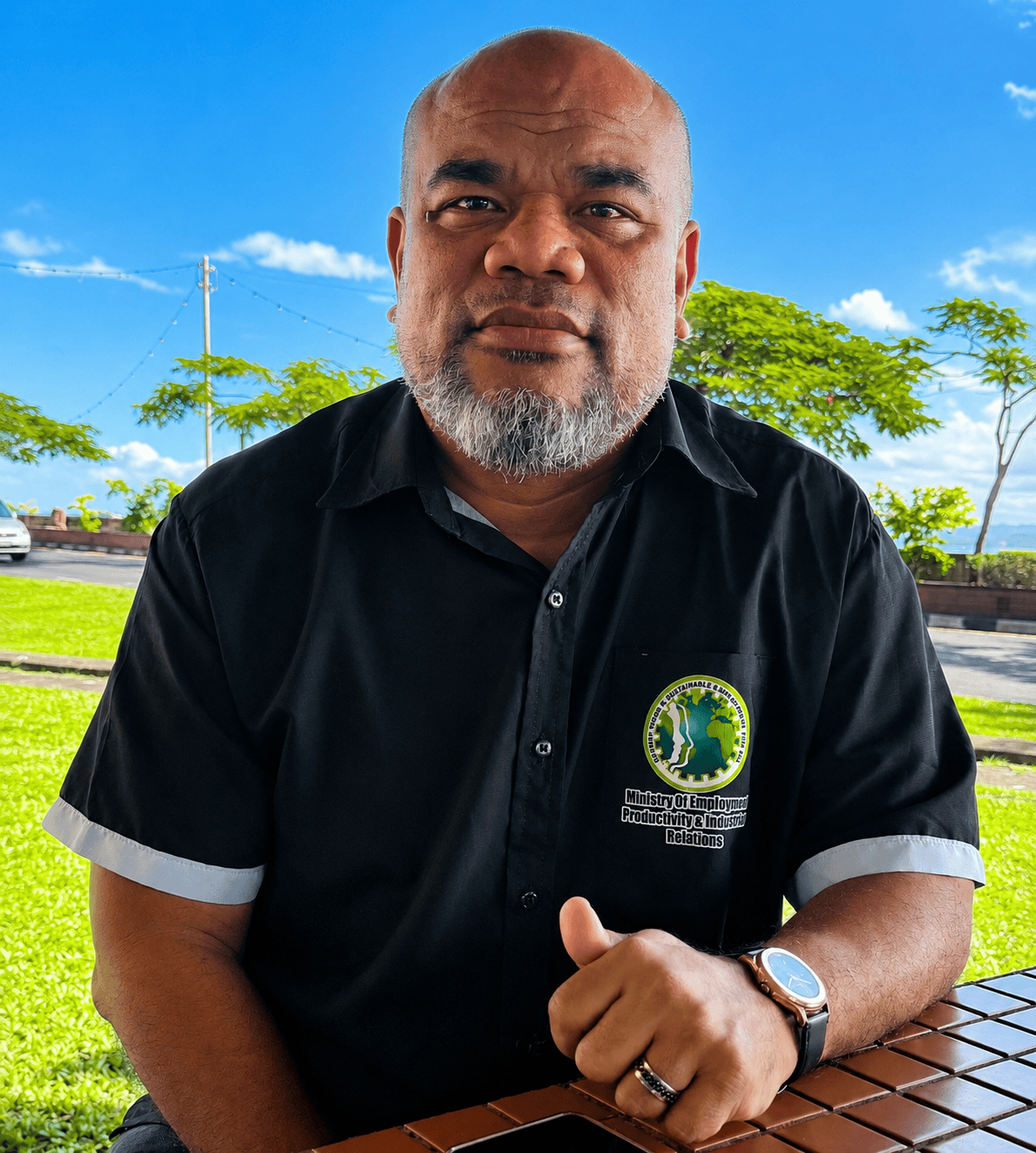
DISABILITY inclusion can end up being just a requirement to be fulfilled, and that is not good enough, according to Kumon Tarawa.
“Let’s change our buildings. Let’s change the roads, our infrastructure. If we’re not doing that then it’s all talk, talk, talk. The practical implementation is not there,” Tarawa said, highlighting the need for real, practical action rather than token compliance.
He would know, as he lives with a disability acquired at a young age. “I suffer from really bad arthritis… This is due to injuries.
From early childhood, I played a lot of sports, played a lot of rugby when I went into high school, and then my injuries were sustained there.”
The effects seemed to worsen with time, so much so that getting from point A to point B is a challenge as he has to fight through the pain.
Having a disability led to a real change of circumstance for him, and one aspect that was quite negatively affected was his mental health.
“It was really sad to say it because I felt like I was no longer useful in life. Seeing my friends play touch rugby, playing sports, playing the sports that I love, having fun, just socialising… And I’m here walking slowly, limping and always in pain, struggling to sleep.”
As an advocate for disabled people, Tarawa has been involved with the disabled community in Fiji and the region for over a decade. A good portion with disabled sports – something he is clearly proud of as he talks about how Fiji now has a wheelchair rugby team, The Rolling Fijians.
In his current role as the reintegration coordinator at the Ministry of Employment and Workplace Relations, Tarawa ensures that disability issues are addressed in every meeting and session he runs. He believes that education is the cornerstone of lasting change, calling for inclusive education to be made a core unit at every level of study – not just an elective.
“Teachers at universities, if you’re doing education, you’ve got to be doing inclusive education as a core unit,” he said.
Inclusion is happening albeit at a slow pace, he said.
Inclusive sport is one of the most powerful advocacy tools available. The recent Coke Games were an example where students with disabilities competed in long jump, shot put, and discus as an exhibition.
Yet even there, he noted that media coverage was, in his opinion, somewhat lacking, showing that there is still a way to go in normalising disability.
Ultimately, “Change will not come until we all play our part,” he said, urging leaders to demonstrate commitment through tangible changes like accessible buildings, footpaths, and public transport, rather than just endless talk about policies.
“Where are the accessible buses?” he asks, pointing to the fact that he finds it hard to get on and off the bus. Navigating those steep steps is, for him, a real challenge. “Some buses have seats designated for disabled people, but able-bodied people come and sit there.
There is no monitoring, and some people just don’t have manners.”
It again comes back to leadership. The government needs to take the lead on these issues, Tarawa said.
“Our leaders need to be the ones demonstrating, starting with these simple steps.
Disability must not be seen as a disease to be cured, but a condition to be accommodated. The health system, he says, still largely treats disability as a medical problem requiring medication when what is really needed is a shift in attitude and infrastructure.
Looking ahead, Tarawa hopes to see at least a 40 per cent improvement in attitudes within the next five to ten years. He calls on the disabled community to stop complaining and start taking small, intentional steps every day.
To the general public, his message is simple: “We are human beings as well. We are very capable. We can do what you can do. But it takes time. It’s not hard to understand disability. It’s about you asking questions. And first and foremost, see us as human beings.”