WHEN you pick up a bag of desiccated coconut at your local grocer in Suva, Port Vila or Honiara, you probably don’t think about the paperwork behind it. But getting that product onto the shelf—especially if it’s bound for export—requires ticking a lot of boxes.
One company helping Pacific producers tick those boxes is aptly named: Quality Solutions.
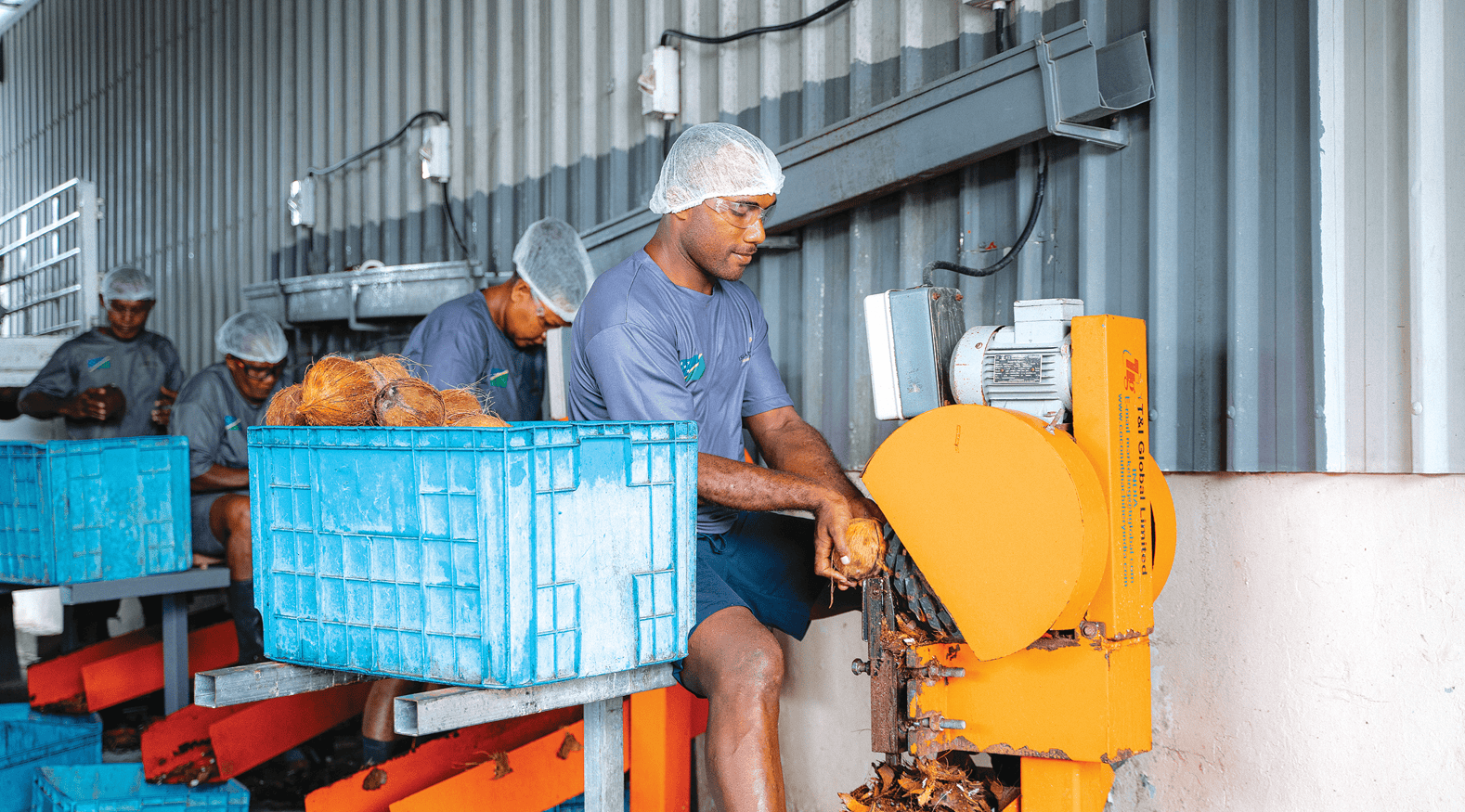
Based in Vanuatu, the regional firm just completed HACCP verification for Islands’ Own, a Solomon Islands producer of desiccated coconut. In fact, Islands’ Own has now become the sole desiccated coconut processor in the country.
Selling to your local village or neighbourhood market is one thing. But breaking into the big leagues—where the real money is—demands internationally recognised certification.
HACCP, which stands for Hazard Analysis and Critical Control Points certification, is one of the keys that unlocks that door.
In plain language, it is a verification that any food product is made in a safe, hygienic way.
For Dion Palu and Quality Solutions, providing that peace of mind is something that keeps them going.
“It’s fantastic that we’ve been able to help a Pacific Island processor of desiccated coconut achieve an international standard so they can export to formal markets,” Palu says.
“That benefits the farmers directly with better pricing and consistent buying. And it was a team effort from within the three Pacific Islands.” A member of Dion’s team at Quality Solutions—who played an integral role in helping Islands Own make the grade—certification officer Ronaldine Tchivi, said she felt a real sense of achievement.
“Helping a regional company like Islands’ Own Ltd achieve certification is incredibly fulfilling for me. It feels like a significant milestone, knowing that my support and support of everyone involved in this journey have contributed to their success and growth. Seeing a local business reach such an important goal not only validates the effort and expertise that Quality Solutions bring but also reinforces the value of supporting regional companies in their journey toward excellence. It’s truly rewarding to be part of their development and to help them open new doors for their future.”
That team effort was a lifeline for Ezra Tan, Managing Director of Islands’ Own. For him, obtaining HACCP certification wasn’t just a badge of honour – it was a strategic necessity.
“Certification has had a tangible impact on Islands’ Own, both operationally and commercially,” Tan says.
“While we started out in pursuit of certification to strengthen food safety and operational systems, it has also helped make us a more credible, reliable, and professional food manufacturer within the Solomon Islands and the wider Pacific region. One of the most immediate impacts was increased customer confidence.”
That boost in confidence is exactly the kind of result Dion Palu says is possible for any company willing to go through the process. And there are other benefits too, most importantly, market access and revenue growth. One client reported a 300 per cent revenue increase following certification.
Palu says that figure is real, and it’s why Quality Solutions sees itself as playing an integral role in solidifying economic cooperation across the region. “By providing practical cross border professional services among MSG countries—even if it’s virtual—and allowing knowledge transfer between Pacific Island countries, we can strengthen the regional value chain and promote shared economic participation across multiple island states.”
Sunita Sundar, a food technologist based in Suva, conducted the internal audit for Islands’ Own. Her job was to identify existing gaps in the production system and design corrective measures. She says certification shouldn’t be viewed as a cost, but as a future investment.
She said the most pleasing part of the whole process was the strong regional collaboration. Personnel and experts from Fiji, the Solomon Islands and Vanuatu were involved.
“Having people and companies from the region involved in this type of work is important,” Sundar says.
“Regional professionals understand the local environment, operational challenges, and realities faced by Pacific food manufacturers. Building local capability helps make food safety knowledge more accessible and sustainable while reducing reliance on overseas support. It also demonstrates that Pacific businesses and professionals are capable of achieving and maintaining internationally recognised standards.”
Ezra Tan agreed and was effusive in his praise for the assistance and advice Quality Solutions provided to help Islands’ Own attain certification.
“I would like to thank the team from Quality Solutions for making this a reality, and for their guidance and professionalism,” Tan says. “Together, we showed that Melanesian expertise is powerful, practical, and capable of delivering world-class outcomes despite the challenges we face as island nations.”