COFFEE futures have been on an extended price rally for months. Supplies are becoming tighter and less predictable due to extreme weather, which is itself a direct consequence of climate change.
World Coffee Research—surveying a growing body of scientific literature—found evidence that confirms earlier predictions: by 2050, the land area suitable for Arabica coffee production could shrink by 50 per cent. Researchers are particularly concerned about Brazil, the world’s largest coffee producer, where vast, hot, and increasingly dry regions have already become unsuitable for cultivation.
A study published in PLOS ONE echoes World Coffee Research’s findings, warning that Arabica faces up to a 50 per cent loss of suitable growing areas by mid-century in major producers such as Brazil, Vietnam, Indonesia, and Colombia. Smaller producers—such as in the Pacific Islands—are also likely to take a serious hit.
Kaveh Zahedi and Hideki Kanamaru, natural resources officers with the UN Food and Agriculture Organization’s Office of Climate Change, Biodiversity and Environment, point to a mounting stack of research sounding the alarm.
“By 2050, up to half of the current coffee-growing land may no longer be viable due to a changing climate. Without swift and substantial action, the viability of coffee as a global commodity could be in jeopardy,” they noted. Scientists agree that the drought hitting major coffee regions, particularly Brazil, is without precedent. Soil moisture has fallen sharply, while rising temperatures are driving higher evaporation and worsening the damage. On the ground, the data are already troubling. Soil moisture records from one of the world’s most productive coffeegrowing regions—Fundação Procafé in Minas Gerais—show a water deficit of 300 millimeters at the end of the dry season in October 2024.
One NOAA–UCLA study finds that since 2000, increased evaporation driven by higher temperatures now accounts for 61 per cent of drought severity, underscoring that climate change is intensifying drought beyond simple rainfall shortages.
Papua New Guinea’s (PNG) diverse and dramatic landscapes are home to 10 key coffee-producing provinces – and a multitude of unique micro-climates. Quality Bourbon, Typica and Blue Mountain Arabica varietals planted throughout the high altitudes of PNG’s coffee lands provide delicious specialty coffees and a wide range of flavour profiles.
While Papua New Guinea supplies less than one per cent of the world’s total coffee exports, it remains the second-largest producer of washed arabica coffee in Asia. Coffee is the second-most important agricultural commodity, accounting for more than a quarter of agricultural export income. It is grown in 18 of 22 provinces, on hundreds of thousands of farms, and is the primary cash crop of people living in highland regions. The Geneva-based International Coffee Organization ranks PNG as 17th on the global export ranking system. Exports estimate that 89 per cent of all PNG coffee production is from smallholder producers.
According to Israel Awute, owner of PNG-based Awute Coffee: “Climate change brings us both challenges and opportunities. For instance, in previous years here in PNG, coffee production and supply was concentrated within the traditional coffee season. Today, this rhythm has been altered due to shifting climate patterns. Coffee is being produced not only during the regular season but also in the off-season periods.”
For Dr Miguel Altieri, a professor of agroecology at the University of California, Berkeley, much of the crisis is intertwined with how coffee is grown.
“Brazilian Arabica coffee production is threatened by high temperatures linked to climate change. The abandonment of traditional systems where coffee was grown under various shade trees exacerbated such vulnerability,” he explained.
This could be a game changer.
“The only sensible adaptation strategy is therefore to return to biodiverse, resilient coffee systems, as done by thousands of small farmers in Central America and parts of Colombia.”
The economics facing farmers are as troubling as the changing climate. Fairtrade International’s senior advisor on coffee, Colleen Anunu, underscores that many growers have endured decades of low prices that have left deep scars.
“Even in today’s high-priced market, coffee farmers are largely unable to meet their costs of production, let alone achieve a living income.”
Dr Ernesto Méndez, professor of agroecology at the University of Vermont, has spent 26 years working with coffee smallholders. His conclusion is blunt.
An extreme weather event, could wipe out an entire season’s cherries.
If there is a hopeful thread, it lies in the fact that adaptation is no longer an abstract idea. It is already happening in fields and hillsides around the world.
Organisations such as World Coffee Research and Embrapa are racing to breed more resilient coffee plants and to support agroforestry, soil conservation, and targeted irrigation strategies. The timeline is tight; climate-savvy innovation has become essential to protect livelihoods, maintain supply, and preserve coffee as a global staple.
About PNG coffee
COFFEE is not endemic to the Pacific and was likely introduced to Papua New Guinea (PNG) in the 1890s along with German occupation, and commercial production began in the 1920s.
Arabica seeds from Jamaica’s Blue Mountain region laid the foundation for the coffee industry in a land of difficult terrain, tropical disease, a challenging economy, and over 800 languages and cultures.
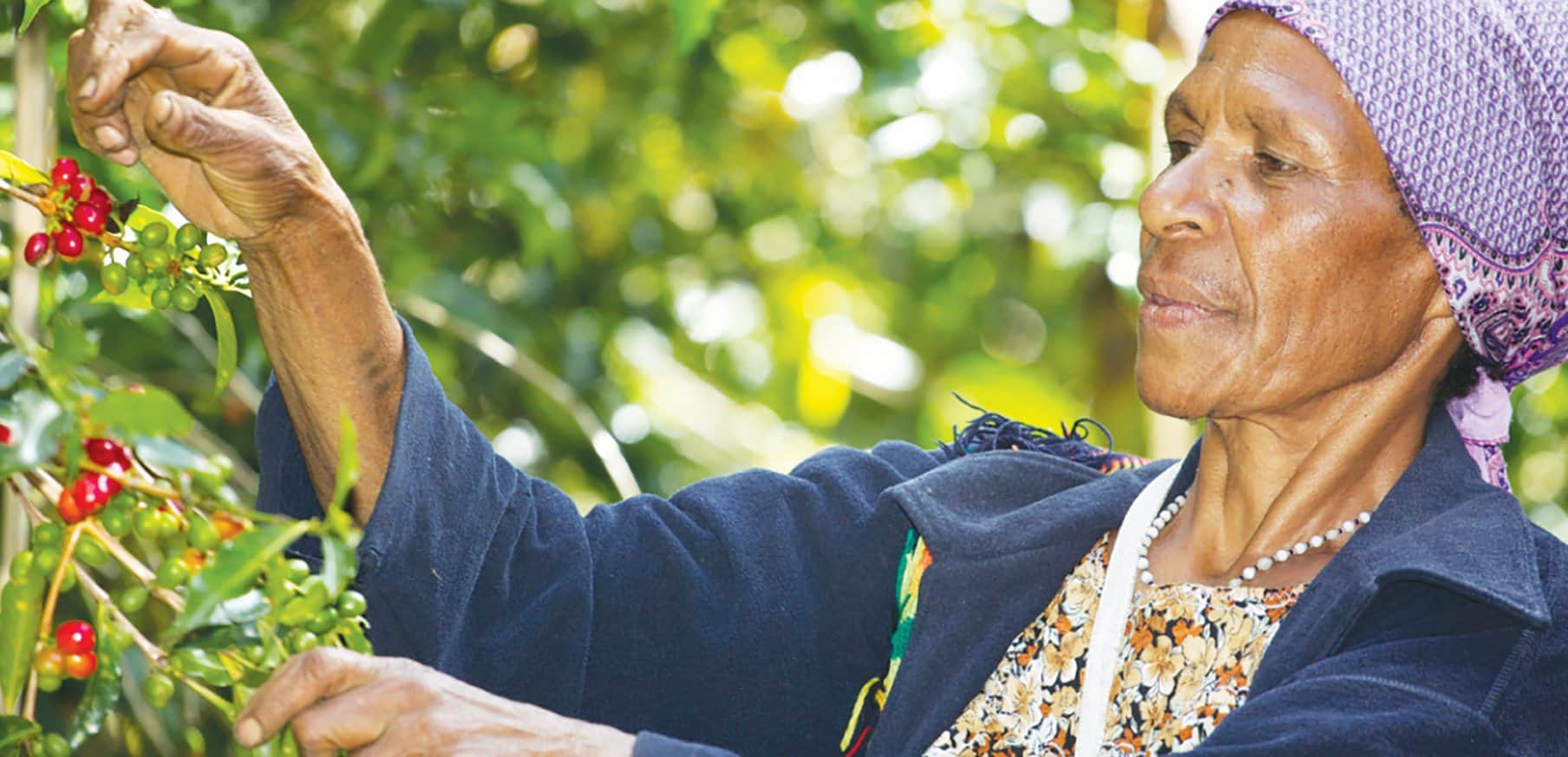
Smallholders are the backbone of PNG’s coffee industry, operating gardens mainly in remote areas. The lack of a comprehensive national infrastructure— roads and government support systems—due to weather conditions and dense jungles, have made expansion difficult.
The rich highland soil offers opportunity for small farmers and family units to enter semi-commercial coffee bean production. This has been enhanced by industry efforts to improve soil management and educate farmers.
Coffee plants need the right balance of water, nutrients, and environmental conditions to be healthy. Factors such as altitude, wind, drainage, humidity, and temperature all affect the flavour and aroma of the coffee.
Papua New Guinea has all the elements needed to grow healthy coffee plants. The challenge is to teach the farmers in their remote homes to meet industry standards and international expectations.
Most exported coffee comes from the Eastern and Western Highlands – smooth and sweet, with a medium body and acidity level.
Experts describe it as “reminiscent of dark berry tastes, and the aftertaste is dark chocolate, yet clean’’. Coffee remains a cash crop but provides income to between two and three million people – around 20 per cent of Papua New Guinea’s population.
Earning $USD100 million annually, coffee contributes around 6 per cent of the GDP and 13 per cent of all agricultural export revenues.