THERE is a particular irony unfolding right now that I find myself unable to ignore. For years, even decades, climate advocates, scientists, and Pacific voices have stood at podiums, written reports, attended COPs, and pleaded with the world to reduce fossil fuel consumption. We produced adaptation and mitigation frameworks, roadmaps and targets. We modelled scenarios and begged.
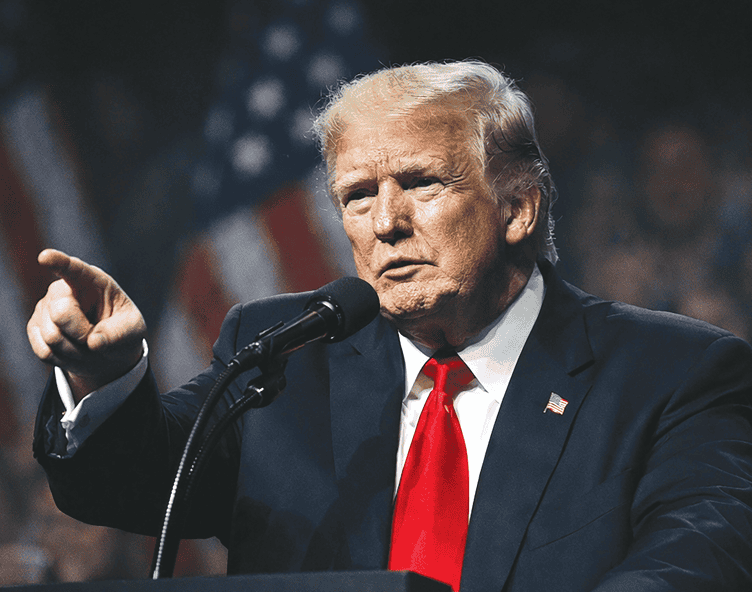
And then along came Donald Trump. The man who pulled the United States out of the Paris Agreement, declared climate change a hoax, and signed executive orders with evangelical enthusiasm. He may have done more for global fuel conservation in a matter of months than the entire post-industrial environmental movement managed in thirty years.
Not by design, of course. But the trade war turbulence, the economic disruption rippling outward fom Washington’s erratic policy lurches, has sent fuel prices spiralling in ways that are now forcing governments and ordinary people to do exactly what climate scientists have been asking them to do all along: stop wasting fuel. Use less. Plan ahead. Walk when you can. Turn off the engine.
Consider what is happening in Fiji right now. Fijian Prime Minister Sitiveni Rabuka held a press conference to address the fuel crisis directly, urging Fijians to carpool, to be deliberate about vehicle use, to reduce consumption as a matter of national responsibility. The government released an official directive, bearing the national coat of arms, outlining new measures now in effect across the civil service: carpooling across ministries is required, government meetings are to go virtual where possible, vehicles must be switched off when not in use, and private use of government vehicles during official hours is strictly prohibited. That last line is worth re-reading: Vehicles must be switched off when not in use.
Anyone who has spent time around Albert Park and Fiji’s government buildings in Suva will understand exactly why that line lands the way it does. The idling ministerial vehicle is practically an institution in itself. Black SUVs and double cab pickups parked in rows outside parliament and ministry offices, engines running, air conditioning humming, drivers waiting, sometimes for hours. It is a ritual as familiar as the agenda item that never gets resolved. The fuel bill for that particular tradition for the Fijian government over the decades would be staggering to calculate. And yet no amount of climate messaging nor regional framework ever managed to address it. A fuel crisis did.
The Facebook comment circulating alongside the Fiji Times article captures the public mood with more accuracy than most policy briefs manage. Someone suggested that the government carpool opposition and government ministers together, so they can begin debating from inside the vehicle and save electricity in parliament too. It is funny because it is not entirely wrong.
This is not to make light of what is a genuine and painful economic situation for ordinary people, particularly the most vulnerable, for whom rising fuel prices translate directly into rising food prices, transport costs, and diminished livelihoods. The burden of this crisis is not shared equally, and that matters enormously. The Fijian government’s decision to impose a 20 per cent pay cut on ministers and members of parliament, and to halt overseas ministerial travel, is framed explicitly as burden-sharing “setting the example as we ask the nation to adjust and respond responsibly.”
Whether it holds is another question. But the language itself is impressive.
What strikes me most, sitting with these images from home, is how quickly behaviour changes when the economic incentive shifts.
The political will that could never be conjured by appeals to parts per million or sea level projections or coral bleaching events materialised almost overnight when the price at the pump became impossible to ignore.
This is not a new observation, as economists have argued for decades that carbon pricing works precisely because it makes the cost of inaction visible and immediate. But there is something clarifying about watching it happen in real time, in your own country, with your own government issuing directives that climate advocates only dreamed of seeing. Trump did not set out to be an accidental environmentalist.
He set out to reassert American economic dominance through disruption, and the disruption has cascaded in directions he neither intended nor would celebrate. But the outcome is real. Governments in the Pacific and beyond being compelled to reckon seriously with fuel dependency. The Fijian government is now enforcing—by directive—behaviours that green transport advocates have championed for a generation. The tragedy is that it took a crisis to get here. The greater irony is who helped manufacture the conditions for it.
For those of us who work at the intersection of climate science and Pacific governance, there is a lesson worth sitting with: the most powerful climate message may not be about the future at all. It may be about what things cost right now, today, when the engine is still running outside the government building at Albert Park in Suva.
Patricia Mallam is a communications specialist with experience across the region in a number of key agencies. She is a PhD Scholar with a passion for the environment