DESPITE 10 years of discussions, development, and technical research, the fisheries companies which take billions of dollars of tuna from the Pacific remain relatively unmonitored.
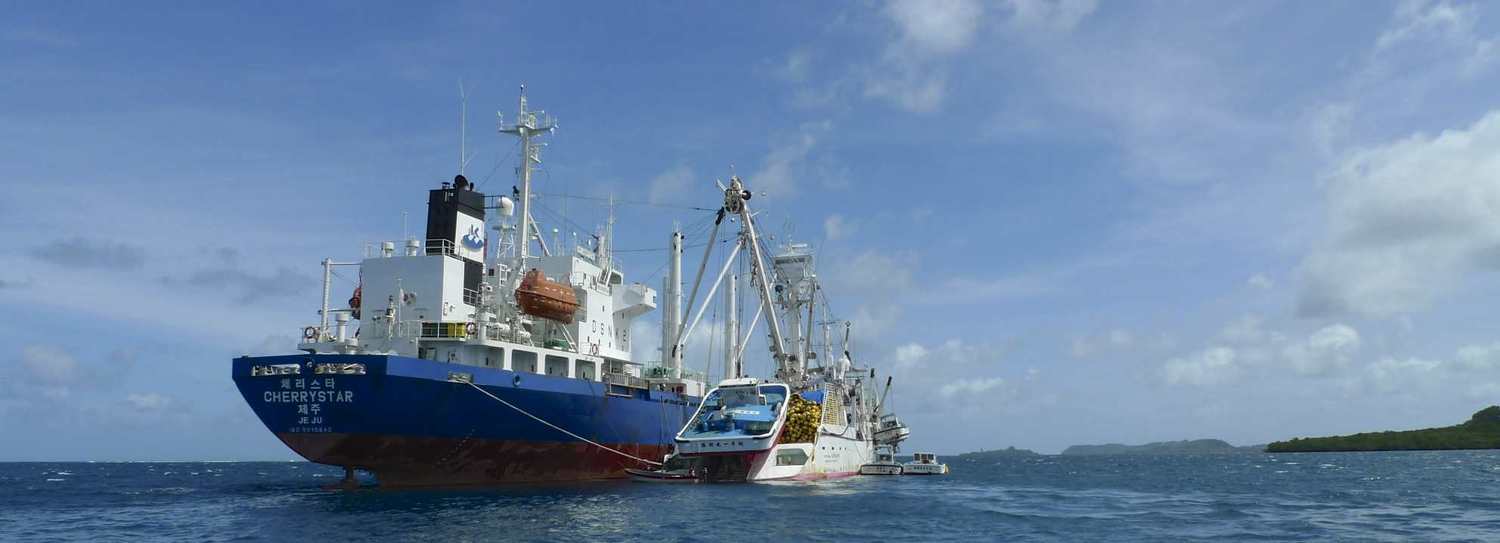
In the Western and Central Pacific region, fleets transship nearly one million metric tons of fish, worth $USD6.5 billion, every year to markets in the Americas, Asia, and Europe. Some of those tuna end up on Pacific shelves.
It has been 15 years since the Western and Central Pacific Fisheries Commission (WCPFC) updated its transshipment rules, which are no longer up to date or in line with United Nations Food and Agriculture Organization recommendations.
Some advocacy groups claim that the WCPFC’s rules lag behind those implemented by the South Pacific Regional Fisheries Management Organisation and the North Pacific Fisheries Commission. Those organisations have adopted transshipment rules which place greater accountability on fleets.
Among the dangers posed by transshipment—especially on the high seas—is that it allows fleets to escape examination of what they have caught. Illegal fishing is not new and huge efforts have been made in the Pacific to ensure that the tuna catch is regulated.
A regulated industry means sustainable stocks, long-term employment, and consistent foreign exchange for small Pacific territories. It also provides updated scientific data to manage, track, and observe the health of tuna species, sharks, and marine life, including migratory birds.
According to the Pew Charitable Trust, tuna fisheries of the Western and Central Pacific Ocean represent more than half of global tuna catch and are worth more than $USD21 billion each year.
“But with such heavy fishing pressure and growing demand for seafood worldwide, there’s no guarantee that this region can continue to produce at such levels,” said Leah Wesiser, Pew’s Communications Manager.
Pew has pushed for WCPFC members to adopt what is described as “forward-thinking, science-based measure for managing tuna”.
With fleets operating over vast expanses of ocean, it is not possible for island states to physically monitor operations. While Australia has provided patrol boats to at least six Pacific countries, the cost of fuel and provisions often means the vessels are often tied up in their home ports.
Fiji’s Navy Commander, Captain Timoci Natuva, told a parliamentary sub-committee that each sea mission cost taxpayers $FJD80,000 for a 14-day patrol of the Exclusive Economic Zone (EEZ).
The task is compounded when fishing vessels go dark or turn off their Automatic Identification Systems.
“We don’t have the capacity to monitor them,” Natuva said.
“That’s why we rely on other new technologies that are coming into place to be able to provide that capability.”
Costs have forced Fiji’s navy to shift toward conducting intelligence-based patrols, working closely with partner agencies to gather information and target specific areas of concern.
Australia, France, and New Zealand provide occasional surveillance patrols by air and sea to support the Pacific effort. And earlier this year, New Zealand provided maritime drones, which will allow cheaper monitoring and surveillance of key sea lanes and the EEZ.
But there is also the need for fisheries agencies to see exactly what happens on board fishing vessels on the high seas. Ten years ago, serious efforts were made to place video cameras on board fishing boats to support the work of fisheries observers.
The cameras and sensors placed on critical equipment were designed to allow authorities to better monitor and record a vessel’s activities remotely. This would allow more effective transmission and analysis of data, to help governments monitor activities and create legislation protecting the oceans and users.
Efforts are now underway in the Food and Agriculture Organization to draft voluntary guidelines on transshipment. There are no global guidelines to help fisheries managers monitor and control the movement of catch between ships.
But if countries agree to adopt a global framework of rules to help flag, coastal, and port states, Pacific nations might just see a rise in revenue and a decline in illegal activities.
Better control will mean greater oversight and nobody will be let off the hook.
Four best practices on tuna transshipment:
- Transshipment authorisation procedures: Vessel flag States should provide relevant authorities with verification of authorization, which are documents showing that the vessels on both sides of the transshipment interaction—the fishing vessels offloading the fish, as well as the carrier vessels onboarding the fish—are allowed to transship. Such verification should be limited to fishing and carrier vessels flagged to members of the RFMOs where the transshipment is taking place.
- Pre-transshipment notification: Vessels should be required to notify relevant authorities in advance of intent, location, and time of transshipments. Before granting authorisation for transshipment, the flag States must confirm that the vessels follow monitoring system reporting and other requirements that help track and report what is caught by a vessel, such as electronic monitoring or observer coverage.
- Post-transshipment reports: Observers should submit key transshipment details, such as the species and quantities of fish, to all relevant authorities.
- Information sharing: Regional Fisheries Management Organisations should adopt minimum standards for transshipment and landing declarations, in order to enable consistent information sharing and data verification across RFMOs and flag, port, and coastal States.
Source: The Pew Trust