SINCE 2001, the association Moruroa e Tatou has brought together former Mā’ohi workers who staffed the nuclear test sites in Mā’ohi Nui (French Polynesia), as France conducted 193 atmospheric and underground tests on Moruroa and Fangataufa atolls.
Today, the nuclear workers and military personnel who staffed the test sites during the 20th Century are ageing and dying. But in a country still grappling with environmental damage and significant levels of thyroid cancer and other illnesses, a new generation has stepped up to continue their elders’ quest for recognition and compensation.
Throughout the three decades of French nuclear testing in the Pacific between 1966 and 1996, thousands of Mā’ohi workers travelled to Moruroa, Fangataufa and Hao atolls to work as labourers, truck drivers, scuba divers, and barge operators. Some were exposed to hazardous levels of ionising radiation and, in later life, developed health problems they attribute to their time working on the atolls.
After the last French nuclear test in January 1996, citizens groups called on France to address lingering health, economic and environmental impacts. Former personnel who worked at the test sites came together to campaign for compensation, as well as environmental remediation and the abolition of nuclear weapons. In 2001, Tahitian trade unionist Roland Oldham, French researcher Bruno Barrillot, and church deacon John Taroanui Doom co-founded Moruroa e Tatou (Moruroa and Us).
For nearly 25 years, Moruroa e Tatou has campaigned for improvements to compensation laws adopted by the French National Assembly in late 2009, which established the Compensation Commission for Nuclear Test Victims (CIVEN). Over the last decade, Moruroa e Tatou has led the campaign to strengthen this compensation legislation, by removing provisions that said there was “negligible risk” of exposure to radiation on Moruroa and Fangataufa.
Sadly, however, three key leaders of the association all died within a short period: John Doom in December 2016; Bruno Barrillot in March 2017; and association president Roland Oldham in March 2019. After a few years of re-organisation, younger activists have now stepped up to revitalise the association and continue its work.
New generation
Today, Moruroa e Tatou has taken on new life, with a younger generation of leaders and the support of the Ètārētia porotetani mā’ohi (EPM) – the Mā’ohi Protestant Church that is the largest religious denomination in the country. For EPM leaders like General Secretary Reverend Hinatea Marotau, “the church must speak with a prophetic voice on the nuclear question, to address issues of justice and dignity.”
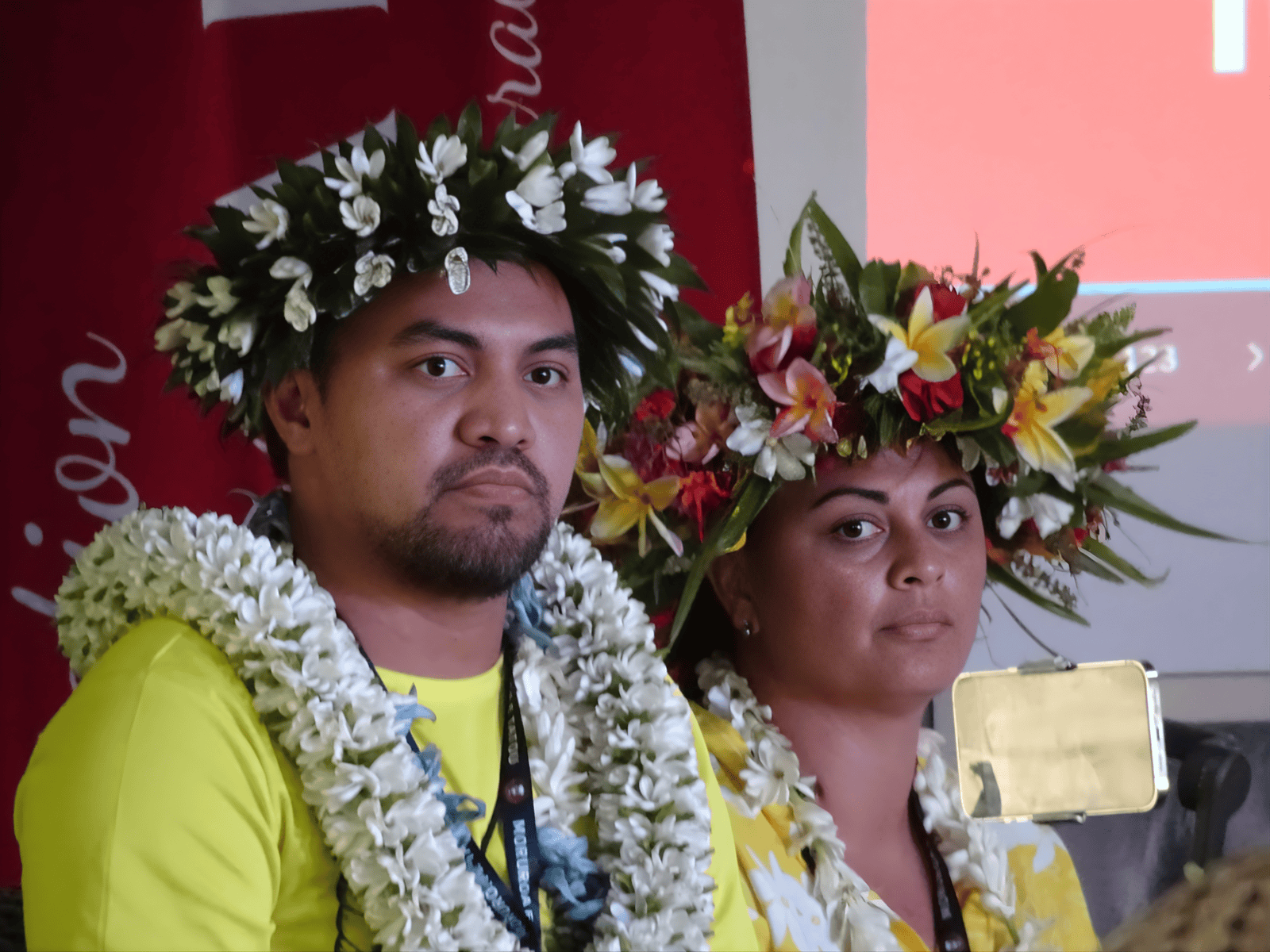
Moruroa e Tatou has established a new office at the EPM’s Pā’ōfa’i headquarters, in the capital Papeete. In October, the association and the EPM co-sponsored a workshop on the island of Moorea, to educate association members, church delegates and a new generation of Pacific youth about nuclear justice and climate justice (Disclosure: attending the conference, Islands Business was hosted on Moorea by the EPM and parishioners from the Ma’atea district).
Local delegates from the islands of Mā’ohi Nui were joined by representatives of the Pacific Conference of Churches (PCC) and church and community representatives from Kiribati, Marshall Islands and Australia, which also served as Cold War nuclear test sites. Christian World Mission co-ordinated a delegation of young people from Papua New Guinea, Solomon Islands, Fiji, Tuvalu, Nauru, Kiribati, Cook Islands, Tonga, and Samoa, to listen to the nuclear survivors and discuss the Treaty on the Prohibition of Nuclear Weapons.
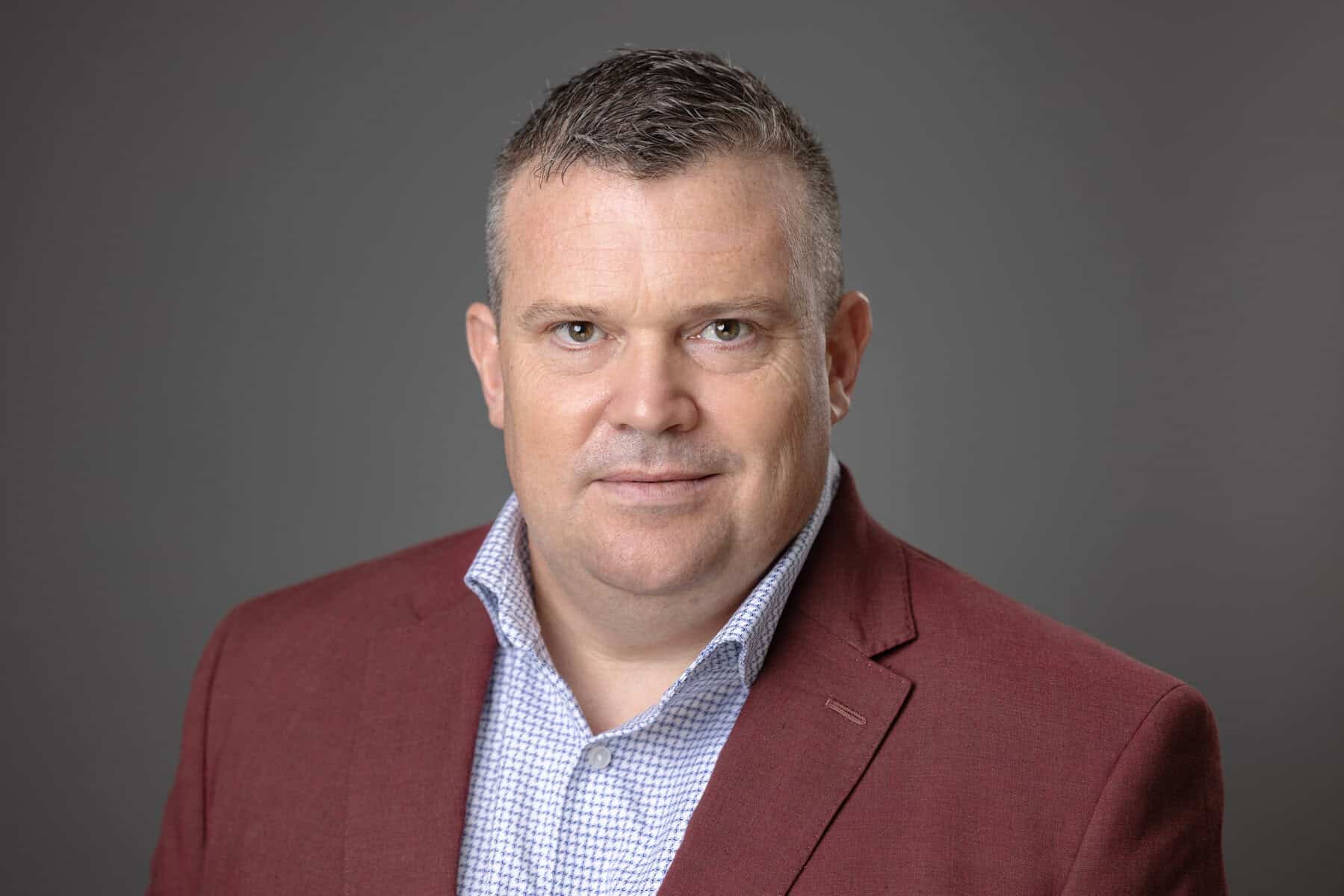
After the workshop, Moruroa e Tatou’s president Tevaearai Puarai spoke with Islands Business about his path to activism, and the challenges facing nuclear survivors.
“To be honest, at first I didn’t know much about Moruroa e Tatou,” Puarai explained. “As a young person worried about our nuclear history and the legacies that have been left, it’s sad not to know about the history of this group. However, I started to attend some meetings, encouraged by my father, who was president of the Moorea branch of Moruroa e Tatou.
“Even though I just sat in the corner, I watched people like association president Roland Oldham, who was the incarnation of this struggle. I learnt a lot from the older people, and began to learn about our nuclear history, bit by bit.
“After the death of the three men who were the pillars of our struggle, my father ‘volunteered’ me to the post of secretary of the association on Moorea,” Puarai said.
“With their deaths, many of the former Moruroa workers dropped away, fearing that the association would die as well. Some even withdrew their applications for compensation, which had never been resolved in France.
“But as the older generation passes on,” he said, “it is important that we retain their vision and their fight. That’s why we renewed the leadership of the association, and I became president.”
Marking the anniversary
In July 2026, Moruroa e Tatou will join the EPM, political parties, and other anti-nuclear associations to mark the 60th anniversary of the first French test on Moruroa. Codenamed Aldebaran, the atomic weapon exploded into the atmosphere above the atoll on 2 July 1966.
For Tevaearai Puarai, “the 60th anniversary of the first test is a date we should remember. We need to come together, to unite with each other and with our Mother Earth, which has suffered all the environmental consequences of the tests.
“Drawing on the knowledge of our elders,” he said, “we can talk about these issues. As many of them don’t speak French, we can act as a bridge to future generations. This is not about turning the page, rather it’s about building on our foundations, with new energy.”
This new activity, however, comes as major powers are modernising their nuclear arsenals, and threatening use of nuclear weapons as part of the geopolitical contest in Gaza, Ukraine, and South Asia.
As youth delegates gathered on Moorea, they were shocked to hear about a social media post from US President Donald Trump, with a throwaway line threatening the resumption of nuclear testing.
In his October 30 post, Trump wrote: “Because of other countries’ testing programs, I have instructed the Department of War to start testing our nuclear weapons on an equal basis. That process will begin immediately.”
In Papeete, President Trump’s statement drew a sharp response from members of the independence party Tavini Huira’atira, led by Oscar Manutahi Temaru, and other elected representatives in the Assembly of French Polynesia. Assembly president Anthony Geros, a leading member of Tavini, joined other Mā’ohi leaders to condemn any talk of renewed testing or the modernisation of nuclear arsenals.
“Today, because they have the atomic bomb, great powers allow themselves to make irresponsible declarations like this,” Geros said.
“But we’re not in a playground and that is why we’re proposing the total eradication, not only of existing nuclear weapons, but also of those that are currently being developed.”
In a striking sign of the times, Tavini’s criticism was echoed by other pro-French autonomist parties in the Assembly, including Tapura Huira’atira and A Here Ia Porinetia. Tapura is led by Edouard Fritch, who served as President of French Polynesia between 2014–23.
As a conservative politician loyal to France, Fritch had long defended the French nuclear testing program. However, following Trump’s statement, his Tapura party proposed a parliamentary resolution opposing any resumption of nuclear testing: “While French Polynesia still bears the human, health, and environmental consequences of 193 tests carried out between 1966 and 1996, such a statement constitutes a major concern and a serious setback for peace. We do not want the Pacific to become—once again—the site for nuclear tests with all the health consequences that we know today and no longer want to see in our ocean.”
The same angry reaction was clear across the region, as a coalition of civil society networks also spoke out against any resumption of nuclear testing.
In a statement on November 12, a total of 18 regional and national CSOs said: “For the Pacific, this announcement and other signals from nuclear-armed states are not just an abstract geopolitical debate. They represent a direct and existential threat that recalls the devastating legacy of the Cold War… These countries continue to deny, minimise, and avoid accountability for their past crimes and how they have fundamentally changed the environment and health of Pacific communities, including future generations.”
Calling on the Trump administration to end the modernisation of the US nuclear arsenal, the Pacific CSOs said: “This is a time for the United States to demonstrate its commitment to our Pacific Zone of Peace by joining Pacific Island states who have ratified the Treaty of Prohibition for Nuclear Weapons, and ratify the South Pacific Nuclear Free Zone Treaty, as it is the only state that has not done so. It’s time for political diplomacy, not nuclearisation.”