THE International Court of Justice (ICJ) historic advisory opinion could reshape climate action worldwide – offering small island nations a powerful new legal tool and injecting rare hope into a fight long shadowed by despair.
For Vanuatu’s Minister for Climate Change, Ralph Regenvanu, the moment was almost surreal. “We have shifted things,” he said after the opinion was handed down.
“We have created a new baseline for climate policy going forward for climate action. I want to say thank you to the youth – this was a crazy idea. States would never have produced it themselves.
“We needed these youths to say, ‘This is something we can do’. And in the end, we did it.”
The decision landed on World Children’s Day in Vanuatu – symbolic for a movement born from young Pacific voices demanding justice for their futures.
The campaign began as a university assignment in the Pacific – a question posed in class: What would happen if the world’s highest court were asked to clarify states’ obligations on climate change? That seed grew into a global movement, driven by Pacific youth who started Pacific Islands Students Fighting Climate Change (PISFCC), who refused to accept a future dictated by climate collapse.
On 23 July 2025, ICJ President Yuji Iwasawa handed down the answer: a unanimous legal interpretation that sets a clear benchmark for state responsibility on climate change.
For Vishal Prasad, Director of PISFCC, the fight was deeply personal.
“The refusal to accept that our futures are expendable, that our cultures are collateral damage, and that our future generations will inherit a world diminished by the actions of others – that was our drive,” he said.
“Every step we took was about closing the gap between the lived experiences of our people and the narrow frameworks of the international community.”
Though the opinion is not legally binding, it carries significant legal weight. International courts, national
judges, and policymakers will now refer to it as the most authoritative interpretation of states’ climate obligations.
Legal experts say the ICJ has done something unprecedented:
• It interpreted obligations under climate law, human rights law, and the law of the sea in a unified way –
making them stronger together.
• It declared that even states that have not ratified climate treaties remain bound by core obligations to
protect the environment.
• It confirmed that loss and damage is not charity – it’s a legal obligation when harm has been caused.
The legal counsel for Vanuatu and Associate Professor of Sustainability Law, Margaretha Wewerinke-Singh, called the ruling “remarkable”.
“It has done it so well that it’s ended up concluding that even if a state hasn’t ratified a climate treaty, it is still under the same obligation.”
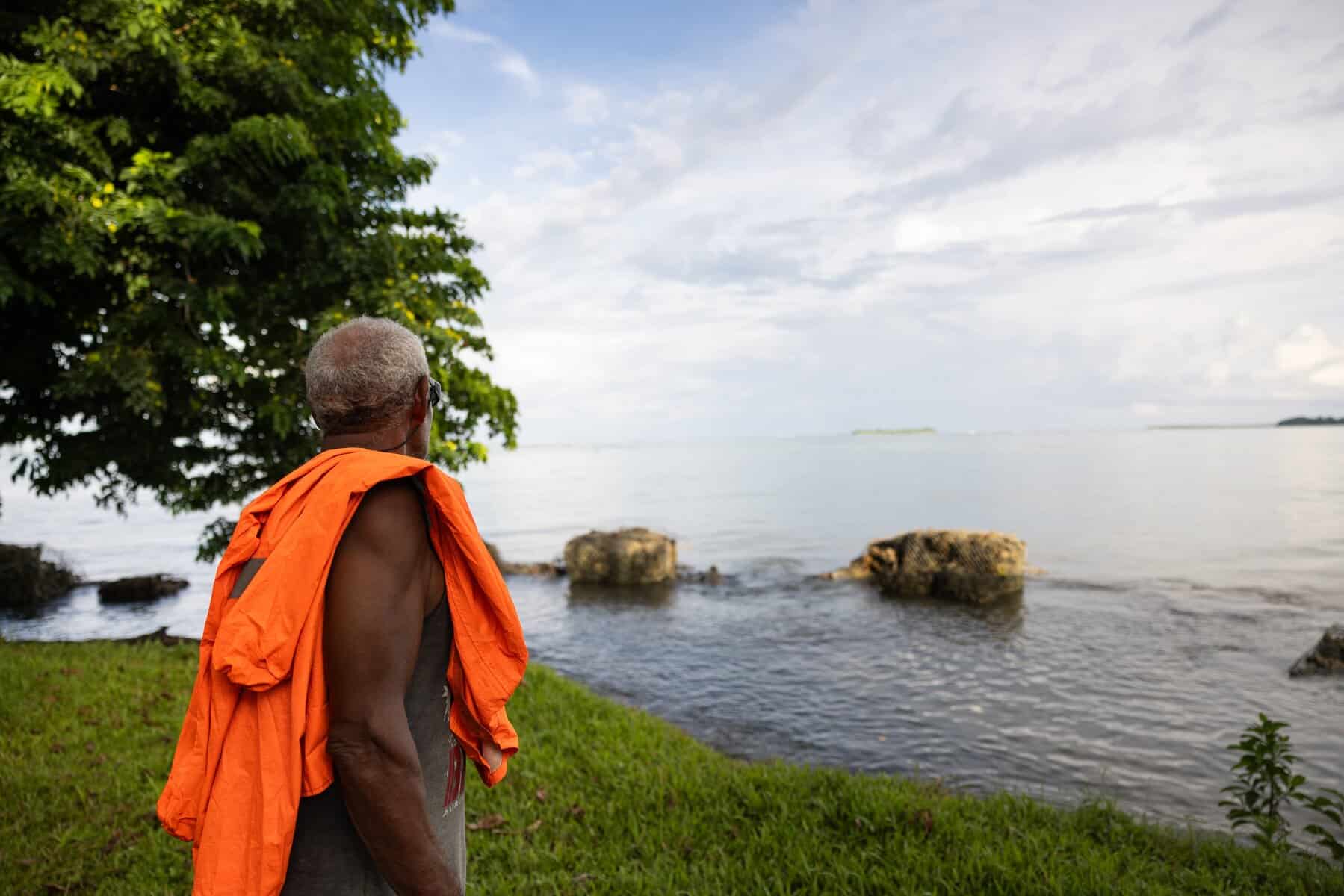
The ICJAO has broader implications, with human rights at its core – and Julian Aguon, founder of Blue Ocean Law, reflected on the journey to the advisory opinion and on the testimonies gathered from frontline communities, including the women of Yakel village on Tanna Island, Vanuatu.
“Their distress is so acute, they are dying from a broken heart—suffering strokes, premature deaths—because of climate change and the loss of their lands,” he said.
For Aguon, the ICJ ruling affirms that these are human rights harms. “What they are really fighting for is their right to live in this world on their own terms – and their children’s right to do the same.
“So, I think that the most exciting part of this is seeing how frontline communities—like the women of Yakel, and many others we spoke with—are going to use this ruling to wrestle with the world for the future they need, deserve, and are legally entitled to,” he said.
Other organisations, including Greenpeace, working with Pacific CSOs, collected testimonials from Pacific Island countries, which contributed to the submission and to the scientific data provided by the Pacific Community (SPC).
The Pacific Community played a critical role, weaving scientific evidence with traditional knowledge to strengthen the case. Coral Pasisi, SPC’s Director for Climate Change, said the court’s ruling “basically said science is the law now”.
But in the Pacific, science also includes 4000 years of traditional knowledge – passed down through songs, stories, and lived experience.
“They acknowledged that even at 1.5°C, it is not safe for many communities and ecosystems,” Pasisi said.
“We have already suffered significant loss and damage – irreparable and irreplaceable.”