A FEAR in the West around China’s expansion in the Pacific may be the catalyst for the renewal of port infrastructure around the region.
The United States has started to review former bases in the Northern Pacific, including remote Palau.
Once a staging point in World War II, Palau’s Malakal Port gradually crumbled over years of neglect.
But now that the US wants to build radar systems and preposition supplies over what it believed is a new threat from China and a number of growing Asian militaries, Palau may have found a renewed defence alliance which will develop civil infrastructure.
In Brisbane last month, Palau President Surangel Whipps Jr. said his country needed more than $USD1 billion in port infrastructure development to ensure the tiny territory was open for business.
Palau is a favoured destination for divers from China, Japan, and South Korea. It is also a major player in the international tuna industry, with pristine seas teeming with tuna. Much of the country’s exclusive economic zone remains closed to external commercial fisheries.
That is one reason Japan has offered to build a modern fishing port, designed to accommodate specialised vessels, while considering Palau’s desire to protect the environment.
At the Pacific Infrastructure Conference in Brisbane, Whipps did not hesitate to declare his country open for business and ready to enter into partnerships, which would provide the much-needed capital funding to develop critical infrastructure.
What he really wants is blended finance packages, which will allow the construction of hospitals, ports, airfields, and environmentally friendly coastal protection systems within five years.
It may seem like a huge ask, but there was definite interest in the room, especially among large Australian construction firms, which have the expertise to compete against US contractors.
The very nature of a mixed-purpose port—commercial in peacetime and immediately available for military use in times of danger or disaster—appeal to Palau and the US.
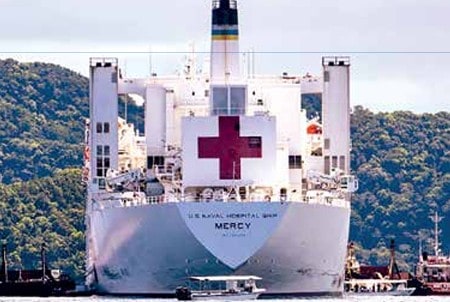
The US has upgraded airfields on Koror and Peleliu, but these developments will need to be supported by a port facility that can accommodate supply vessels, hospital ships, and other support units to land troops and equipment. That need plays into Palau’s hands.
After Whipps’ Brisbane pitch, it’s understood the US is ready to proceed with an earlier plan to rehabilitate an 80-year-old dock at a cost of $USD12 million as early as late this year. It will be one of several infrastructure improvement projects in Palau that support US Indo-Pacific Command initiatives to ensure operational readiness in the region.
Work will begin by the end of 2025 and be completed within two years.
The proposed project involves the restoration of the channel’s width and depth to their original 1945 dimensions to improve the existing dock facilities.
The project is intended to provide infrastructure capable of supporting larger watercraft, including local barges. This shared-use facility would be suitable for use in all tidal conditions, improving upon existing limitations during low tide.
The project also includes vegetation clearance and grading of a beach area, dredging to the original 12-foot depth below the low-tide line, and installation of aids to navigation to increase safety in the harbour entrance and channel, in accordance with specifications from the Palau Bureau of Marine Transportation.
What can local residents hope to see under this expansion and rehabilitation?
According to the US Department of Defense, the project “incorporates shoreline stabilisation, a quay wall wharf with a roll-on/roll-off boat ramp, and construction of a public boat ramp to support safe launch and recovery of small craft for residents.”
A civil facility with military application. For Palau, it is the perfect solution.