The squabbles between New Zealand’s Foreign Minister, Winston Peters and heads of government in Kiribati and the Cook Islands have been denounced by some as neo-colonial grandstanding but welcomed by others as signalling a timely tightening of Pacific aid policy.
In January, Peters called off a trip to Kiribati and announced a review of aid to the country after its President, Taneti Maamau cancelled a scheduled meeting. In February, Peters criticised the Cook Islands Prime Minister’s decision to sign a ‘comprehensive strategic partnership’ agreement with China, without consultation with Wellington, claiming this to be a breach of that country’s free association agreement with New Zealand.
That controversy came on the heels of a December dispute about whether the Cook Islands might issue its own passports, which Wellington traditionally opposes on the grounds that Cook Islanders automatically acquire New Zealand citizenship.
The Kiribati scrap was an unusual affair. On Tarawa, the President’s office said that President Maamau had been drawn away to attend a Catholic ordination on his home island of Onotoa, but that event turned out to have taken place on 11-12th January, ten days prior to the scheduled meeting with New Zealand’s Deputy Prime Minister.
For the Kiribati Head of State to have met with a less senior figure in New Zealand’s government hierarchy would defy ‘established protocol’, argued one Kiribati MP, alleging that the New Zealand stance was ‘disrespectful of Kiribati sovereignty’. After all, just a week earlier, Australia’s visiting Deputy Prime Minister Richard Marles, had raised no public objection to meeting instead with the Kiribati Vice-President.
New Zealand diplomats responded that the two encounters were quite different: President Maamau also holds the foreign affairs portfolio and so this would have been a meeting between diplomatic counterparts.
What was not explained was why the Kiribati President chose not to meet Peters and why New Zealand’s foreign minister made such a public fuss about it. After all, misunderstandings are common in the diplomatic world. The musty corridors of power abound with failed liaisons, cultural confusions, and bizarre personality clashes.
Many pointed to the Kiribati switch of diplomatic links from Taiwan to China in September 2019, claiming that the latest tiff with New Zealand reflected Beijing’s expanding influence.
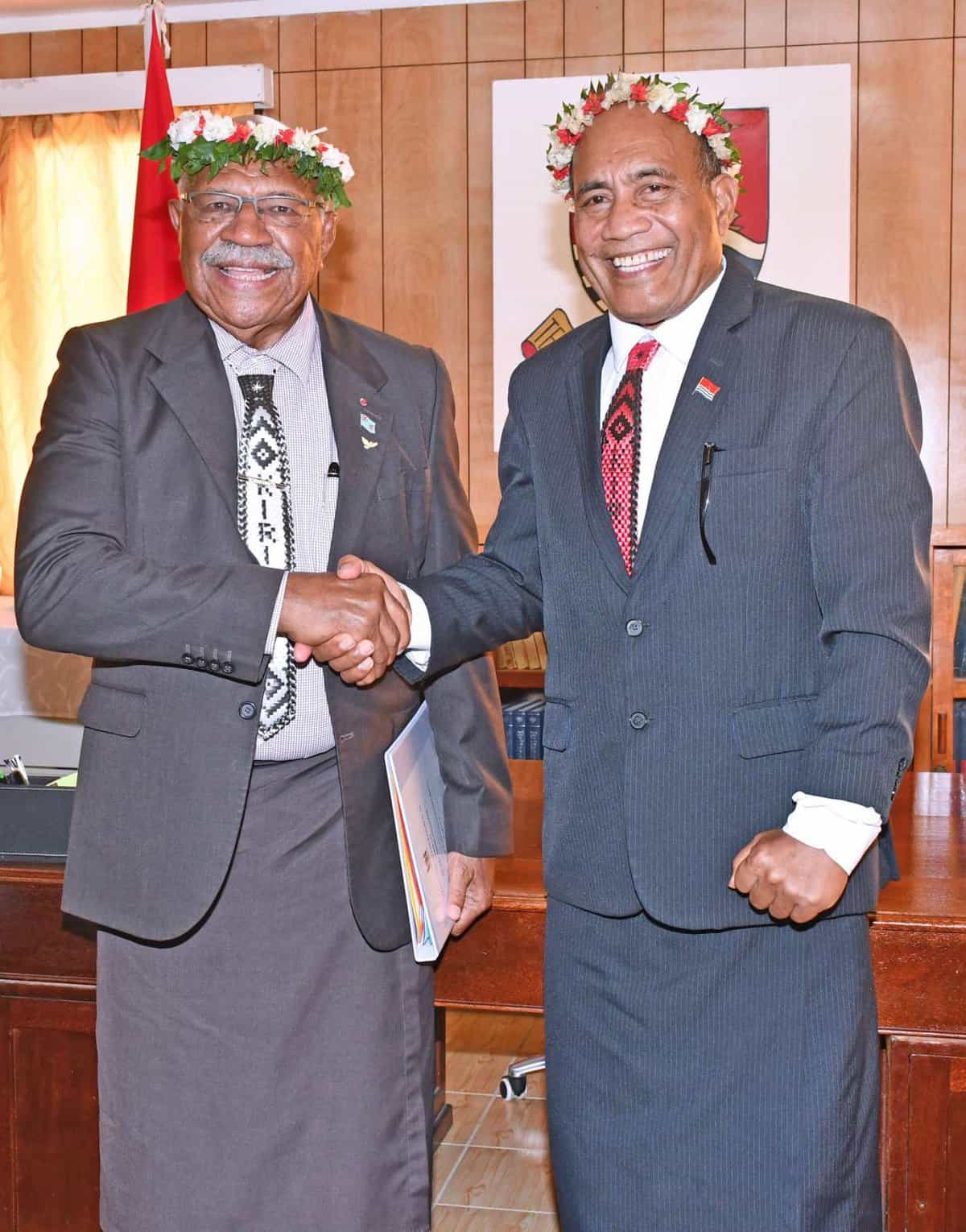
That 2019 switch was itself preceded by a diplomatic misunderstanding: Maamau had been miffed about then Taiwan president Tsai Ing-Wen not visiting Kiribati while on a March 2019 Pacific tour. Kiribati’s troubled regional relationships continued thereafter, with a withdrawal from the Pacific Islands Forum in 2022, which was only reversed after some careful statecraft by Fiji’s Prime Minister Sitiveni Rabuka in early 2023.
Maamau’s New Zealand snub echoed a broader reaction, which was at least in part a response to international pressure aimed at drawing Kiribati back into the Western orbit in the wake of the 2019 diplomatic switch.
Ahead of the August 2024 general election, the Maamau caretaker administration announced a moratorium on all diplomatic arrivals, which endured through the October presidential election.
Only in early 2025 was that suspension eased, but with President Maamau still preferring that other ministers take responsibility for meetings with foreign dignitaries. Even when the borders are open, the present Kiribati government is reluctant to allow Western diplomats to meet with opposition leaders.
Kiribati has been witnessing an authoritarian drift: with the suspension of the Chief Justice in June 2022 and then of three Court of Appeal judges in September of that year.
The Opposition was blocked from fielding a candidate in the October 2024 presidential election.
Taneti Maamau first became President in 2016, promising to prioritise domestic issues and economic development through his KV20 20-year vision. He was critical of his predecessor, Anote Tong, for allegedly spending too much time on the international stage promoting climate change awareness.
Whereas Tong accepted that his people might ultimately need to migrate, President Maamau told The Guardian in 2020 that he planned to tackle sea-level rise by dredging lagoons to build up sea defences and was exploring replacing the Japanese-built Nippon causeway on South Tarawa with a long bridge comparable to the one built by China Harbour Engineering in the Maldives.
He expects significant gains from the Beijing connections, but so far, China’s assistance has been modest, aside from the US$28.7 million allocated for the purchase of Embraer aircraft, which are manufactured by a Brazilian firm that partners with Chinese contractors. The second of these aircraft has yet to be delivered.
According to the Lowy Institute’s database, New Zealand aid to Kiribati from 2019 to the latest available year, 2022 (US$65.8m), puts it slightly ahead of aid from China (US$64.1m). This is Winston Peters’ third stint as foreign minister. Previously, he served in the role as part of Jacinda Ardern’s 2017-20 Labour government assuming responsibility for the much-vaunted ‘Pacific reset’. Now he returns to the same portfolio but in a right-wing coalition committed to spending cuts and to beefing up New Zealand’s defence posture.
Since resuming the role, he has visited every one of the Pacific Islands Forum countries… except Kiribati. The bust-up about the cancelled January visit, his office explains, came after repeated efforts to set up a high-level meeting. Peters says it prevents adequate consultation over ‘joint priorities for our development program’.
That may be true, but it doesn’t explain why one would broadcast the dispute in the media. Already, what TVNZ at first announced as a ‘halt’ in aid to Kiribati has been recast as a ‘review’, and officials are predictably walking back the initial angry response. Expect little or no interruption in New Zealand’s average annual aid flows to Kiribati.