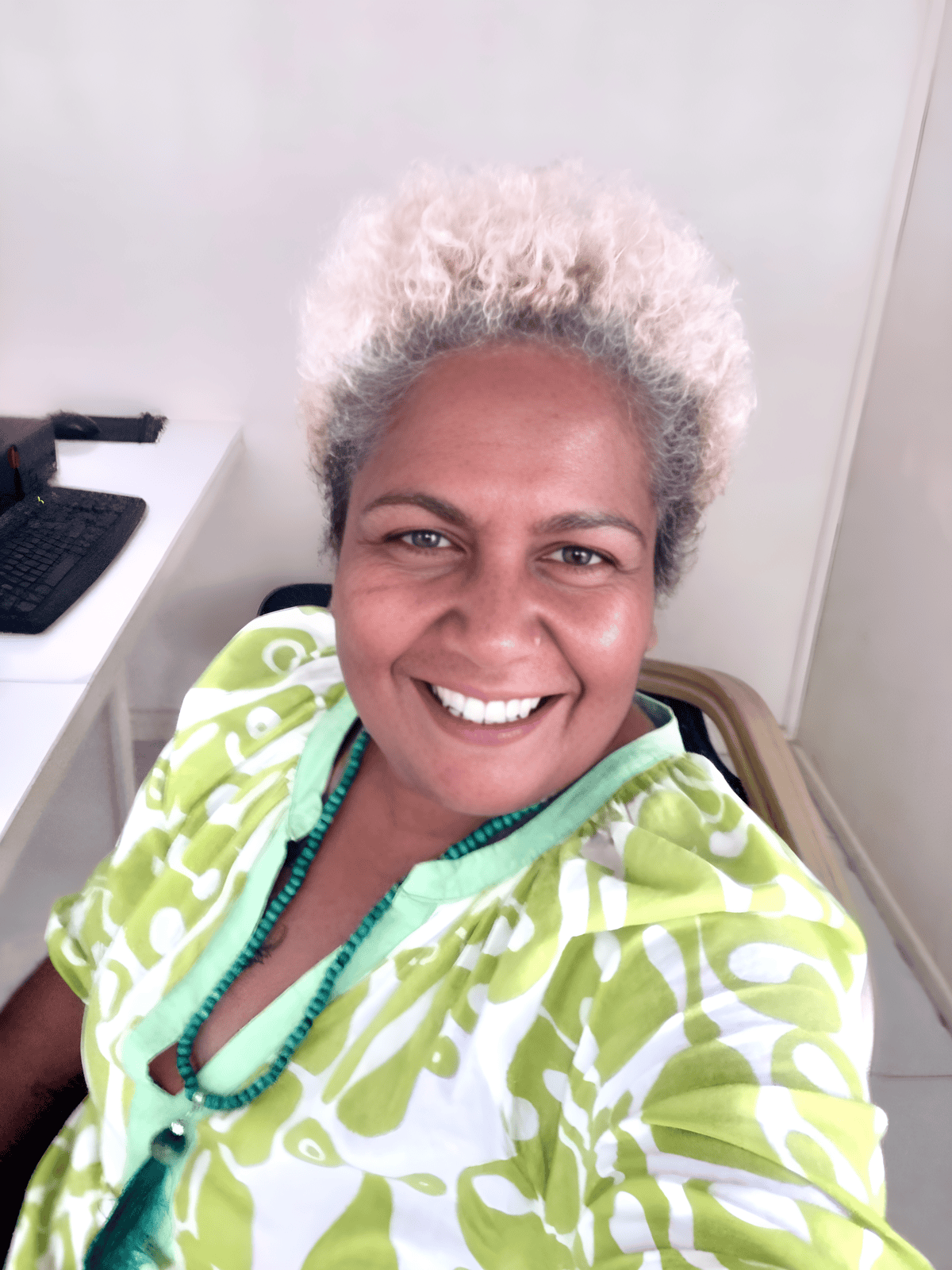
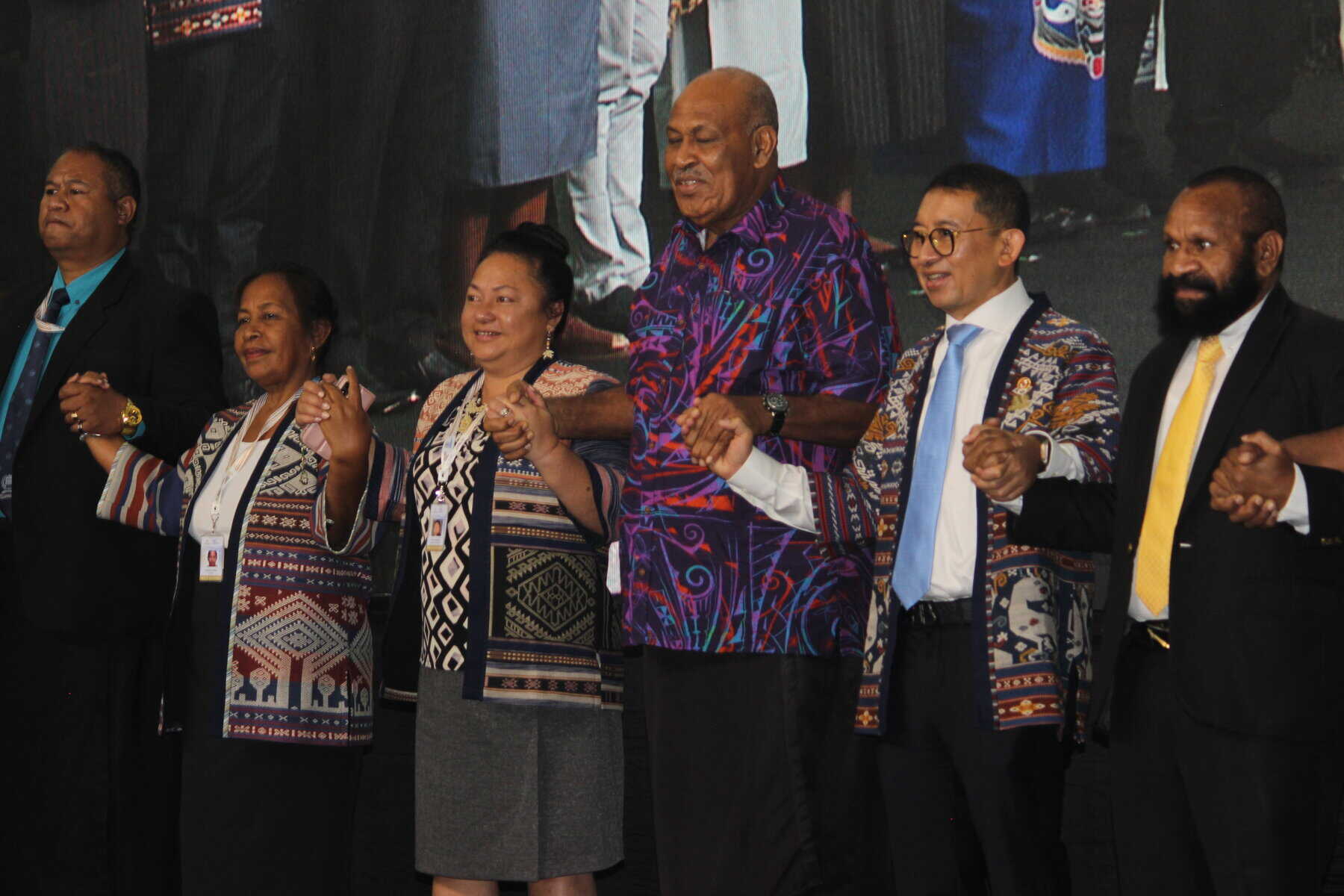
TO reshape New Caledonia’s political landscape, Veylma Falaeo, President of the Congress of New Caledonia, is advancing a bold agenda centered on participatory democracy, government accountability, and gender-inclusive leadership.
In an interview with Islands Business, Falaeo laid out a comprehensive vision for governance reform that seeks to reconnect citizens with their elected leaders.
Falaeo is spearheading the country’s first national-level initiative on participatory democracy. She argues that democratic engagement in New Caledonia tends to stop at the ballot box. “There is a problem in New Caledonia – once the citizens have voted for their candidates, it stops there,” she said.
“They don’t really understand what the elected people are doing for them, are doing for the country.” To bridge this disconnect, Falaeo has launched a study aimed at establishing a national platform for dialogue
between citizens and political leaders.
“This will be a safe space for citizens to express their concerns directly to elected leaders.” Currently limited to the municipal level, participatory democracy would, under her proposal, expand nationally to “allow the citizens to come closer to the leaders … and reinforce stability.”
This initiative, still in development, aims to move beyond the local participatory mechanisms that exist only at the municipal level. “It’s the first time ever that such a process is being considered at the national level,” she said.
Her team is currently conducting a nationwide survey to assess citizen engagement and trust in political leaders, with plans to institutionalise a “safe space” for public dialogue grounded in legislative frameworks, to be introduced to Congress for deliberation. Another key pillar of Falaeo’s agenda is the systematic review of New Caledonia’s public policies – a move she says is long overdue.
“We cannot afford to have policies that are not impactful, that are not doing anything good,” she emphasised. In November 2024, her office secured technical assistance from the French Congress and Senate to support this evaluation process.
On June 2 this year, Falaeo and a colleague submitted a formal proposition of deliberation to institutionalise the policy review. If passed by Congress this September, the legislation would mark a historic step toward transparent and results-driven governance.
Falaeo is also a leading voice for gender equality in the Pacific. Her personal journey into politics defied traditional expectations. “The first difficulty was internal; my family expected my brother to enter politics,
not me, because I was a woman,” she shared. That perception changed as she proved her capability and
resilience.
Today, New Caledonia’s Congress comprises a majority of women, 28 out of 54 members, thanks to a French law mandating gender parity in elected office. “This is showing them that it’s possible … they can play a major role, whether it’s in politics or in the economy or in various sectors,” she asserted.
Falaeo hopes to export this success story to neighboring Pacific nations. As New Caledonia continues to grapple with deep political divisions and the lingering effects of the 2024 crisis, Falaeo’s vision stands out as both pragmatic and inspirational. Through her work in participatory democracy, public policy reform, and gender advocacy, she is shaping a more inclusive and resilient political future – not only for New Caledonia, but potentially for the entire Pacific.