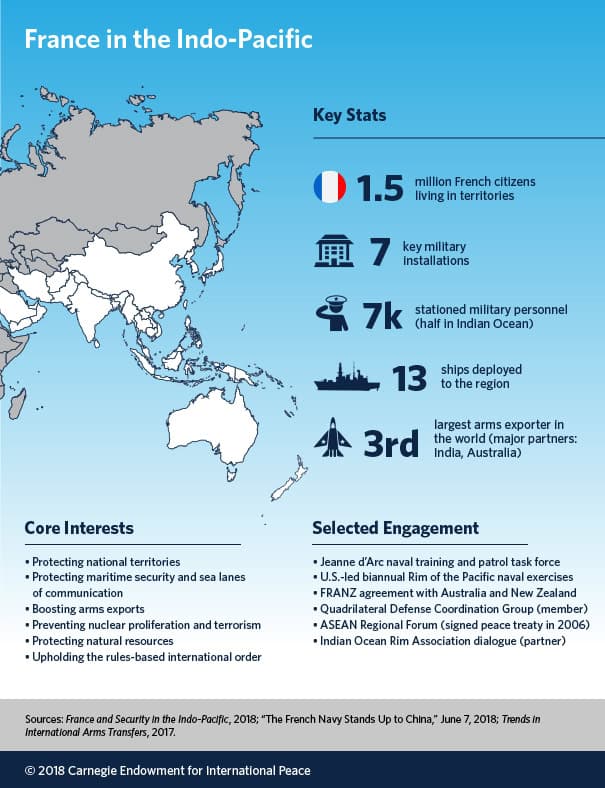
WITH 8000 troops permanently stationed across the Indo-Pacific, France is the only European power with a military presence of any significance in the region.
Those troops are spread across three forces—army, navy and air force—with around 3000 based in the Pacific territories of Kanaky (New Caledonia) and Maohi Nui (French Polynesia).
While pro-independence movements have fought for self-determination for over four decades, France has resisted, to the point of reneging on deals made with local communities in legally binding referendums.
The two French Pacific territories—along with the smaller Wallis and Futuna—allow France to have the second largest Exclusive Economic Zone in the world, stretching over nine million square kilometres.
French bases dot two oceans, beginning with Mayotte in the Indian Ocean, between Madagascar and the coast of Mozambique, and La Réunion; to Tahiti, New Caledonia, Wallis and Futuna; and finally, Clipperton in the eastern Pacific Ocean, 500 km from Hawaii.
This gives France a place of influence at international forums that deal with oceans, fisheries, aviation, shipping, and trade.
More than 200,000 French nationals live in these Indo-Pacific states, and France exported goods worth €66.438 billion to the region. This did not include defence equipment.
In a 2019 National Defence Report, the French Minister for the Armed Forces, Florence Parly, outlined her country’s approach to the region.
“The growing polarisation of the region threatens the upholding of the multilateral order that enabled the economic prosperity of the Indo-Pacific. The threat multiplier effect of climate change directly concerns the Indo-Pacific. The most vulnerable countries will see their economic growth prospects highly reduced, whereas the most resilient ones, owing to their size or their power, will gain a geostrategic advantage.
With Pacific Islands staring down the barrel of the existential climate change threat, France cannot afford to take its eyes off the region. However hard the pro-democracy movements fight, the French will hold on to their Indo-Pacific possessions to maintain a foothold across what is essentially 60% of the world’s population, and 33% of international trade.
That is a sphere of influence, which matches even the United States with its bases on its own territories and on the islands of its allies.
On the ground, the French military may look small, but appearances can be deceptive. It has two frigates, two support ships, and two offshore patrol boats in its naval component, along with five surveillance planes, five transport aircraft, and four helicopters. But it is the capability of the French air bases in the Pacific that extends its reach far beyond Paris.
In a regional conflict, France could project its power into the Pacific faster than many of the nations it considers threats. On a bilateral level, French troops exercise regularly with Australia, New Zealand, and a number of Pacific armed forces.
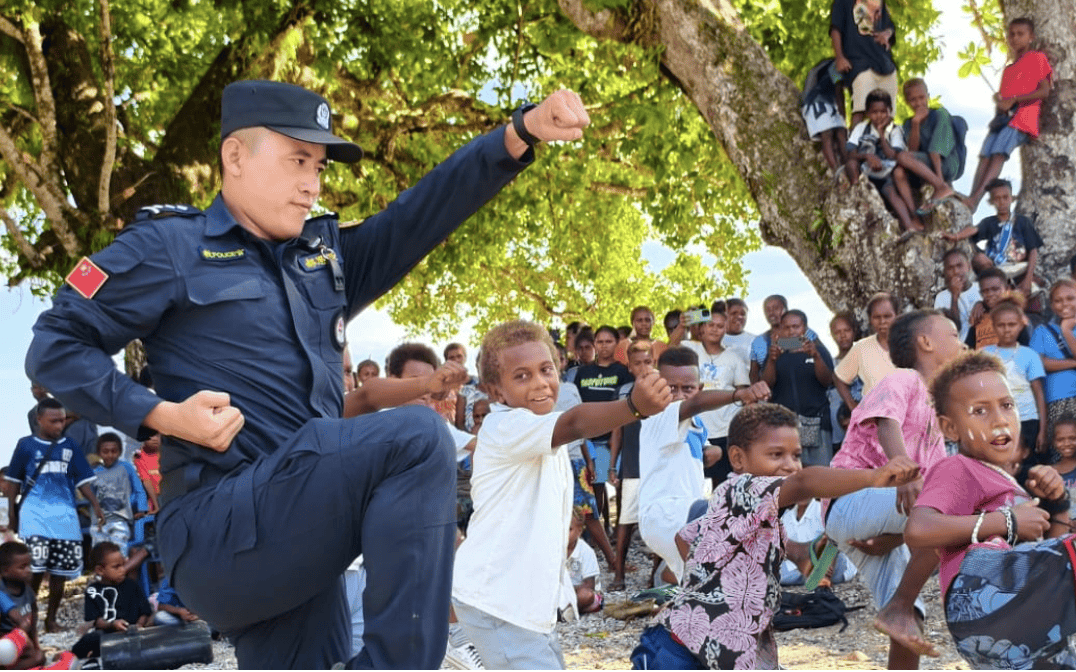
Its regular peacetime deployment of maritime surveillance flights, fisheries patrols, and port visits helps to maintain good relations throughout the region, in activities that show presence, fly the tricolor, and imply that the French are friends and good neighbours.
The government of Emmanuel Macron said French armed forces stationed overseas allowed Paris to fulfil the security responsibilities of a resident power of the Indo-Pacific.
“This region is not spared by the increasing tensions on the international level. Terrorism remains a major and immediate concern. Despite military progress in Levant, the threat is reshaping and spreading to new regions, thriving on chaos, civil war, and the fragility of some states,’’ the National Defence Report stated.
“In the Indo-Pacific area, North Korea challenges the international community by conducting nuclear trials and ballistic missile tests, thereby breaching the resolutions of the United Nations Security Council. The military assertiveness of a growing number of established or emerging powers presents many challenges to multilateralism and increases the instability and unpredictability we are confronted with.”
Not once did France refer to China as a threat. Terrorism, which led to violent attacks on French streets—including orchestrated suicide bomb attacks in November 2015—has made security forces wary. That wariness extends into the Indo-Pacific, where its territories are sometimes treated as suburbs of an extended republic. They are France in the Indo-Pacific, and that means terrorism is considered part of the French mainland.
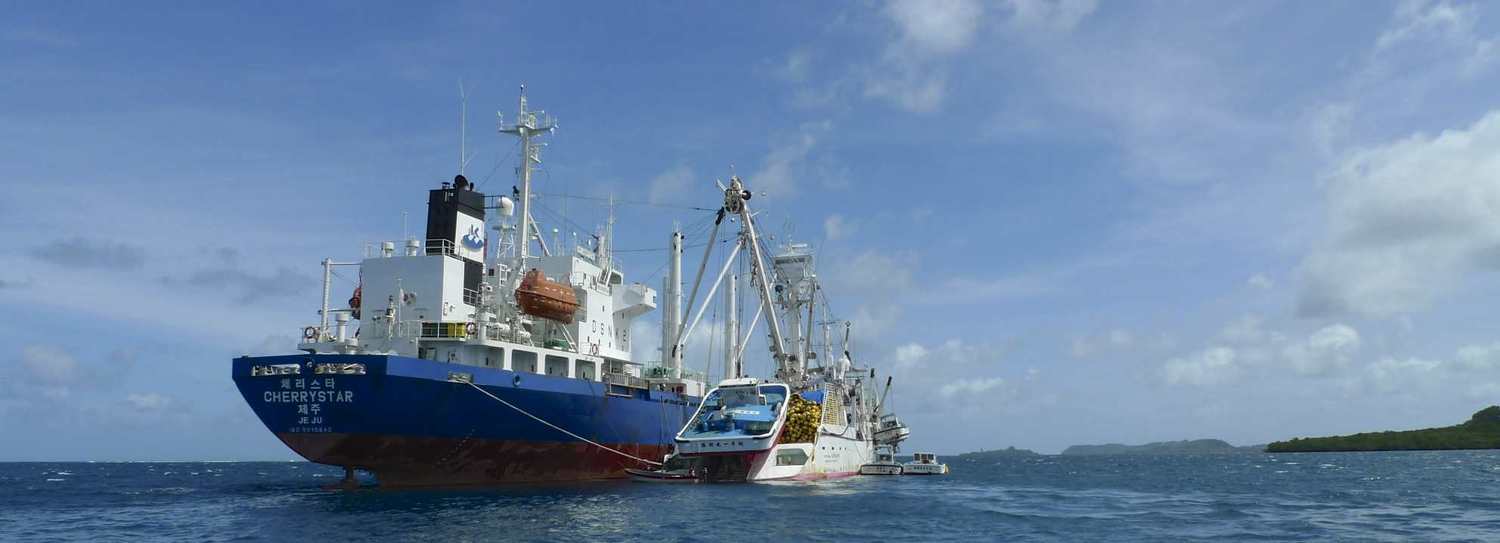
And there are the threats to shipping, as Chinese, Spanish, and Vietnamese fishing fleets cross the oceans in search of fresh catch. With the use of fishing and research vessels by some countries to conduct electronic surveillance, presence near the shipping channels becomes critical, along with the capacity to respond.
Once again, the National Defence Report pointed to French intent: “The maritime domain remains an area of tensions due to the challenging behaviour of some States with regards to United Nations Convention on the Law of the Sea and the persistence of acts of piracy. Finally, the effects of climate change and environmental degradation represent a major issue in the Indo-Pacific, and, as far as in the Antarctic, exacerbating security risks. Upholding stability in the Indo-Pacific, which is a source of overall prosperity thanks to its economic dynamism, demographic growth, and technological innovation, is essential.”
France is here for the long run.