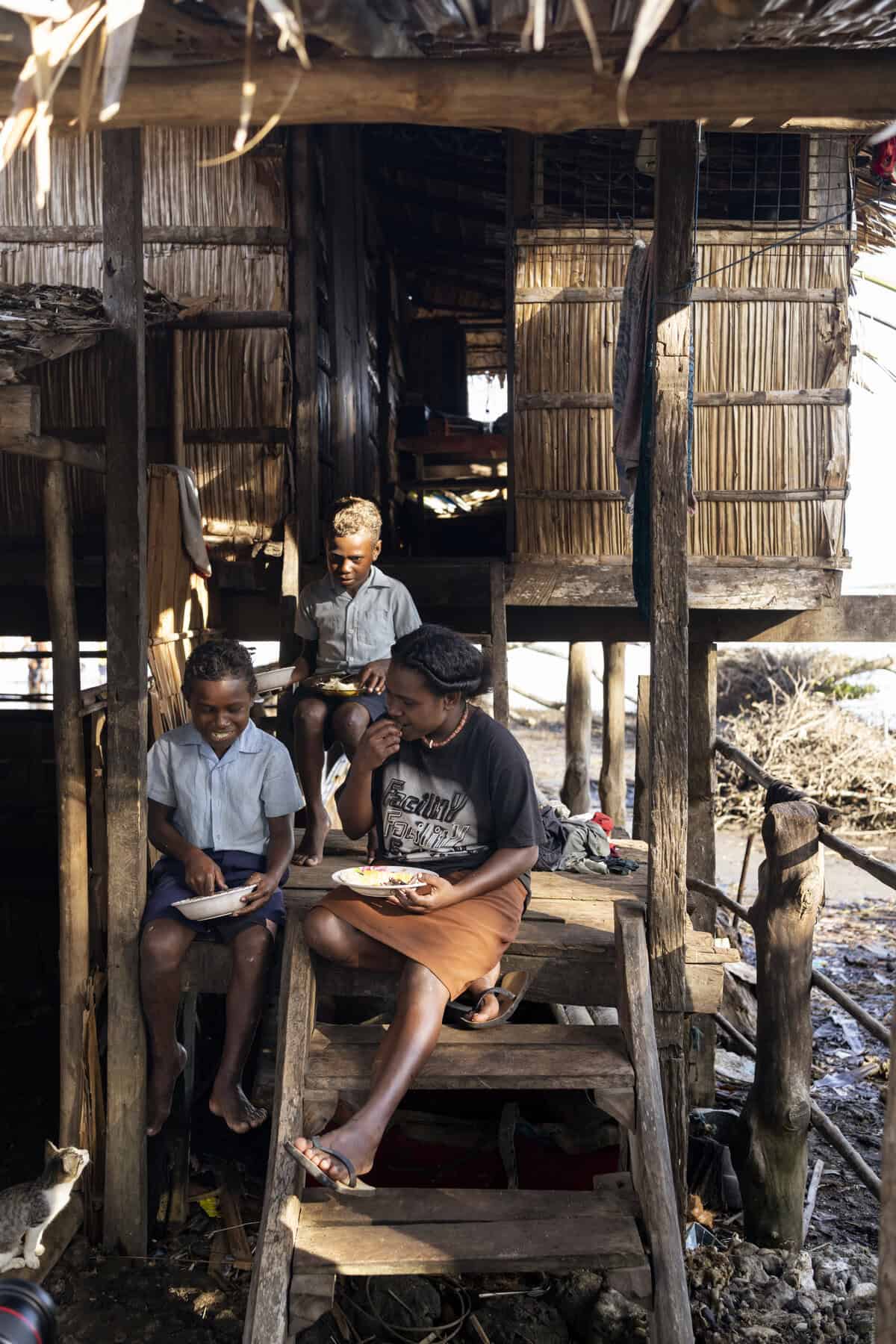
ONE in three Melanesian children experiences malnutrition (such as stunting, micronutrient deficiency, or obesity) while growing up on the front line of the climate crisis.
“Climate change is threatening the nutrition of children by disrupting agriculture, health and water, sanitation and hygiene (WASH) systems,” according to Save the Children: Study Insights from Papua New Guinea, Solomon Islands, and Vanuatu.
The study found that the constant strain of climate impacts is undermining food security, overwhelming WASH infrastructure, public health systems, and deepening nutritional vulnerability.
Communities reported being trapped in a never-ending cycle of preparing, surviving, and recovering, with little opportunity to rebuild and develop.
Save the Children study noted, “Despite the urgency of this challenge, the evidence base for the impact of climate change on all forms of malnutrition in Melanesia remains limited, particularly in terms of country-specific data and analysis.
“This study examines the impact of climate change on nutrition and food security, with a focus on women and children under five, particularly those in the First 1,000 Days (the critical period from conception to two years of age).
“These are not isolated incidents but cumulative stressors, creating a cycle of preparation, survival, and recovery with no clear reprieve.
“This constant strain is not only undermining food security and public health systems; it is deepening nutritional vulnerability.”
Save the Children also highlighted that, according to UNICEF, this crisis manifests as a troubling triple burden: undernutrition characterised by stunting and wasting, micronutrient deficiencies, and overnutrition leading to overweight and obesity.
Alarmingly, the prevalence of stunting among children under five in these countries stands at 48.6% in Papua New Guinea, 32% in Solomon Islands, and 29% in Vanuatu – significantly higher than the global average of 23%.
Save the Children noted the climate crisis is intensifying nutrition vulnerabilities across all communities.
This issue has a disproportionate impact on women, children under five, and persons with disabilities.
According to the study, “women face increasing labour burdens due to climate change, leading to chronic fatigue and reduced capacity to care for children.”
This highlights the critical challenges that women encounter in managing their households amid climate stressors
“Persons with disabilities in rural areas encounter significant physical and social barriers to accessing food and essential services, which worsen during climate extremes.”
These barriers intensify during climate extremes, making it even more challenging for vulnerable groups to meet their basic needs.
The study further emphasises that “Gaps in nutrition knowledge—often shaped by restrictive socio-cultural beliefs and taboos—further hinder adequate child and maternal nutrition.”
Such societal factors can significantly influence health outcomes for families. Unstable income and limited access to land exacerbate food insecurity challenges. The study notes that “substance abuse, often used as a coping mechanism for societal stressors, diverts household resources from food and childcare.
“Traditional food sharing networks are weakening due to declining yields and evolving communal structures, leaving vulnerable households with less community support.”
In Papua New Guinea, Solomon Islands, and Vanuatu, significant progress in the climate-nutrition nexus focuses on integrating climate adaptation in agriculture—improving water management, and supporting smallholder incomes—alongside nutrition education for vulnerable groups.
Save the Children notes that the urgent need to integrate climate and nutrition into existing national policies and programs is becoming increasingly evident.
“This integration requires close collaboration among governments, development partners, and civil society organisations.
“By focusing on key areas of policy and program action, these groups can effectively address the intersections of food, health, and WASH, creating comprehensive strategies that respond to today’s challenges.”