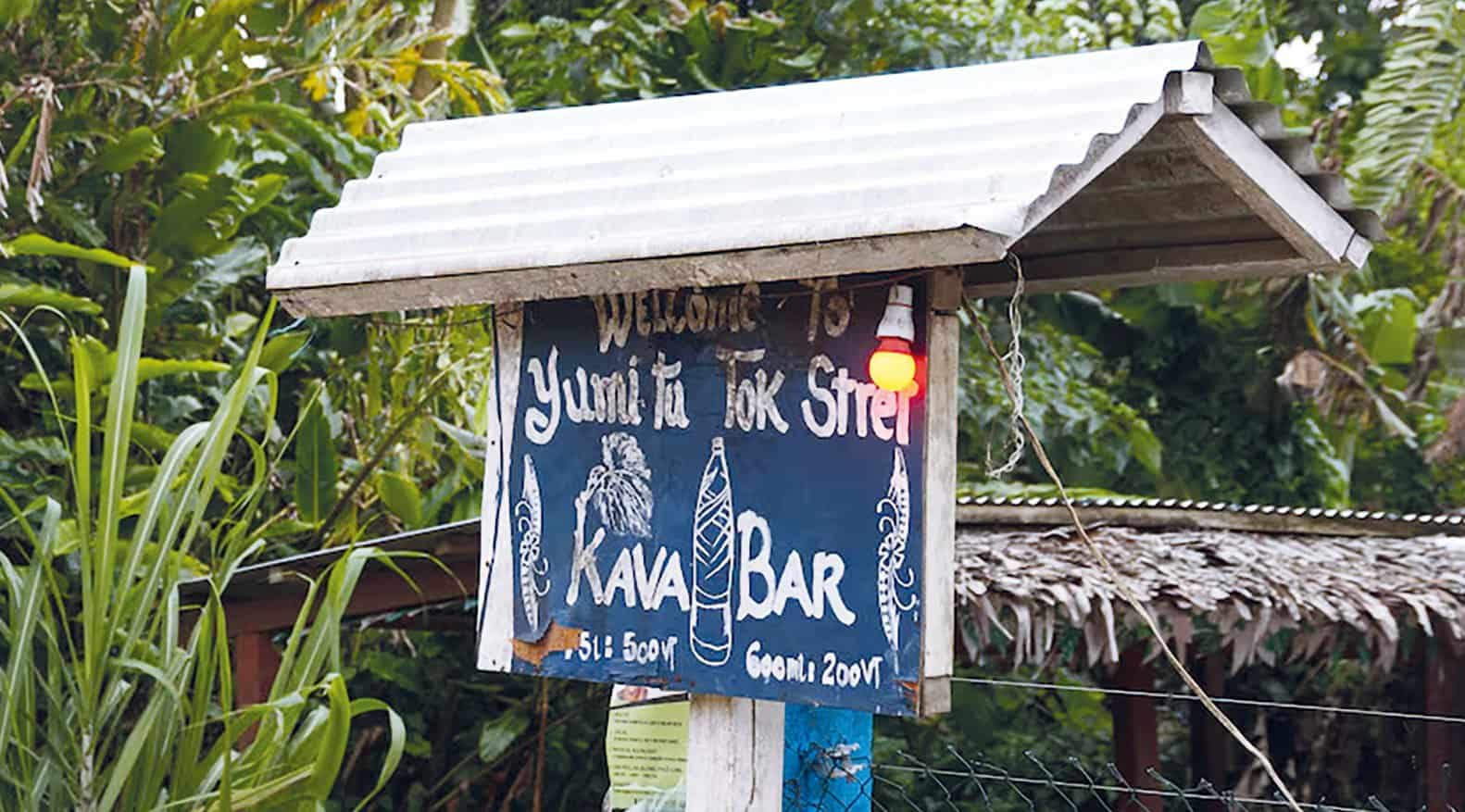
KAVA accounts for the majority of Vanuatu’s economic activity, and operators intend to become the main producers of the commodity in the Pacific.
Last year, Vanuatu exported VT5.3 billion kava, up from VT4 billion in 2023 and VT3.3 billion in 2022. That was a huge 68.5% of exports in 2024.
The National Kava Strategy 2016–2025 delivered and planted over 600,000 plants since 2020.
Vanuatu’s Minister for Agriculture, Ian Wilson, emphasised the necessity for effective planning and use of data in order to grow the industry.
The lack of data is a primary problem in Vanuatu’s efforts to achieve its kava goals in line with the national policy agenda.
Wilson explains that the government requires current data in order to pinpoint issues and create plans and policies to make up the shortfalls.
Even with the most recent census, there remain concerns over the data’s accuracy, which makes it difficult for the government to map out policies.
“If we want to move forward, we have to know our supply and demand,” Wilson said.
Smaller amounts of Vanuatu kava are exported by nearby Pacific microstates like Nauru and Tuvalu, but the majority of kava supplied to Kiribati is used domestically.
Kiribati, which imports from other Pacific Island nations, is predicted to be the largest importer of Vanuatu kava in 2024, bringing in a record 280 metric tons – equivalent to almost 1.56 million 1.5-litre bottles.
This presents a regional and global challenge for Vanuatu’s kava industry, as other Pacific Islands, such as Fiji, are among the leading producers and exporters of kava.
Vanuatu Foreign Affairs Minister, Matai Seremaiah, says, the kava industry lacks farmers and laborers due to a huge number of individuals, who are involved in regional labor mobility schemes, which reduces the local workforce available for kava cultivation.
“People, as farmers, need to know that there is a market so they can plant,” Seremaiah said.
“But for planting to continue, we also need labour. If we continue to export labour overseas, it will bring another great challenge for kava production by local farmers.”
Following the present issue of kava shortages in the country, the Chairman of Vanuatu’s Kava Industry Association, William Colmar, has strongly criticised a request made during the Kava Forum for the government to allow kava imports to meet the current domestic shortfall.
“We wish to state our position clearly and firmly: the importation of foreign kava into Vanuatu must not be permitted under any circumstance,” he said in a letter to the Director-General (DG) of the Ministry of Agriculture, Livestock, Forestry, and Biosecurity (MALBF), Timothy Tumukon.
Kava shortages arise when farmers fail to meet demand, including climate change and dry seasons, affecting kava harvests in Vanuatu.
Most young entrepreneurs operate small kava ventures that engage in the kava industry, selling and producing kava for everyday consumption.
Sergine Tahun, a dedicated female entrepreneur and the creator of Tahun Kava Exports Limited, carved out a space for herself in a competitive business as Santo’s first woman-owned kava exporter.
She was the first to receive the internationally recognised HACCP certification, which promises to open doors to worldwide markets.
“I want to prove that women can thrive in this space – and that collaboration, not competition, is the way forward,” Tahun said.
Vanuatu intends to focus on the future of the sector and develop its presence in the international market, as well as ensure that farmers can preserve kava as a precious resource for future generations and prevent past issues that could have a devastating impact on the country’s vulnerable economy.