THE climate crisis is having an alarming impact on the Pacific region, with women, children, and marginalised communities being disproportionately affected.
Despite these challenges, Pacific student journalists from the University of the South Pacific are still optimistic about climate reporting and climate justice.
Just three months ago, the International Court of Justice (ICJ) issued a unanimous advisory opinion affirming that states have legal obligations under international law to prevent environmental harm and uphold human rights while reducing emissions to stay within 1.5°C of warming.
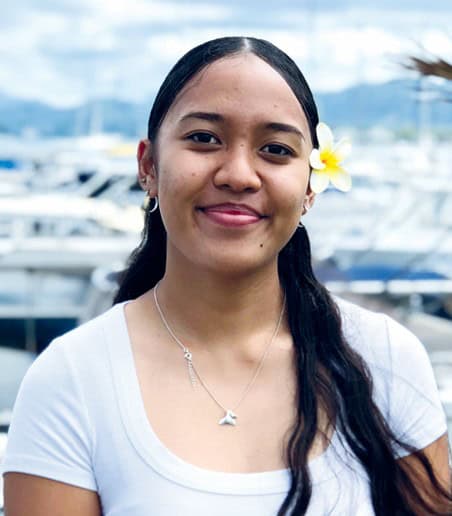
“Our voices haven’t drowned; there is still hope. If other Pacific students took their climate fight to the ICJ and won, we young Pacific journalists also have a role to play,” said Peniel
Jemima Solomona, 21, from Tuvalu. “Climate change has had a significant impact on Tuvalu.
From personal experience, it has affected our language and culture. For instance, many of us have had to move away from Tuvalu due to rising sea levels, which disrupts our ability to gather as a community.
“As a result, my parents primarily communicate with us in English, and we know very little about our native language.
Our traditional practices, such as weaving costumes and creating flower garlands that represent our culture, are slowly fading away.”
She said the situation had profoundly impacted her connection to her identity.
“It’s important for people to understand the effects of climate change from the perspective of someone who has lived and has been impacted by it,’’ Solomona said.
“My experience, particularly in the context of climate change, has fuelled my desire to raise awareness about our current situation.
“My identity carries significant weight, and I empathise with those who have lived through severe climate impacts.’’
Mollyn Nakabea, 21, from Fiji, said, “We have a responsibility to be the voice for the voiceless, to amplify the voices of those who are unheard and to provide a platform.
“Regarding climate reporting and climate justice, we have a significant role to play in sharing stories that help people understand the impact of climate change firsthand.
“As someone living in the Pacific region and observing the outside world, I believe an important message I want the Western world to understand is that it’s real and it’s not a myth.
“They don’t think that it’s real. They think it’s something we are trying to make up to sound and look dramatic.
“As a young, inspiring journalist and as part of the younger generation, I feel that we are reaching a point where people are paying attention to us and taking us seriously. Not just because of our age, but because we are the future,” she said.
Ryan Iroga from the Solomon Islands said there had been countless messages about climate change.
“What is missing now are the hands and feet to turn words into action. Climate change is a lived reality for the poor, and a debt long overdue, left by those most responsible,’’ he said.
“Collective action is essential, and if we continue to debate endlessly, we risk losing the very home we are trying to protect.”
He said the most important message he would communicate is the urgency in our actions, the urgency in our decisions, and the urgency in our commitment to change before it is too late.
“My personal experience has brought the issue painfully close, revealing how it touches the lives of my community each day. It has stirred a quiet fire within me, a longing to be part of the solution in any way I can.”
As young journalist Iroga said, “Our youth is our greatest asset. We have the energy and freedom to venture into the most remote places – to uncover stories where others may not reach.
“We enhance our storytelling with our skills, our knowledge, and the latest gadgets, becoming not just messengers, but the very face of climate change advocacy.
“We are climate storytellers, innovators, and catalysts of change. Through our voices, we shift perceptions, transforming climate justice from a distant policy issue into a vibrant, living movement that inspires action.”