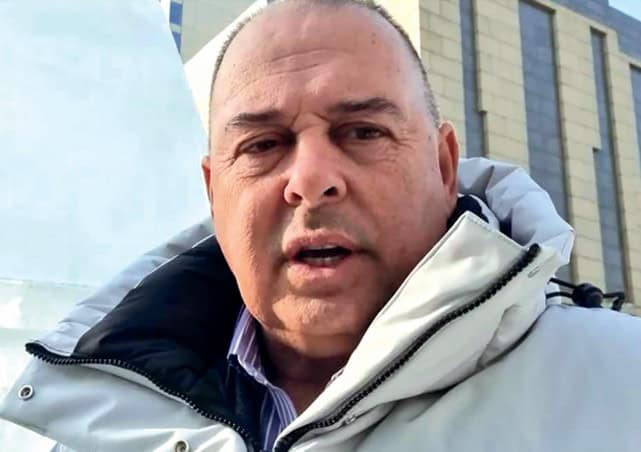
It’s a cold weekend in one of the coldest cities in Northeast China. Just before heading back to Rarotonga from a controversial mission to China, Prime Minister Mark Brown stepped outside to film one of his regular ‘postcards to the people’.
Ahead of the official release off the government website, Brown in video selfie mode, provided a newsy monologue on his meeting with Premier Li Qiang and the 28-year history of the Cooks-China relationship within the context of other agreements with Australia and New Zealand – all while finding time to joke about the block of ice behind him.
Back from China as the new week started, the text of the new comprehensive agreement with China was released as promised, and met with more questions, and a protest march on Parliament.
The Ministry of Foreign Affairs & Immigration (MFAI) will continue co-ordination and implementation oversight of the provisions of an action plan for the agreement in the months ahead. It includes provisions on greater cooperation in trade, tourism, seabed mining, seafood exports, marine resources, and infrastructure (through the Belt and Road framework).
MFAI says the agreement is in keeping with the approach taken for the “Aotearoa New Zealand – Kuki Airani Cook Islands Vaka Houroa / Vaka Purua” partnership signed in 2022 and the “Cook Islands – Australia ‘Oa Tumanava Partnership” signed in 2022.
On his return from Beijing, the Prime Minister did not meet protestors. Political commentators say this is a lost opportunity.
“There was a golden opportunity to engage and lead the story – not meeting the protest march was not a good look,” noted one political observer. For many, the key issue is less about China, or a Cook Islands passport, or seabed mining, or paying for water—all hot topics in recent times—and more about a building sense that too much trust has been lost across a range of issues over the years.
But there are also many who feel that Brown is listening and listening powerfully.
Former Member of Parliament (MP) and a leading development economist to the region, Vaine Wichman, says it’s time for Cook Islanders to look back and examine the decisions made by the leaders of the last 60 years – and what those decades have delivered for Cook Islands people.
“The Prime Minister has listened – he’s been listening to the last 60 years of our statehood. He’s entrusted with the steering oar and his direction will help us weather the storms of growth while trying to find safer lands and food ahead. As people in the vaka, we all have a job to do to ensure our safe journey,” she said.
Wichman, who has recently been invested the traditional title of Koringo Mata Atua Rangatira, recognises the importance of traditional leaders to help keep the vaka on track, but says Cook Islands youth are the biggest concern right now, and ensuring they “hit their mark as equals or above world citizens, if my support can give them even half that chance, the rest is up to them.”
Clearly, Prime Minister Brown’s current focus will be on checking in with MPs ahead of the looming no-confidence vote which has been filed by the Opposition and is scheduled to be tested towards the end of February.
Analysts from both sides of the house say it will be hard for the Opposition to gain the 13 votes needed to dethrone the PM. Whatever the result, the action will be a highly visible reminder of what he needs to do more of before the country goes to the polls in 2025, ensure his government regains the trust and confidence of those who want proof that they are being taken seriously by a government that listens.