The customary landowners of Kangava Bay in the Solomon Islands have filed a claim with the Solomon Islands High Court for damages caused by a 2019 oil spill, the worst of its kind in the nation. The claim was filed jointly with the Solomon Islands Government on 31 January 2025.
Barrister at Doughty Street Chambers in London, Harj Narulla, said: “This case is one of the worst environmental disasters in Pacific history.”
Narulla is acting for the claimants alongside Primo Afeau legal services lawyer, William Kadi, and international lawyers John Ridgway and Dirk Heinz from the Pacific Legal Network, as well as international counsel Frank Clarke.
“The customary landowners and Solomon Islands Government are owed millions of dollars in compensation for the catastrophic harm that they have suffered from the Rennell Island oil spill. Our clients continue to live with the daily impact of this disaster and have waited six long years for the corporations responsible to be held accountable. By filing today’s landmark case, we will ensure that justice delayed is not justice denied,” Narulla said.
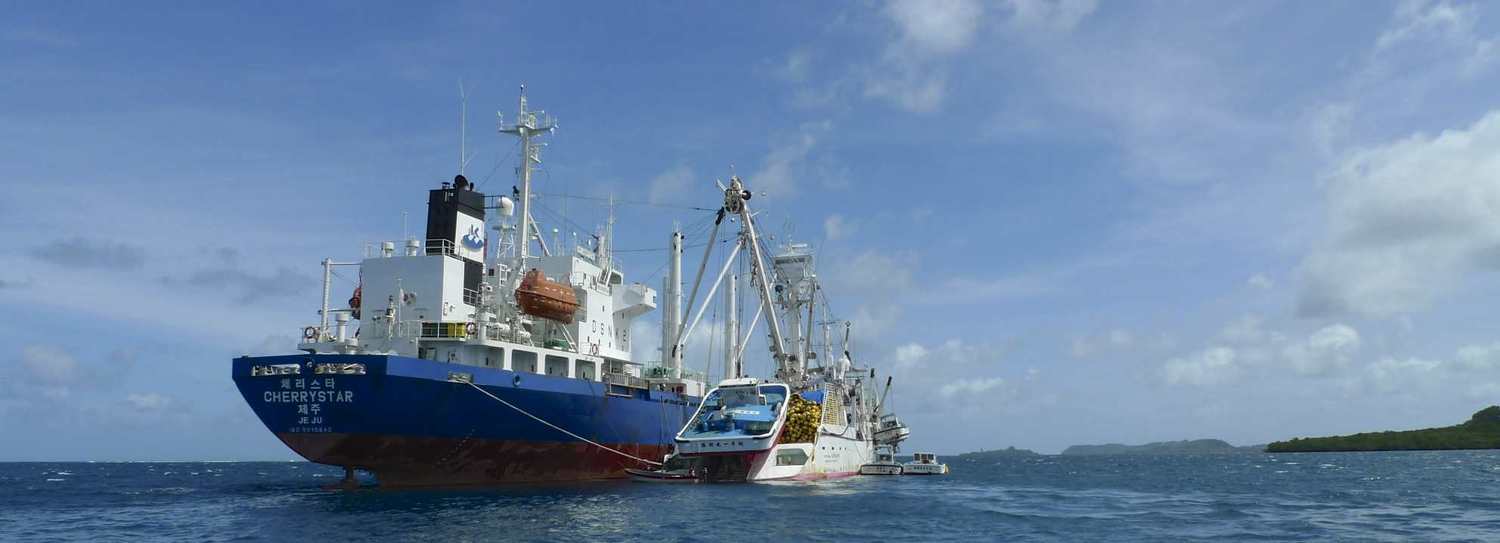
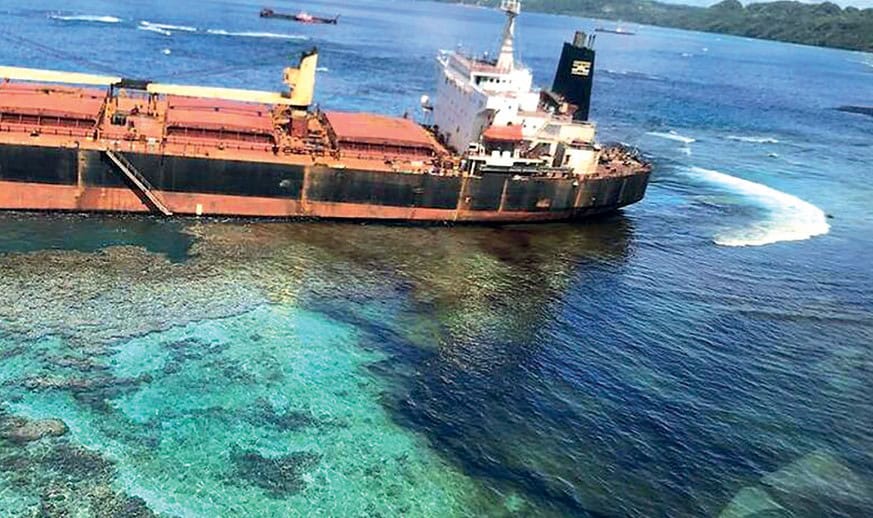
In February 2019, a bulk carrier ran aground in Kangava Bay, off Rennell Island during adverse weather. The MV Solomon Trader was carrying 10,850 tonnes of bauxite ore for a mining operation run by Bintan Mining Corporation (BMC) and its Solomon Islands subsidiary, Bintan Mining Solomon Islands (BMSI).
According to reports, in or around 2015, Asia Pacific Investment Development (APID) was awarded a mining lease over a tenement of land on the western side of Rennell Island, the southernmost island of the Solomon Islands group.
APID, a Chinese-owned Solomon Islands-based company, subcontracted BMC and BMSI to carry out the mining operations.
A brief prepared by Pacific Legal Network (PLN) states:
“Standard practice during the mining years was to use an excavator to load clumps of raw bauxite onto barges for transport to a waiting cargo vessel moored beyond the reef in Kangava Bay,” noting the area largely lacks safe access points for large vessels.
“Following this standard practice, the vessel MV Solomon Trader had arrived in Kangava Bay on 26 January 2019 and, in the days leading up to the grounding, barges of raw bauxite were being transported from the shore at Kangava Bay for loading onto the MV Solomon Trader.
This visit was not the first time the MV Solomon Trader had arrived at Rennell for this purpose.”
On February 3rd, the Solomon Islands Meteorological Services issued a strong wind warning for the area. The MV Solomon Trader was reportedly still loading the bauxite ore at this time, anchored in deeper waters close to the reef off Kangava Bay.
Weather conditions worsened by February 4th, causing the MV Solomon Trader to drag its anchor, eventually running aground on the reef at Kangava Bay on the morning of February 5th. At the time of its grounding, the MV Solomon Trader was reportedly carrying 10,850 tonnes of bauxite ore, 741 tonnes of heavy fuel oil, and 25 tonnes of diesel.
“This continued swell and wind and what we allege were attempts by crew and persons involved with mining operations at Rennell to remove the MV Solomon Trader by tugboat between 6th – 10th of February 2019 further pushed the MV Solomon Trader onto the reef, significantly damaging the portside hull,” the PLN brief reports.
“On the 15th of February 2019, a sheen of hydrocarbons was observed adjacent to the MV Solomon Trader. Progressively more oil was observed from drone overflights on 20th and 21st of February 2019, with a major oil spill observed on 22nd February 2019.
“Estimates are that more than 300 tonnes of heavy fuel oil were discharged from the wrecked ship before the oil leak was sealed, toxifying the reef and surrounding marine and shore environments.”
Following the spill, Islands Business reported on an undertaking by the Solomon Islands Government to establish a marine pollution fund to respond to such incidents, allegations by landowners that they had not received sufficient royalties for the mining of their land, and the role of the crisis in the national elections of that year.
The legal basis of the claim will be established relying on a mixture of claims for damages under the local laws of the Solomon Islands and recognised international conventions, for the allocation of liability and compensation for pollution events caused by large shipping vessels.
The landowners and communities most affected by the spill are represented by tribal, community elders and youth representatives—Anthony Tamaika, Derek Pongi, Tony Kagovai and James Tipaka.
Local Chief of Lughu Ward, Kangava Bay and Spokesperson for the community, Tony Kagovai said, “Our way of life changed on the day that the shipwreck occurred on our reef.
For six years, we have not known whether the fish we are eating are safe to eat or whether our lands and waters are free of poison. Our community deserves justice for everything we have suffered.”
The claim filed last month seeks compensation under the Solomon Islands Shipping Act of 1993, under international law as set out in the International Convention of Civil Liability for Bunker Oil Pollution Damage, and a claim for damages as a result of negligence in accordance with recognised principles of common law in the Solomon Islands.
The claim alleges that five entities are liable for the damage caused by the spill: the owner of MV Solomon Islands Trader, Hong Kong based company King Trader Ltd; Protection and Indemnity Insurer Korea P&I, a state-owned maritime protection and indemnity insurer based in South Korea and responsible for insuring the vessel MV Solomon Trader; Bintan Mining Corporation, (which has now been wound up and is owned out of British Virgin Islands; Bintan Mining (SI) Limited; and MS Amlin Marine MV, a Dutch provider of charterer’s liability with whom BMC had a policy of charterer’s liability insurance in respect of the vessel at the time of the oil spill.
The damages suffered by the claimants will be assessed as part of the legal proceedings but, according to PLN, are expected to be between US$30 and US$100 million.
William Kadi, a local lawyer representing the Kangava Bay Communities and Landowners said, “The connection between Solomon Islands peoples and their land is a sacred pillar of our unique culture.
“The communities we represent have had their traditional lands and waterways irreversibly damaged by this disaster, lands and reefs they have relied on for centuries. Today we start the process of helping the community heal by seeking justice and accountability for the mess left behind by these companies at Kangava Bay.”
Under the mining agreements in place between the operative companies and the landowners and Solomon Islands Government, monies and royalties from mining were due to be paid back to landowners and the government, but large amounts allegedly remain outstanding, and neither the government nor the community have received any form of compensation since the disaster.
As the Pacific waits for the legal battle to unfold, the people of Kangava Bay continue to suffer the adverse effects of the Solomon Islands’ most devastating man-made disaster, now six years on.