
A company found guilty of destruction on Malolo Island is still to rehabilitate the site, years after the judgement.
While the case against Freesoul Real Estate Development (Fiji) over destruction on Malolo Island was closed in 2022, the island and surrounding reef is yet to see any recovery, and Freesoul’s neighbours say they are still awaiting justice for the destruction of their waterfront access.
Meanwhile, Fiji’s Ministry of Environment says it is still awaiting Freesoul’s rehabilitation plans for remediation of the areas the company damaged.
“They’ve been fined but they still got away with it anyway” A love for the ocean, a desire to be close to one of the world’s most exhilarating surf breaks, and an appreciation for the simple life, were the perfect mix to bring Australians Navrin Fox and Woody Jack to a small corner of Malolo Island, a hidden paradise in Fiji’s Mamanuca Islands. The acquisition of their own little piece of this paradise inspired their dream of building an intimate and fully sustainable getaway to be shared with other ocean lovers; a dream they now share with Malolo Island local and the third owner of the plot in question, Ratu Jona Joseva. This dream, however, hit an early roadblock that continues nearly eight years later.
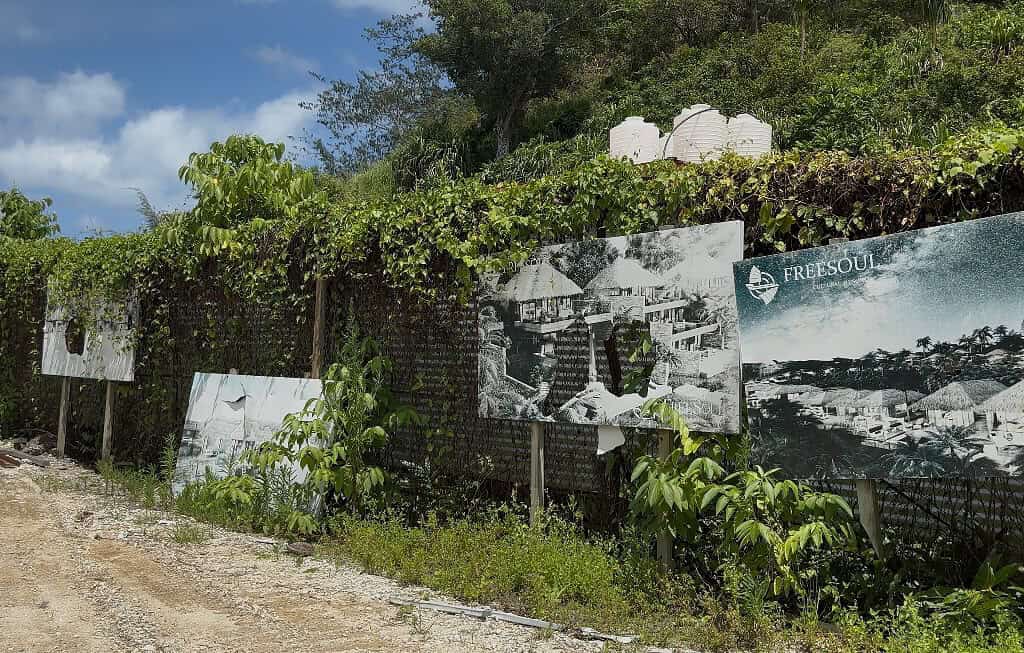
In 2017, Freesoul, a company with ties to China, led by directors Dick Peng and Ben Ma, began construction of its own getaway; a multi-million dollar, 350 villa property. The ambitious project reportedly attracted the attention of nearly 200 international private investors.
After all, who wouldn’t want a piece of the dream Freesoul was selling?
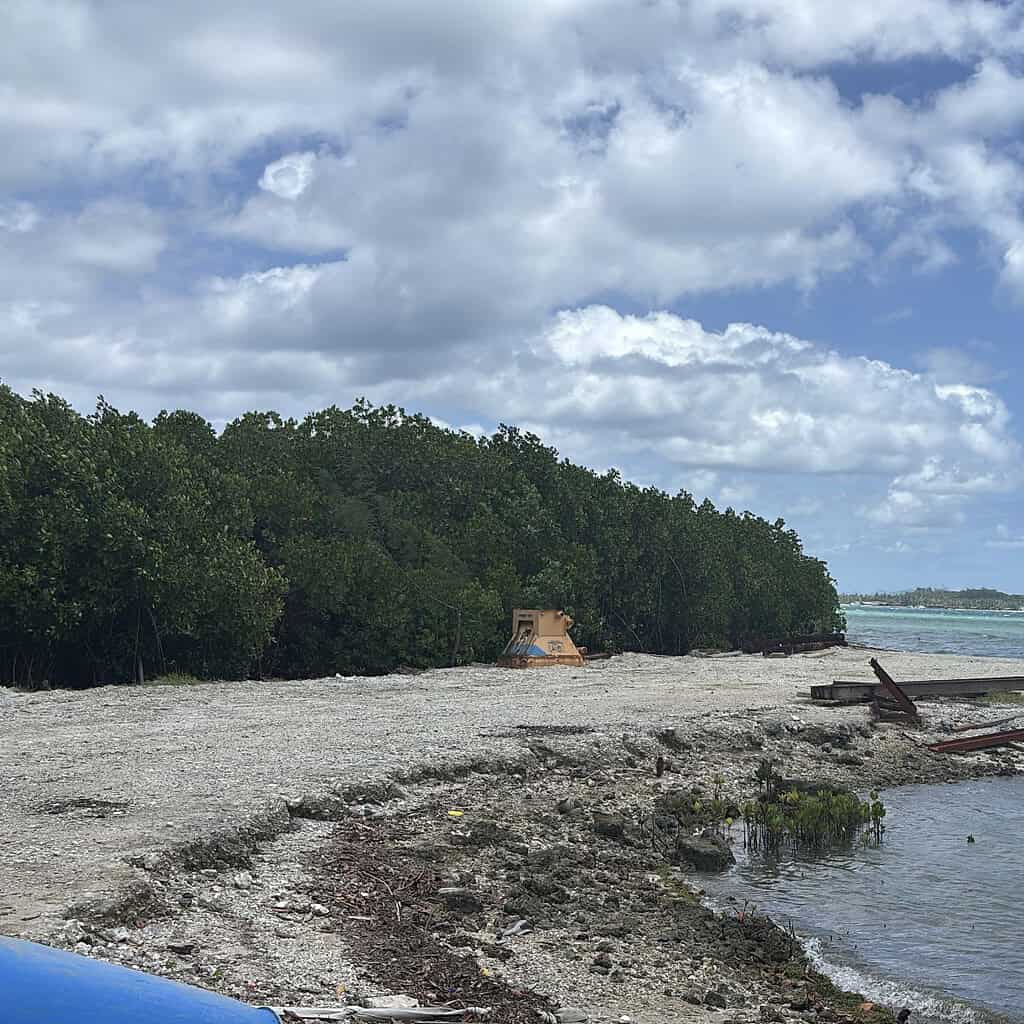
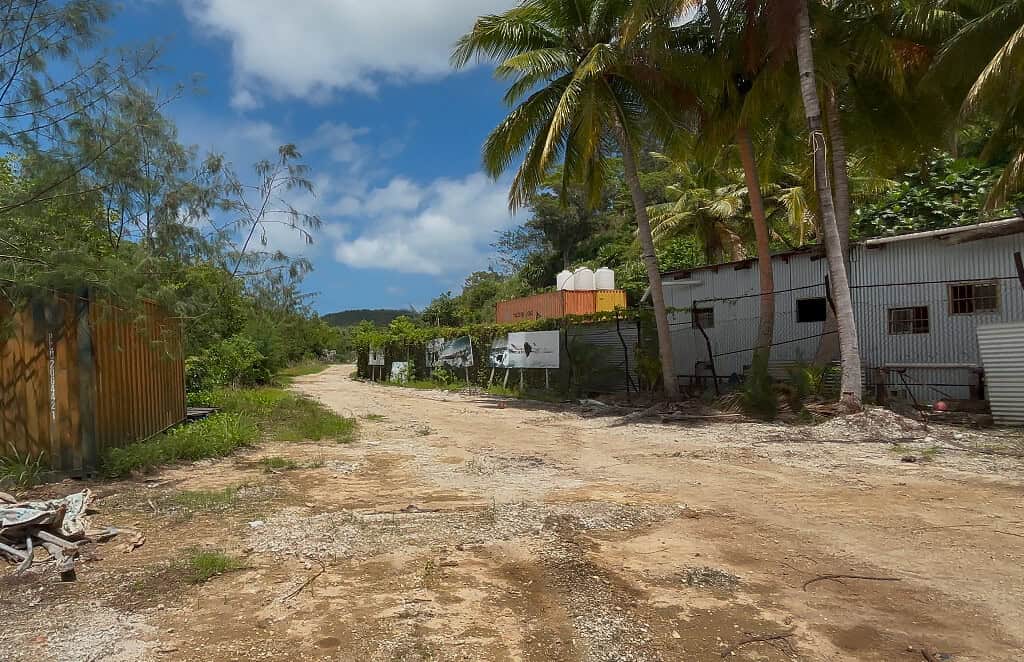
The Freesoul site, once a picture of paradisaic beauty, now stands cluttered with abandoned construction equipment rusting into the earth and sea. During a recent visit to the site, Islands Business saw evidence of mass mangrove clearing, blackened pools of tainted water, and abandoned construction waste that the surrounding vegetation appeared to be struggling to reclaim.
In 2018, Fiji’s Department of Environment issued a notice demanding Freesoul’s construction on Malolo Island be halted. Investigations found the company had conducted multiple unauthorised actions during construction, and that much of their activities on the island had been done without the necessary Environmental Impact Assessment approvals.
This included digging an approximately 20-meter-wide channel through the surrounding coral reef to facilitate access to barges, causing severe damage to the island and the surrounding sea’s delicate ecosystems.
The order appeared to fall on deaf ears as Freesoul reportedly continued its construction, taking advantage of the relatively remote nature of the island.
Woody Jack, Navrin Fox, and Ratu Jona Joseva, at this point had been occasionally enjoying their own neighbouring patch during family vacations, as the plans for their ecofriendly getaway solidified in their minds. This was, until they allowed some friends from Australia to make a visit in their absence.
“Oh, you guys have finally started work on your little hotel?” Woody Jack’s friends asked him after they visited. Confused, Jack and Fox returned to Malolo Island to see what their friends were talking about.
“In the short time it took for us to get back here to see what was going on, a channel was already forming.
And then within a week, they just dug through. In that time, the island was already different; it was like day and night. There were already barges coming in, bringing equipment,” Jack told Islands Business.
“So there’s big steel beams. Like, even some of the houses they started to build, the barracks, they’ve got steel footings into the mangrove, into the saltwater. So, the steel is going to rust into the saltwater,” Jack said of his immediate concerns upon return.
“Everything they’ve done is just an ecological nightmare, really. “And soon enough, we recognised we needed legal representation.”
In April of 2022, the Suva High Court found Freesoul guilty of two counts of undertaking unauthorised development under the Environment was finally halted, and the company was ordered to pay a FJ$1 million fine and post a refundable environmental bond of FJ$1.4 million. But the damage was done.
While Jack, Fox, and Ratu Jona have consulted several experts for ways to aid the rehabilitation of the affected ecosystem, there is little they can do while debris from the
ill-fated construction lies rotting on the island.
“It’s kind of like they’ve been fined but still got away with it anyway,” Jack said of the case’s current standing, “and not one of the people behind Freesoul have been investigated or prosecuted. We don’t know why.”
They are now awaiting a foreshore lease so they can regain legal access to their land, and to travel to and from the island as before.
“We’ve had meetings with ministers, around November, a year ago. So, they said they’ve got no objections to us having a foreshore lease. It went on, it was going well. And six months later, it all just stopped. And we’re like, ‘What’s going on?’ I said we should just wait, maybe it was fine, maybe these processes just take time. But then…we were told Freesoul has an application as well for that land. So, they get prosecuted for ruining the land, and then they get the chance to get a lease over it. Something is not right here. “And we’re like, ‘How? It’s in front of our land.’ So, there was something that put our application on hold. So now we’re just trying to get that hold taken off. We just want legal access to our land again,” Jack said. “Once we have that, we can start thinking about our little eco resort again.”
“We never wanted to come to Fiji to wreck any of the environment,” Fox added. “We wanted to respect the environment and respect the Fijian people and their way of life.
“To have Freesoul set up next to us and then also do such destructive damage right in front of our property, not in front of theirs, was very confronting. It was the polar opposite of what we wanted to do,” Fox continued.
“It’s been eight years of fighting and pushing forward now, and we’ll keep pushing,” he said.
Avoiding a band-aid situation
Responsibility for the island’s rehabilitation is officially in the hands of Fiji’s Ministry of Environment. According to Permanent Secretary Dr Sivendra Michael, Freesoul has paid its rehabilitation bond in full.
Dr Michael says that the court determined that the rehabilitation on Malolo would not be considered complete until it had been carried out to the satisfaction of the Ministry of Environment. The Ministry now awaits updated rehabilitation plans from Freesoul.
“There are two types of rehabilitation works required,” Dr Michael told Islands Business in a recent interview. “One is the Mangrove Management Plan, and the other one is the Infrastructure Coastal Rehabilitation Plan.
“Now, there are a lot of moving parts here, particularly with the second plan, which includes dealing with the reef damage. Because we have to make sure the plan doesn’t cause further harm to the reef. We have to ensure the sedimentation is controlled and controlled permanently. And then to also figure out their plans, if [Freesoul] will actually be using that channel they dug out. Because if they have to use that channel, then they have to ensure that it’s done in a way that it can sustain the waves of the boat and things like that.
“So, a lot of things need to be submitted to us before they can carry out the rehabilitation to ensure this won’t be a band-aid solution,” Dr Michael shared.
In the meantime, the Environmental Impact Assessment relating to Freesoul’s project has been cancelled. Dr Michael says it would not be re-issued until the rehabilitation process has been completed on all fronts, at which point the company may apply for the approvals again.
Fiji tourism’s drive for sustainability
While this case has been a blight on the tourism industry, Fiji has often led the region when it comes to sustainability initiatives, with many smaller eco-friendly projects making big waves over the years.
Tourism Fiji has taken a more direct role in guiding and engaging with new tourism projects from the ground up, ensuring fewer and fewer projects slip through the cracks in terms of proper process and risk environmental damage.
“While this one [Freesoul] was before my time,” Tourism Fiji CEO Brent Hill told Islands Business, “it is good to see the plan was halted and the company prosecuted.
“Sustainability should be at the heart of every new project, and we have worked with Government consistently to advocate that upfront sustainability measures be put into every new project,” he said.
“The good thing is that we and Investment Fiji, collectively, are engaging with as many of the new projects coming into Fiji as possible and that we’re aware of, and we consistently advocate for sustainability measures – renewable energy, protecting the environment, reduction of plastic, waste management, water harvesting, etc.
“It’s so important that new projects bring this mentality right from the get-go, as that enables us to continue to move forward sustainably,” Hill said.
For now, Jack, Fox, and Ratu Jona’s dreams for a small eco resort seem mired in paperwork and red tape. There has been little progress on their attempt to regain their waterfront access, and a similar application from Freesoul is still on the table, despite the damage the company caused. The Fiji Government awaits Freesoul’s full rehabilitation plans. And the abandoned machinery on Malolo Island continues to rot.


