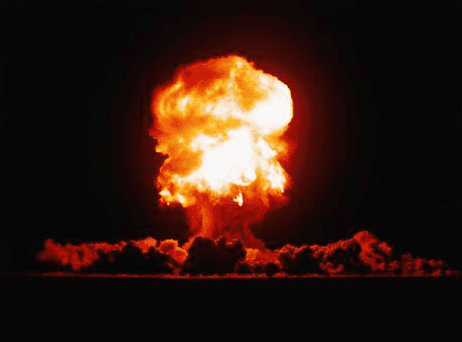
From 1966-1996, France conducted 193 nuclear explosions on Moruroa and Fangataufa atolls in the Tuamotu archipelago of Mā’ohi Nui, known in France as its overseas territory of French Polynesia.
These detonations occurred during the worldwide nuclear arms race of post-World War II – a time when geopolitical tensions of the Cold War or the East vs. West prompted developed countries to develop nuclear arms at an alarming and dangerous rate.
This forced weapon testing in what were considered remote places across the world such as Oceania, North America, Africa, Asia, and Europe. The tests and resultant worldwide tensions undeniably
put the whole world at risk of destruction. Most at risk were territories which had little to do with nuclear arms development but were forced hosts of testing programmes such as those in Mā’ohi Nui.
France officially claimed the “clean bomb” narrative until 2016, stating that the nuclear bombs they detonated over a 30-year period in the South Pacific were clean, unlike the nuclear weapons that were used by other countries. Within this logic, France’s position and insistence of cleanliness meant that there would ultimately be no immediate nor long lasting consequences. This was clearly propaganda to evade responsibility of the consequences because comparing the nuclear weapons impacts, based on scientific studies, to other countries that experienced them, there are indeed undeniable long-lasting and intergenerational impacts. These impacts are health and environmental, which are forever altered due to
nuclear exposure.
Several international treaties have been enacted to halt nuclear weapon use and testing, such as the Partial Test Ban Treaty passed in 1963, and the South Pacific Nuclear Free Zone Treaty, also known as the Rarotonga Treaty in 1986. The latest Treaty to be passed in 2017 is the Treaty of Prohibition on Nuclear Weapons (TPNW). This treaty prohibits the use of nuclear weapons activities, including development, testing, usage, etc. Another part of the treaty addresses the nuclear harms that have already occurred through nuclear weapon use and testing, which is a novel but much-needed aspect within
these types of treaties.
Today, nine countries continue to possess nuclear weapons, including France, which is the only nation within the European Union that possesses a nuclear arsenal. The US, Pakistan, Israel, China, Russia, the United Kingdom, India, North Korea, and France, have tested their weapons but failed to sign the TPNW.
Thirty years on from these last detonations in Mā’ohi Nui, the toxic paradise that France created has unfinished business when it comes to nuclear justice. That is why it is so important for justice and nuclear nonproliferation groups that France sign the TPNW. While France has given up on the “clean bomb” narrative of the past, the ecological and health damage caused by the tests are yet to be fully addressed by the French state.
Medical care in the territory remains inadequate, with only one fully functioning hospital on the main island of Tahiti. The other islands, which experienced nuclear fallout from the atmospheric tests, sometimes only have one doctor or nurse residing on the island, accompanied by a small clinic. These
clinics and the one hospital are not fully able to address the 23 radio-induced cancers, recognised by the French state, that are the result of the nuclear testing. Some cancer patients have to fly to France in order to receive treatment, far from their families and home.
By abstaining from signing this Treaty, France continues to evade responsibility for their nuclear past and ongoing consequences due to those tests they detonated in Mā’ohi Nui, 30 years ago.
This is why a Ma’ohi delegation made the voyage from Pape’ete, Tahiti to New York from March 4 to March 7, 2025, to attend the Third Meeting of State Parties (3MSP) for the Treaty of Prohibition on Nuclear Weapons (TPNW). This is the largest delegation of nuclear justice activists from Ma’ohi Nui yet to attend the Meetings, but this is essential, as the nuclear legacies in Ma’ohi Nui are ongoing. By attending
these meetings, the delegation is able to advocate to France to sign the Treaty and to build coalitions with other affected communities and allies.
For most affected communities, the experiences of nuclear testing and the consequences are eerily similar. Our nuclear histories are usually hidden from us as youth, and we learn more about the nuclear exposures and fallouts over the years, and mostly as adults. There are high rates of cancers, stillbirths, malformations, and mental disorders within our communities, which tend to be intergenerational, starting
from grandmother or father down to grandchildren. And the environmental impacts and data continue to be difficult to obtain, as there is usually a lack of research, and more importantly, very few independent studies that have been conducted which are available to communities. The states that conducted these nuclear weapons tests are consistently lacking in transparency and accountability across the globe.
Therefore, this Treaty on the Prohibition on Nuclear Weapons is incredibly important to discontinue the
development or potential use of nuclear weapons, considering all the harm it has already caused and could further cause in the future if used again. But also, this Treaty is important to address the health and environmental impacts. These are clear human rights violations as the right to a healthy and clean environment is the right to all. By ignoring our pleas and ignoring to sign the Treaty, France ignores its responsibility to Ma’ohi people, allowing for these human rights violations to continue.