When African Swine Fever was found in the Southern Highlands Province of Papua New Guinea just after COVID-19, authorities feared a run on the banks.
Literally.
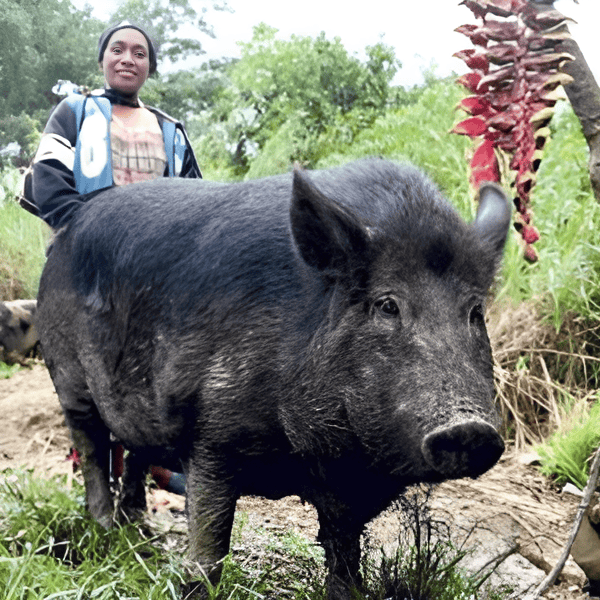
In much of the highlands, pigs are banks. Pigs represent wealth, savings, and investment.
With an estimated pig population of 3.5 million worth an average PGK3000, African Swine Fever—with no known cure—poses a PGK9 billion threat to the economy.
To stop the threat, the National Quarantine and Inspection Authority launched a multi-faceted response,
deploying veterinarians to affected provinces to conduct tests and raise awareness.
Josephine Inguba was moved from her clinic in Lae and thrust into a role usually performed by men.
In a land of 832 languages, it was not easy to pass on the message that pig movement must be controlled.
Inguba faced the additional challenge of convincing pig owners, who were dependent on their animals as payment for goods and services or as settlement of debts with neighbouring clans.
That meant changing mindsets of communities in which pigs are the central means of revenue, savings, payment and investment.
For this to happen, change must be led by the leaders themselves.
But how do you change the mindsets of men when you are a woman in a patriarchal society?
In the Papua New Guinea case, industry experts and the quarantine authority recognised the special links between women and the care of pigs in highland communities. So, special care was taken to introduce female agriculture officers to the battle against swine flu.
Inguba and three female colleagues stood on the front line and slowly, gradually, pushed the disease out of and away from communities. They saved lives and traditional economies.
This largely unrecognised work by women continues today across the region – providing advice, supporting the economy, protecting national health.
That work is not without challenges to Inguba and the other women who must work in communities in which they are often seen as out of place – even second-class citizens.
In some villages, their views may be rejected outright by the men, based on nothing more than gender.
Throughout the Pacific, women take to the fields—or in some cases, the ocean—every day as essential parts of national economies.
Some, like Inguba, are experts in their field, highly trained, skilled, fountains of knowledge, which can be shared for the sustainability of livestock management and community self-determination.
Others are like Premila Devi, a Fijian cane farmer, forced by the death of her husband to make a living off the land with no training or prior knowledge of farming. She was driven by necessity and took the task on with passion.
These women and thousands of others make enormous contributions to society. They feed families and provide income. In many cases, they are sole providers due to death or abandonment.
It is time for community leaders to pay more attention to Pacific women and give them the credit which they so rightly deserve.