Agriculture remains the root of stable economies across the Pacific.
While no accessible database offers real-time statistics for 2025, recent reports from four Pacific Island nations can provide insight into what’s being grown and how.
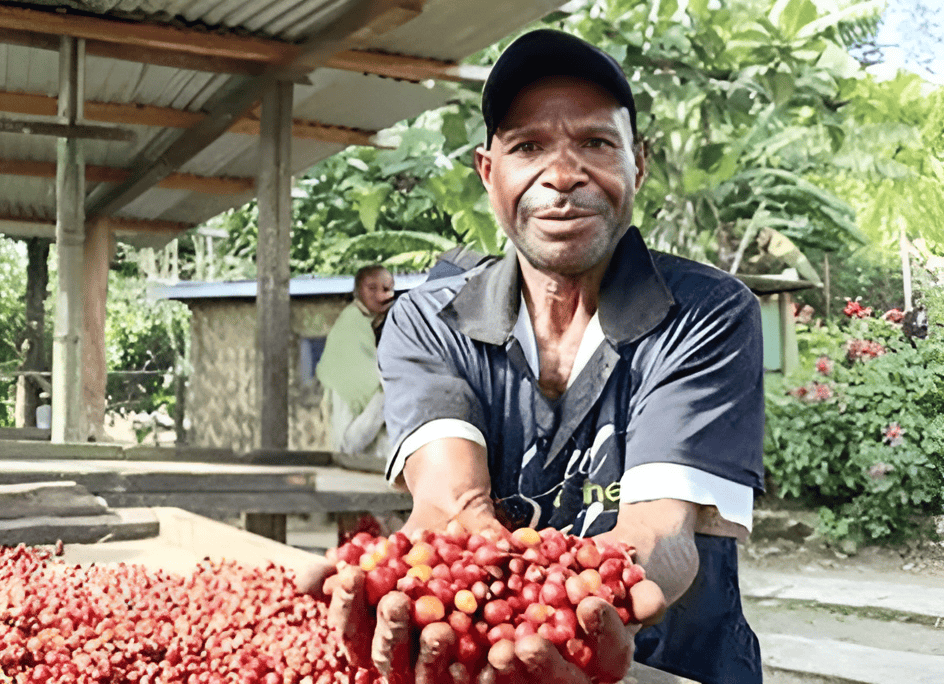
In Papua New Guinea, agriculture reportedly remains overwhelmingly household driven.The country’s cocoa sector supports “the livelihoods of 150,000 households in 14 provinces,” according to a 2024 briefing on PNG’s agricultural commodities.
Cocoa yields 43,000 tons of dry beans valued at US$84 million annually.
Other widely grown crops include vanilla, produced by 130,012 households, with a national output at 300 metric tons per year, and coconut, which involves 440,328 households at 96,665 metric tons per year.
The livelihoods of the people of PNG were reported to be 85% dependent on agricultural production, while agricultural products also made 28% of total exports for the nation, contributing significantly both at the individual and national level.
In Samoa, subsistence models of farming are similarly widespread. According to a report presented at the 2024 Hand in Hand Investment Forum, “67% of all households in Samoa grow coconuts,” followed by taro at 64%, and cocoa at 56%.
While most taro is grown for domestic use, an estimated 800 out of a total of 18,320 taro growers in Samoa reportedly supply the export market.
The report notes that “Samoa’s agriculture sector transformation aligns with government priorities to boost local production of cocoa, coconut, and taro, ensuring food security and economic resilience.”
The Commonwealth of the Northern Mariana Islands (CNMI) presents a different production profile.
According to its 2023 agriculture census released in March of 2025, “vegetables and melons represented the largest category of crop production in farms in the CNMI.”
Cucumbers reportedly lead the way with approximately 52 metric tons harvested, followed by watermelons at about 47 metric tons, eggplants at about 29 metric tons, and tomatoes at about 26 metric tons.
While Pacific nations largely continue their focus on subsistence produce, locally sold cash crops, and raw exports, some have ventured into niche exports based on local agricultural strengths.
Kava-based pills and bottled drinks, gluten-free flour products, seaweed products for the cosmetics industry, and chocolate from the Pacific, appear to be gaining popularity abroad.
Together, these snapshots reflect a region where root crops, cocoa, coconuts, and increasingly vegetables, remain central to local livelihoods, while an increasing interest in value-added products from the Pacific has allowed exports to diversify.