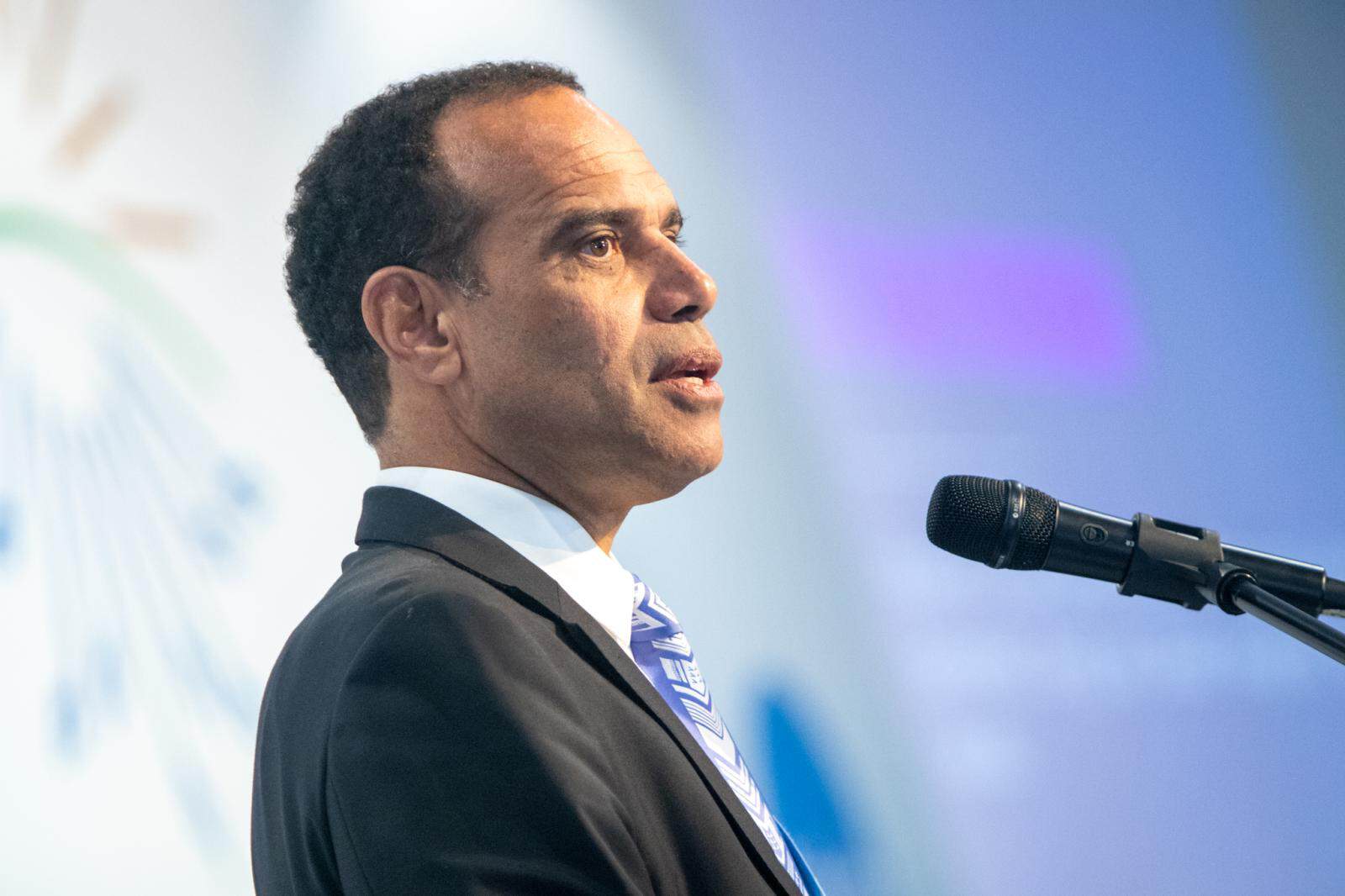
FIJI Prime Minister Sitiveni Rabuka’s resolute declaration that the Pasifika remains “friends to all, enemies to none”, cutting through baseless speculation about Chinese military bases, wasn’t mere diplomacy. It articulated a fundamental truth echoing across our Blue Continent. This stance, reinforced by Pasifika leaders and China’s focus on infrastructure over militarisation, transcends passive neutrality. It is the only viable foundation for a foreign policy navigating the turbulent geopolitical currents swirling around
our islands.
The tired narrative persists: every partnership with Beijing triggers warnings of military outposts or “debt traps”. Rabuka dismissed this manufactured paranoia with clarity: “China doesn’t need bases here, and we don’t want them. Our reality is tangible development – Chinese-funded roads connecting Fijian villages, Juncao mushroom projects supporting farmers, stadiums like Honiara’s built for the Pacific Games. This is our focus.”
Yet, true leadership demands more than rejecting external pressure. It requires proactive, unified regional action defined exclusively by our needs. Consider Fiji’s offer of personnel to the ranks of Australia’s military. While pragmatic, it missed a crucial chance for collective agency. Imagine the impact had Fiji championed a regional mechanism, negotiated through the Pacific Islands Forum (PIF). This would address shared concerns while demonstrating the Blue Pasifika’s collective strength and independent purpose. This is the ambition our moment demands.
The unapologetic core: sovereignty defined by us
At the heart lies “selfish” sovereignty: unwavering focus on our survival, prosperity, and values, defined by us, through the PIF and Blue Pasifika vision. PIF aspirations—absolute sovereignty, people’s well-being, ocean stewardship, people centered development—are non-negotiable bedrock. As Rabuka stated, “We are not ready to sacrifice our relationships with Australia and New Zealand and America, just because of what China has done.” Nor should we sacrifice vital development partnerships under duress. Any arrangement compromising these core aspirations, dividing our ocean, or demanding bloc alignment, corrodes the unity that is our greatest strength. This is a red line.
Confronting our true existential threats
The gravitational pull of US-China rivalry is immense. Initiatives like AUKUS, facing its own doubts, exemplify external security architectures. Yet, as Fiji and Solomon Islands show, our primary engagement remains development: roads connecting communities, climate-resilient bridges, hospitals, food security projects. Our existential threats are not imported rivalries. They are rising seas, intensifying cyclones, and the corrosive waves of poverty and inequality. These demand our collective will and resources. Diverting focus to security dilemmas serving external interests is neglecting our own burning house.
Active non-alignment: our strategic imperative
Rabuka’s “friends to all” is not passive; it is our active strategy. It means channelling finite resources exclusively towards our survival and prosperity:
- Climate Resilience as Leadership: We must lead the
global fight against the climate crisis we suffer most
from, demanding action and finance commensurate with
this existential threat. - Poverty Alleviation & Self-Determined Development:
Building resilient economies serving our people. Adopt
effective models—like aspects of China’s anti-poverty
drives—strictly on our terms, free from geopolitical
strings. - Fortifying PIF Unity: Making the Forum the undisputed
engine of collective action.
Fiji, Papua New Guinea, and all members must lead for
the region. Fiji’s foreign policy review is a start, but requires
constant re-evaluation through a regional lens. Leadership is
earned by actions uplifting the entire Pasifika family.
Harnessing our indigenous power
The capacity for this independent policy resides here. We possess formidable intellectuals like Teresia Teaiwa, experienced diplomats like Peter Eafeare, and cultural leaders like Winifereti Nainoca, with deep understanding of our unique challenges. It is an obligation to harness this expertise. We must reject the colonial mindset that solutions require external approval. Crafting our “selfish” agenda means defining interests solely through Pasifika realities: atoll vulnerability, poverty eradication, youth aspirations, cultural
preservation.
Our current rises now
In a world where great powers see oceans as chessboards and islands as pawns, hesitation is an existential gamble. Our path isn’t choosing between Washington, Beijing, or blocs. It is choosing ourselves. It demands the courage, shown by Prime Minister Rabuka, to declare: Our ocean, our priorities,
our solutions. Let the Pasifika rise not as a ripple from another’s tide, but as our own powerful, undeniable current. The time to craft that wave—selfishly focused, united in purpose, unapologetically sovereign—is now.