AT the heart of politics today is a striking contradiction – the need to transition away from fossil fuels
while continuing to develop these energy sources.
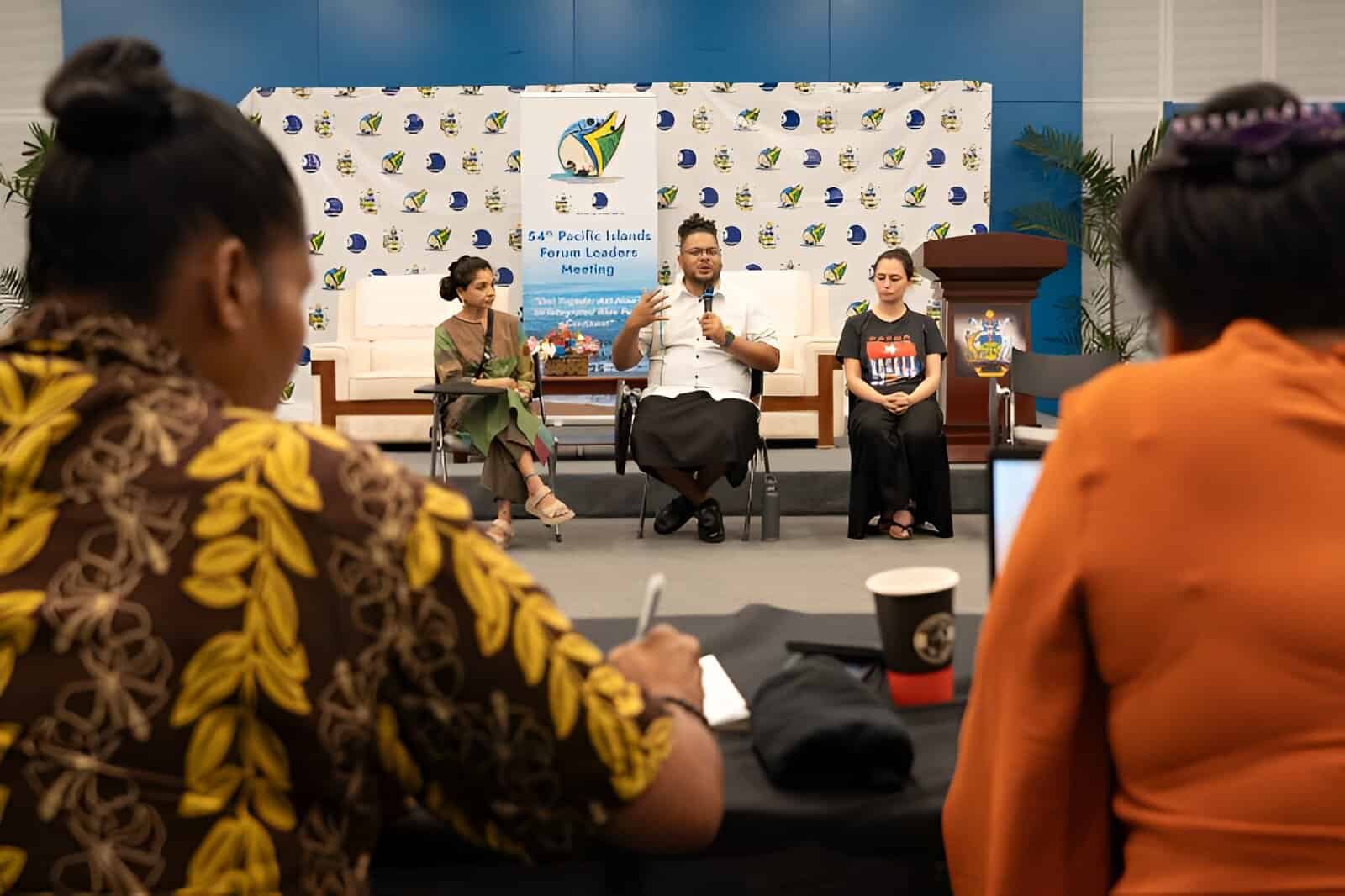
Pacific Islands Climate Action Network (PICAN) Director Rufino Varea described this Global
Production Parado as central to the reality faced by Small Island Developing States.
And this has formed the basis for PICAN’s urgent call for global accountability ahead of COP30 in Belém.
“The UN process now recognises the need to transition away from fossil fuels, yet the physical economy has continued to expand oil, gas, and [in several regions] coal production,’’ Varea said.
The evidence for this contradiction is stark. This year’s Statistical Review of World Energy shows that between 2015 and 2024, the United States increased oil production by roughly 40% and natural gas production by 40%.
Over the same period, Australia’s natural gas production increased by approximately 102%, and Brazil’s oil output rose by around 38%. Meanwhile, coal production surged in several major producers, including China, India, and Indonesia.
“The outcome is the same: a global energy trajectory that hard-wires emissions and undermines the 1.5°C limit Pacific peoples fought to secure,” Varea said.
The net effect of this continued expansion is to “load more risk onto communities who neither caused nor can offset the damage.”
While responsibility and capability differ profoundly across countries, for PSIDS (Pacific Small Island Developing States), the urgency of closing the ambition and finance gaps “is not rhetoric; it is about the continuity of our societies, cultures, and economies in a rapidly narrowing window of safety.”
Against this backdrop of rising emissions, the Pacific has actively moved the centre of gravity of global climate governance.
“Ten years ago, the collective voice of the Pacific Islands helped embed the 1.5°C warming limit in the Paris Agreement as a scientifically grounded survival line.”
The Pacific’s constructive leadership has continued since then. The region pushed for the 1.5°C guardrail in 2015 and introduced the Talanoa Dialogue in 2017 to bring transparency and lived experience into the UNFCCC.
Years of SIDS advocacy culminated in a landmark COP27 decision to create a Loss and Damage Fund.
More recently, Pacific diplomacy powered the Port Vila Call for a Fossil Fuel-Free Pacific and helped deliver the UN General Assembly’s request for an International Court of Justice Advisory Opinion (ICJAO) on climate change.
“The Advisory Opinion strengthens legal clarity around states’ duties to prevent climate harm, including from exported emissions,” Varea said.
It makes plain that failing those duties is “an internationally wrongful act requiring remedy”.
This language, if taken seriously by developed countries, should significantly increase the risk profile for new fossil fuel expansion.
The primacy of law was evident in the outcome of the recent Honiara Leaders’ Meeting (PIFLM54). By commending the request for the ICJAO, leaders signalled that climate action is not merely voluntary.
“The Opinion’s articulation of duties to prevent harm and protect human rights creates a legal yardstick that applies to every Forum member, including Australia and New Zealand,” Varea noted.
“The communiqué’s endorsement of the ICJ process is a quiet ‘no’ to policies that lock in new fossil expansion, whether at home or via exports.”
The 1.5°C hard limit and COP
PICAN International Policy Lead Dr Sindra Sharma said that for Pacific peoples, the 1.5°C warming limit is treated as a hard limit.
This is because the science around overshoot—exceeding 1.5°C, even temporarily—is clear: “It is a trigger for irreversible loss that later cooling cannot unwind.”
The consequences are existential. At approximately 2°C of warming, up to 99% of tropical coral reefs are projected to perish, leading to the collapse of food security, coastal protection, livelihoods, and the cultural identity tied to reefs.
This overshoot locks in centuries of sea-level rise that cannot be “repaired” by future carbon removal.
Sharma highlights how this translates into more than just material damage in Pacific testimonies: “Graves and sacred places surrendered to the tides; ceremonies interrupted by the loss of key species and plants; and the tearing of language and knowledge systems when the vanua (land), people, and spirit are forced apart.”
This profound threat is why the Pacific’s advocacy is distinct: “Our advocacy integrates both scientific guardrails and lived realities.”
Overshoot research calls for making irreversibility visible and for setting justice-centred guardrails on carbon dioxide removal and geoengineering, so risks are not shifted onto those least responsible for the crisis.
With the Paris Agreement entering its second decade, COP30 is where “ambition must be measured in deliverables”. The necessary steps are not mere “asks”, but “the minimum conditions for credibility after a decade of drift”.
According to Sharma, the priorities for COP30 are clear:
- Countries should lodge on-time, 1.5°C-aligned 2035 NDCs that translate the “transition away” mandate into time-bound national plans, including an end to new coal, oil, and gas approvals and the phase-out of fossilfuel subsidies.
- Finance must catch up with the reality of the extent of the climate crisis. The New Collective Quantified Goal (NCQG) should lock in grant-based, new and additional, predictable public finance at scale.
- The Loss and Damage Fund needs upfront capitalisation, regular replenishment, direct SIDS/community access, and procedures that move grant-based resources in weeks and months, not years.
“If COP31 is to be a genuine ‘Pacific COP’, Australia, in particular, faces concrete credibility tests.
“Endorsing legal principles at the Forum and then pursuing contradictory domestic expansion is a gap that cannot be bridged with branding.”
Sharma outlined the litmus test PICAN will apply to assess Australia’s commitment and determine whether the bid is merely a “greenwashing” tactic. This test is based on three key deliverables that must be in place by COP30:
- Revisiting its 2035 Nationally Determined Contribution (NDC) to align with the 1.5°C target.
- Halting approvals and planned life extensions for new fossil fuel projects inconsistent with the 1.5°C pathway.
- Presenting a multi-year, grant-based public finance package for Pacific Small Island Developing States (PSIDS), encompassing the Pacific Resilience Facility, Loss and Damage Fund, Green Climate Fund (GCF), and simplified SIDS windows with direct access.
“The region has already signalled the measure: partnership will be judged by delivery against the science-and-justice yardstick we set – not by slogans, nor by diplomatic choreography,” he said.
The Pacific has provided a path to realign law, finance and policy with a liveable future. They have insisted that the meaning of 1.5°C be translated into protections for people, cultures, and ecosystems that endure.
He asserts, “COP30 must be where that leadership is met with proof – proof that the world is willing to align production with pathways, finance with need, and targets with time.
“For our islands, this is not a technical debate. It is about whether our children will inherit the Pacific they recognise as home.”