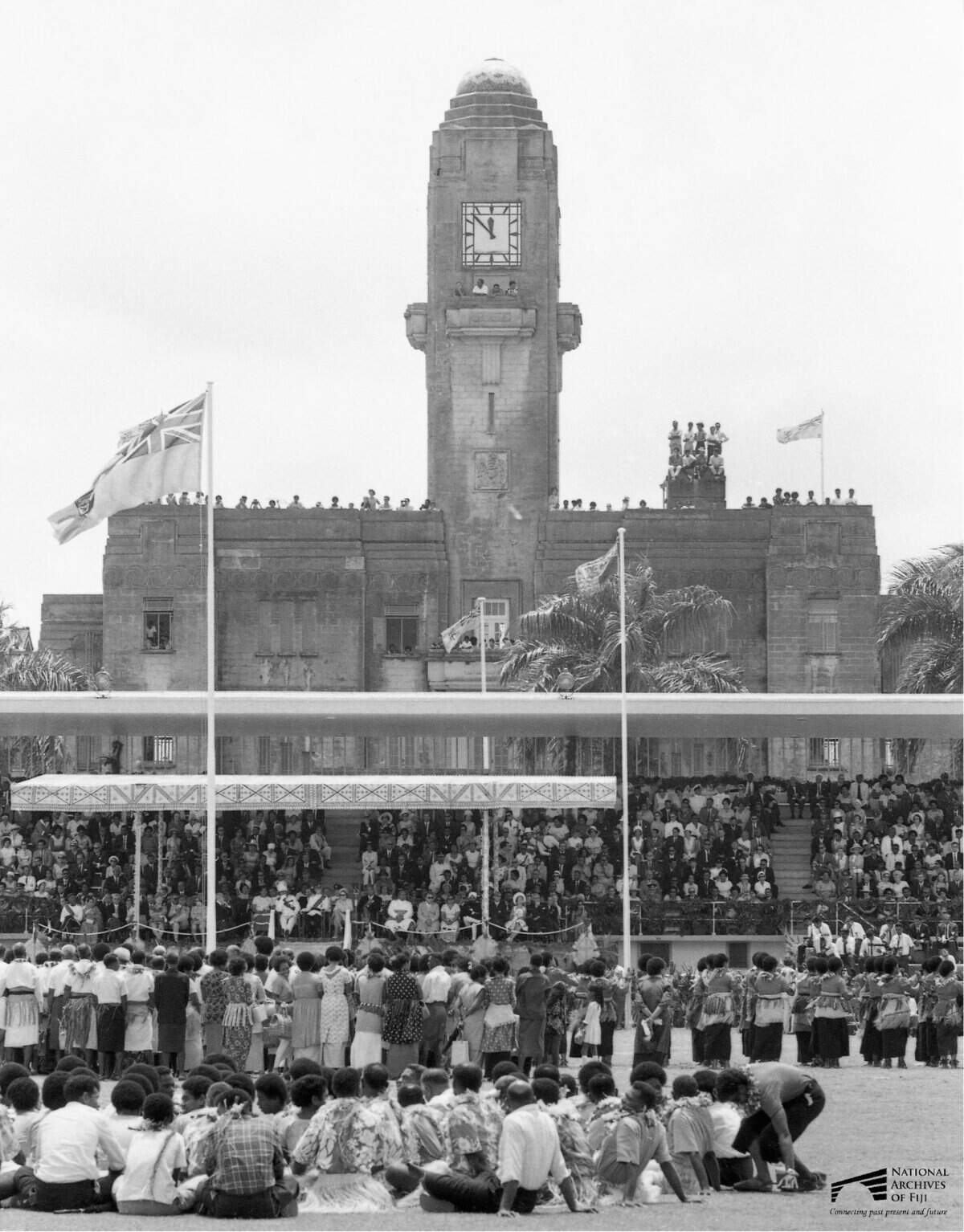
OCTOBER 10, 1970, was a milestone for Fiji as it regained its independence after close to a century of British colonial rule. This moment not only changed Fiji’s status but handed political power to its people.
“Fiji gaining independence meant a shift from colonial rule to self-rule,” says Emeli Tolo, a politics lecturer at the University of the South Pacific (USP).
“Not only was it a change of status, but it also meant real autonomy. Fijians were going to have to make their own rules and make their own decisions that would cater for domestic and foreign affairs.”
Independence brought both hope and responsibility. Fiji’s leaders had to forge a nation from diverse ethnic groups— mainly indigenous Fijians and Indo-Fijians—with distinct cultures and histories.
Ratu Sir Kamisese Mara, Fiji’s first Prime Minister, and often called the founding father of modern Fiji, played a pivotal role during this time.
“He worked to maintain stability by navigating deep ethnic divisions,” Tolo explained.
Mara helped draft the 1970 Constitution, which created a parliamentary system, blending communal and national seats to ensure balanced representation, while protecting indigenous land rights.
Yet, ethnic tensions and political struggles persisted. Nai Lalakai Chief Editor Sailosi Batiratu reflects on Fiji’s ethnic relations: “On the individual level, we get along fine… but when our interests clash in regard to land and political leadership, things can get really nasty.”
Batiratu noted these divisions partly stemmed from colonial legacies that created racial separation and mistrust.
Since independence, Fiji has experienced several coups d’état, starting in the 1980s, which profoundly impacted its political landscape.
“Three or four coups is too many,” Tolo said.“It has definitely made me see democracy played out as
being mocked.”
The coups challenged the nation’s democratic values and created uncertainty about leadership. Still, they also revealed how Fiji’s people and leaders grapple with freedom and governance.
“Leadership is about the ability to influence,” Tolo adds.
“Since the 1980s, I’ve seen how our leaders have had the ability to take ownership of what they thought was best for the people, the nation, and even for themselves.”
Despite these challenges, Fiji has emerged as a prominent regional leader in the Pacific.
Anawaite Dolavale, a history lecturer at USP, reflects on independence as a pivotal moment when Fiji “asserted the right to shape its own path” – a foundation of resilience that continues to guide its leadership in the region.
Fiji’s regional role dates back to colonial times, when the British Governor of Fiji also served as High Commissioner for the Western Pacific, overseeing much of the region.
Later, Mara’s vision helped establish the Pacific Islands Forum, the Melanesian Spearhead Group, and other key regional bodies.
Batiratu emphasised Fiji’s importance in regional cooperation: “Because of its lead role in the inception of the Forum, Fiji is looked up to as a Pacific leader.”
However, he also noted that some viewed Fiji’s coups as a controversial assertion of indigenous rights, sparking debate over legality and justice. Nonetheless, Fiji’s prominence in Pacific affairs remains undeniable.
Fiji now faces important political and social tasks to maintain stability and continue its leadership role.
Tolo outlined key priorities: “There’s a lot to be done – political reforms, promoting equality, collaboration, inclusive implementation, and regionalism.”
She stresses that progress may be slow, but it’s necessary for sustainable growth.
Dolavale emphasised the ongoing responsibility Fijians bear: “Independence remains a reminder of our resilience and identity, as well as the duty we all have in upholding the vision our leaders had for the nation.”
As Fiji celebrates 55 years of independence, it reflects a nation that has faced internal divisions, political upheavals, and societal challenges – yet continues to rise, adapt, and lead in the Pacific.