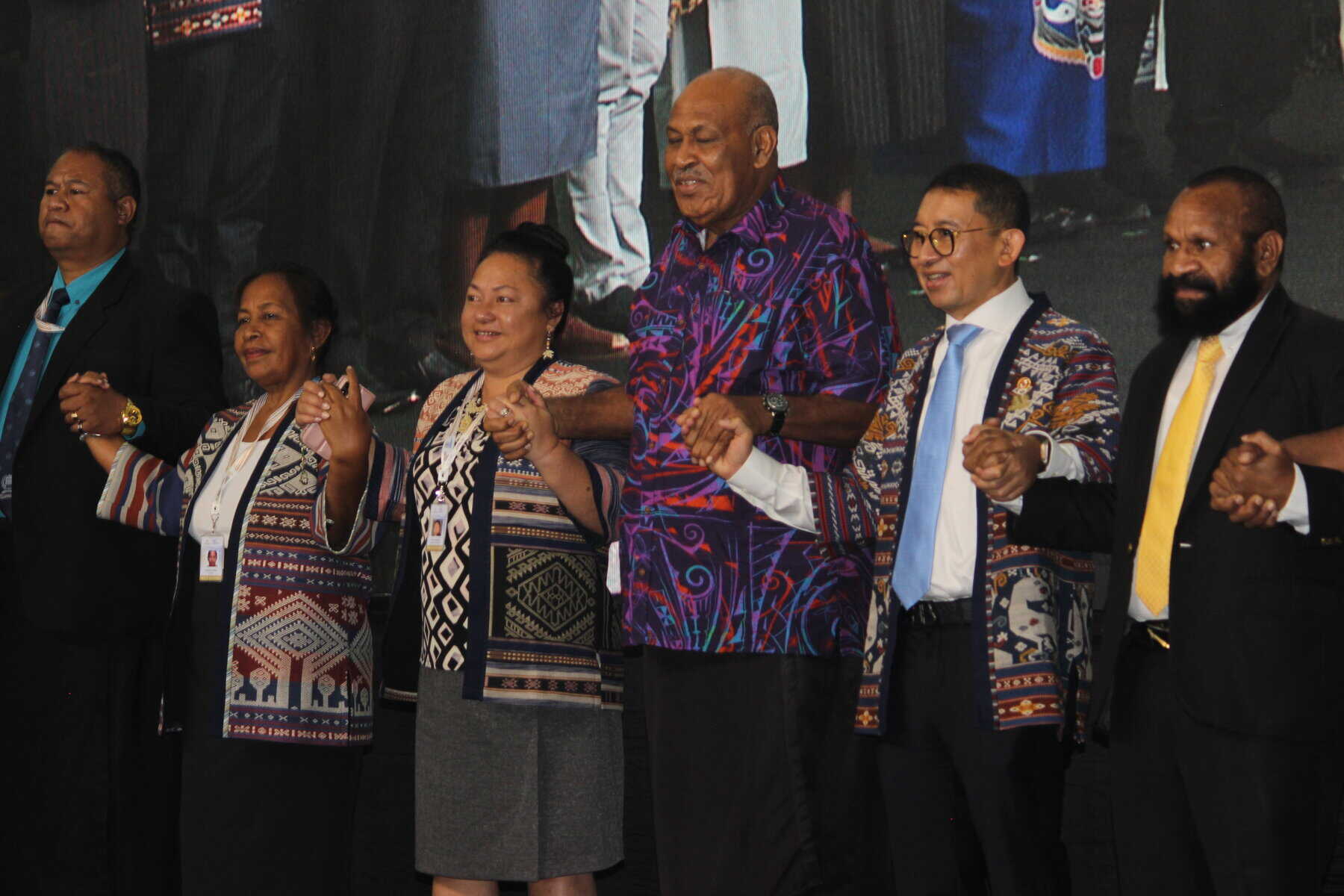
INDONESIA and Pacific Island nations signalled a new era of cultural cooperation at the Indonesia–Pacific Cultural Synergy (IPACS) 2025.
This was a gathering that blended diplomacy, creativity and tradition to advance regional unity and climate resilience.
Over three days in Kupang, delegations from 13 Pacific nations joined Indonesian artists, policymakers and communities in a landmark gathering that blended political dialogue with vibrant cultural showcases.
Hosted by Indonesia’s Ministry of Culture, IPACS 2025 became one of the region’s most comprehensive efforts yet to strengthen cultural diplomacy and build long-term cooperation.
Indonesia’s Minister for Culture, Dr Fadli Zon, opened the forum by reminding delegates that Pacific links long predate modern borders.
“The sea has never divided us. It has always connected us,” he said.
Zon highlighted Indonesia’s immense cultural diversity—17,000 islands, 1340 ethnic groups and 780 languages—describing it as a natural bridge to its Pacific neighbours.
He outlined the rising value of cultural and creative industries, which contribute $USD4.3 trillion globally, and said Indonesia’s creative sector is projected to add $USD9.8 billion to GDP by 2027.
But he warned of cultural loss driven by climate change.
“Seventy-three percent of UNESCO-listed sites are at risk,” he said, calling this “a cultural emergency” for island communities.
One of the most talked-about features of the exhibition was the bamboo innovation showcase.
Indonesia’s Environmental Bamboo Foundation demonstrated bamboo bicycles, bowls, utensils and eco-friendly products sparking excitement among Pacific artisans.
Fiji’s Elesi Koroi said she was eager to teach communities back home how bamboo could boost household incomes.
Solomon Islander Daisy Michael added: “We should plant more bamboo. It’s a material full of possibilities.”
A shared cultural vision for a resilient Pacific
The meeting produced a Joint Statement titled, “A Shared Cultural Vision for a Sustainable and Resilient Pacific.”
It outlined three priority pillars:
Socio-cultural development – empowering women and youth, expanding cultural exchanges, digitising archives, and combating illicit trade in cultural objects.
Cultural and creative economy – strengthening creative industries, eco-tourism, digital entrepreneurship, and improving skills and market access.
Culture and environmental sustainability – integrating traditional knowledge in climate adaptation and protecting heritage sites from rising seas.
The statement also endorsed an Indo-Pacific Cultural Network and deeper cooperation on archives, repatriation and joint UNESCO nominations.
Fiji’s Minister for iTaukei Affairs, Ifereimi Vasu, welcomed the Joint Statement but stressed that new commitments must undergo national consultations.
“Any new programmes or institutional commitments will require Cabinet approval,” he said.
Fiji advanced discussions on cultural education, creative industries, UNESCO heritage work, and restoring visa-free travel for Fijian nationals visiting Indonesia.
Solomon Islands Minister for Tourism, Choylin Yim-Douglas, described the forum as “rewarding, informative, inspiring, and wonderfully entertaining.”
She said the key takeaway for her country was the potential of the creative economy to transform Pacific livelihoods. The Solomon Islands will also review the Joint Statement before Cabinet adoption.
Papua New Guinea’s Minister for Tourism, Belden Namah, stressed that PNG’s cultural wealth—800 languages and over 1000 tribes—is a powerful economic asset.
“Tourism is not just about visitors,” he said. “It is about celebrating our identity.”
Namah praised Fiji’s tourism-culture model and said PNG aims to harness its heritage for jobs, unity and national pride.
Vanuatu Cultural Centre Senior Officer, Sikadra Nellie Tovosia, said IPACS strengthened Vanuatu’s cultural diplomacy and highlighted the role of heritage in climate resilience. She welcomed opportunities for cultural residencies, academic exchanges and creative-industry training.
Tovosia also called for deeper Melanesian ties, including expanded mobility for West Papuans.
“By opening opportunities for movement, education and economic participation, Indonesia will strengthen understanding across Melanesian communities,” she said.
As the forum closed, Indonesia’s Minister of Culture, Dr Fadli Zon, said IPACS 2025 had become “a vibrant celebration of our shared cultures and a testament to the enduring friendship between Indonesia and the Pacific.”
Delegates left Kupang with a clear message: culture is not only identity, but also a tool for diplomacy, resilience and a shared Pacific future.


