BUILDING strong ties with regional universities and churches ensures climate education reflects local realities and cultural values.
Engaging universities like the National University of Samoa (NUS) and regional partners helps document how customary land ownership in Samoa affects climate mobility.
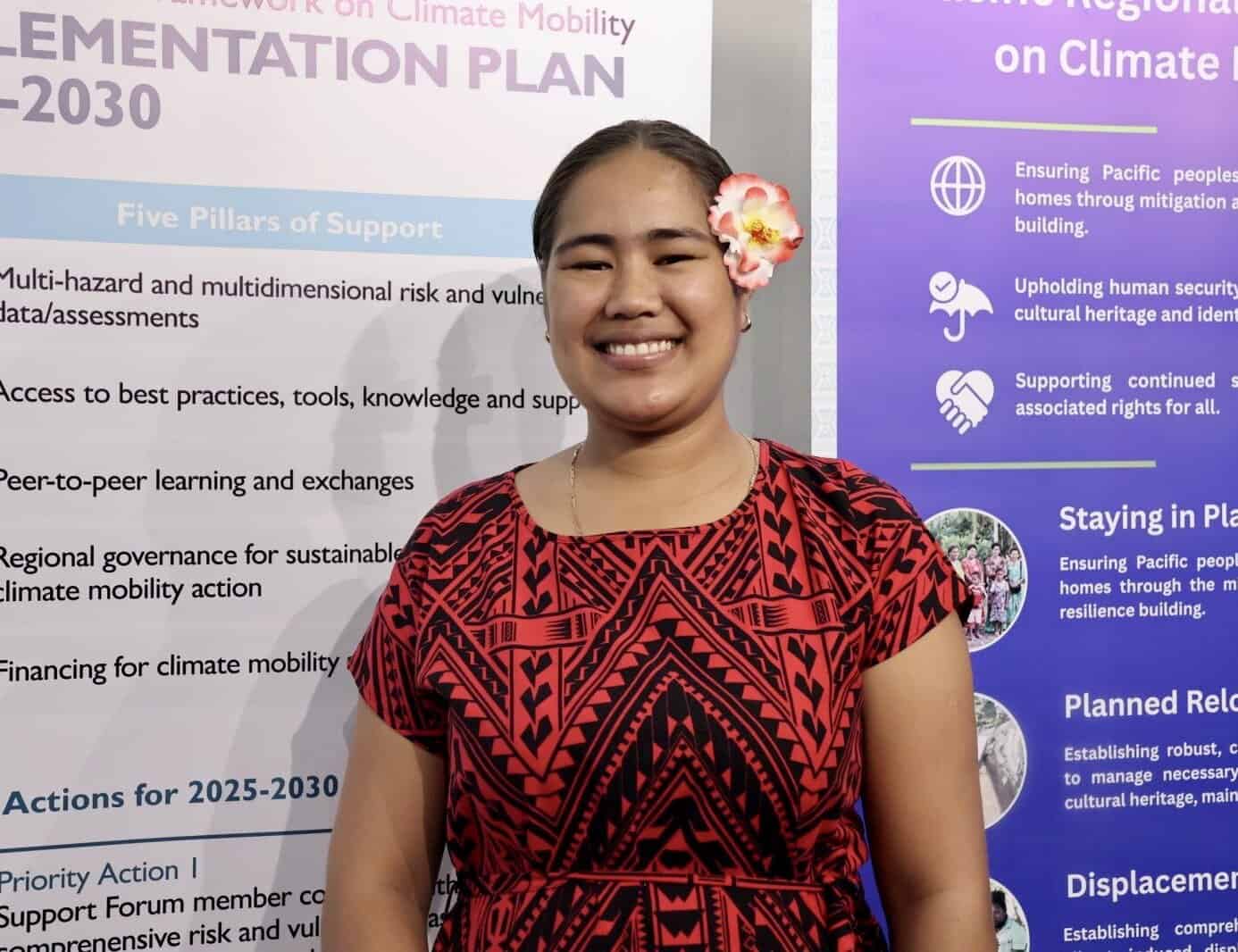
“This research bridges lived experience with policy, ensuring climate strategies respect cultural realities,” said Yumi Epati Tala’ave, Media and Journalism Lecturer at NUS. “Combining storytelling and knowledge exchange across the Pacific strengthens community-rooted climate responses.
“This approach supports decision-makers in creating policies that honour local land-use traditions, and it addresses the critical need to make climate mobility solutions relevant and effective in affected communities.”
Partnering with church education institutions extends climate education to grassroots levels. The first places of learning for many Pacific children are the family and in church.
Tala’ave said integrating climate topics into Sunday schools and youth programmes connects issues to values like stewardship.
“Churches can help frame climate change as a moral responsibility, increasing community buy-in, and this partnership makes climate action relatable and inspires collective efforts beyond scientific facts,” she said. “It creates a trusted communication channel reaching audiences who might not engage with formal education.” Combining academic rigour with faith-based community reach makes climate education both credible and accessible.
She added that universities could bring scientific expertise to learning centres while churches provided cultural grounding and trust. And this dual approach would help embed climate knowledge into everyday life and local values. “It ensures climate topics resonate emotionally and intellectually with diverse audiences,” Tala’ave said.
“The collaboration helps overcome scepticism by respecting spiritual perspectives alongside science.”
Climate courses which blend scientific content with cultural context equip students for effective local action. These courses must ground content in local traditions, stories, and values to ensure relevance.
Tala’ave said using local examples, like rising sea impacts on village land, made lessons tangible.
“Weaving science with cultural language connects climate issues to personal identity and community experience, and this approach increases student engagement and motivates practical responses,” she said.
“It ensures future leaders understand both scientific and cultural aspects of climate challenges.”
Balancing scientific knowledge with spiritual perspectives is key to overcoming scepticism in education.
Adapting content to reflect local realities while respecting church and community authority is necessary to increase acceptance. “This sensitivity prevents climate education from being perceived as foreign or irrelevant. It encourages dialogue between academics, community leaders, and students, and the approach supports respectful integration of traditional beliefs with modern science.”
Involving community leaders like village matai (chiefs) strengthens land-use discussions and climate messaging.