NIUE has been called xenophobic, and at times, Niueans themselves use harsher words—even “racist”—to describe their own fears and people. These are heavy labels, especially for one of the smallest populations on Earth. In the Niue 2022 census, only 1153 of the total 1680 population identified themselves as Niuean, equating roughly to four Niueans per square kilometre of land, and only 0.0036 per square kilometre of our vast ocean territory. Yet this tiny population is responsible for protecting one of the Pacific’s largest ocean spaces, while facing rising seas, coastal erosion, and growing development pressure.
But the deeper fear is not about economics. It is about survival – cultural survival.
Today, the overwhelming majority of Niueans live overseas, primarily in New Zealand. UNESCO, in 2010, listed the Niue language as endangered. Each time fewer Niuean children grow up speaking Vagahau Niue fluently on the island, the risk of cultural loss grows. This is why something as simple as speaking Vagahau Niue in public matters. Some may see it as discourteous not to switch immediately to English, but courtesy cannot come at the cost of extinction. For Niueans, speaking our language at home is not exclusion – it is preservation. It is how identity survives.
For Niueans, land is not just property. It is identity, ancestry, and belonging. Preserving our presence here is essential to preserving who we are. So, when a major supermarket is sold to an overseas investor, it is not simply a business transaction. It is a signal that control over essential parts of daily life can shift beyond local hands. Niueans have also seen cases where foreign leaseholders on government land have sold properties or business interests for profit, despite not owning the land itself. At the same time, Niuean landowners leasing their land to foreign investors often have few safeguards, even when those investors generate income through tourism or commercial ventures. This raises difficult but necessary questions: Who gets to stay? Who gets to decide? Who benefits? And quietly – will there still be space for us?
What is often labelled as ‘xenophobia’ in Niue is more accurately fear of being erased in a climate-vulnerable island with finite land. This fear is not hatred. Niueans are a global people. Migration is part of our story. But there is a difference between partnership and the slow loss of land, language, and the cultural roots that anchor a people.
Niueans are not afraid of people. They are afraid of disappearing – of losing control over their land, their culture, their language, and their future. Niueans are asking for something simple: safeguards, fairness, and the ability to remain visible and in control of their own destiny on their own land. Calling this xenophobia is easy. Understanding it requires listening. This is not fear of the world. It is the instinct of an indigenous people trying to ensure they—and the generations of Niuean families both at home and overseas—still have a place to belong tomorrow.
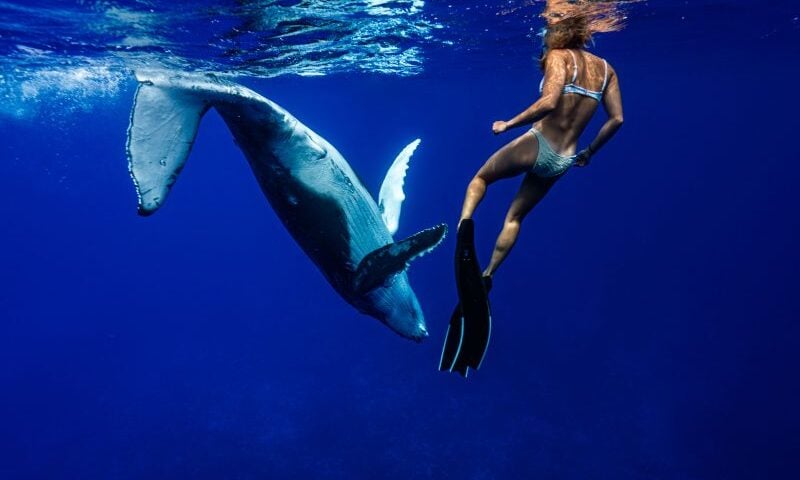
Alana Fiafia Richmond-Rex is the founder and president of the volunteer education and research organisation Oma Tafua (“to treasure whales”). Her NGO is dedicated to protecting marine mammals in Niue and across the Pacific. A graduate of the University of the South Pacific, she aspires to be wild, beautiful, and free – just like the sea.