IN the Pacific, healing has never been confined to hospitals.
It is carried within families, stories, and inherited knowledge, grounded in the understanding that care is both responsibility and relationship.
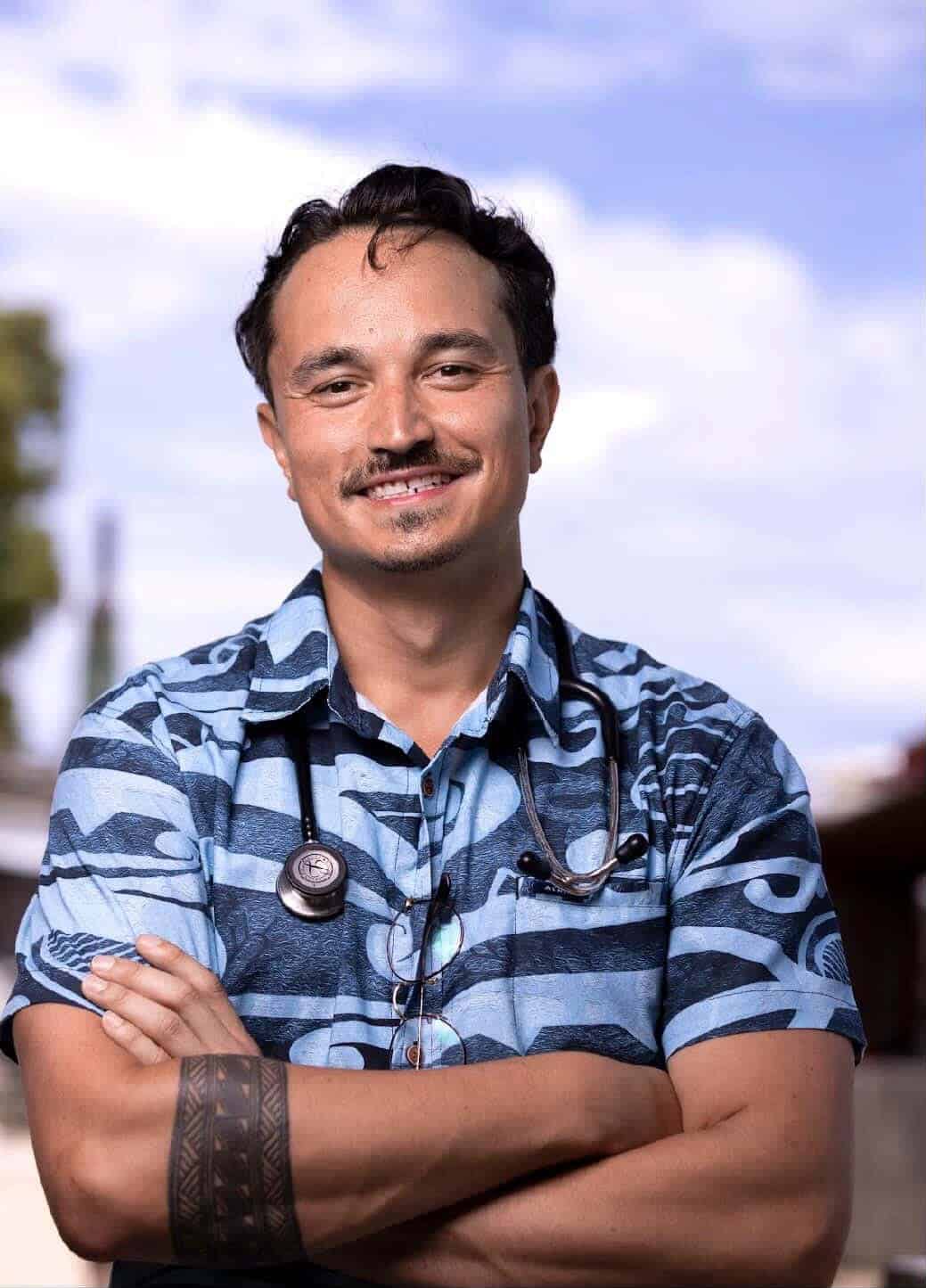
For Dr Matt Bray—a senior emergency medicine registrar at The Royal Melbourne Hospital—that understanding has travelled with him across oceans – from Rotuma to Canberra, from Melbourne to Honiara, and back into the heart of Pacific health systems.
“Emergency medicine is, for me, the epitome of equity and inclusion,” he says. It is a belief shaped by identity as much as profession.
Bray is a proud Australian of Rotuman heritage through his maternal Fatiaki family, with a bicultural upbringing shaped by both island and diaspora communities.
On his paternal side, healthcare was a familiar presence.
His grandmother and godmother were both nurses, and as a child, he would accompany his grandmother on ward rounds in the retirement home where she worked – early lessons in dignity, ageing and care.
On his maternal side, healing takes a more traditional form. The Fatiaki lineage includes majau (traditional healers) and sarao (a form of therapeutic massage rooted in Rotuman wellbeing). The same family line also carries a strong legacy of leadership in education, law and public service across Fiji and Rotuma.
“Service and responsibility were always part of the expectation,” Bray reflects. “Opportunity was never just for the individual. It came with obligation to others.”
Born in Sydney and raised in Canberra, Bray initially imagined a career in diplomacy.
Growing up in a bicultural family spread across the Pacific, he was drawn to international affairs and social justice. But medicine, encouraged by his parents, offered something more immediate and practical.
“It appealed to me as an idealistic teenager raised in a community that emphasised social justice and service,” he says.
“Medicine gave me a way to directly impact people’s lives while also engaging with broader inequities affecting First Nations and Pasifika communities.”
That commitment led him to emergency medicine, a field he describes as the “open front door of the hospital,” where care is guided by need rather than circumstance.
“I realised I’d found my tribe,” he says. “There’s a strong sense of collective endeavour. It reminded me of village life.”
After completing his MBBS, he pursued a Master of Public Health and Tropical Medicine, broadening his focus to health
systems, climate change, and inequities affecting First Nations and Pacific peoples.
A defining moment in his journey came in 2017, when he took a break from training to serve as a volunteer medical officer in Rotuma – the island his family calls home.
“Being able to care for people in the place my identity is rooted was incredibly fulfilling,” he says. “My days were a blend of medicine and cultural connection. It reinforced for me that health is not just clinical; it is cultural, historical, and deeply personal.”
Working in a small, remote community with limited resources also brought challenges and responsibility, shaping his growth as a doctor and deepening his understanding of how culture, history and identity influence healthcare experiences.
That perspective continues to guide both his clinical practice and advocacy, particularly around health equity and culturally responsive care.
Between 2025 and 2026, Bray stepped away from The Royal Melbourne Hospital for six months to join the Volunteer Emergency Medicine Registrar Program at the National Referral Hospital (NRH) in Honiara, Solomon Islands.
The hospital serves as the country’s only tertiary referral facility, supporting a population spread across a vast archipelago. Its emergency department manages high volumes of trauma, infectious diseases, non-communicable diseases, and climate-sensitive illnesses.
What he encountered, he says, was not a lack of expertise, but a system under pressure.
“There is a tendency to underestimate Pacific health systems,” he notes. “But the clinicians here are highly skilled, adaptable and deeply committed.”
His role focused on strengthening local capacity through mentoring, training and workforce development. He also contributed to governance and quality improvement initiatives, led the inaugural NRH Emergency Department Symposium, and helped shape a five-year strategic plan for the hospital.
The experience deepened his appreciation of Pacific knowledge systems.
“There is extraordinary resilience and innovation in Pacific health systems,” he says. “That knowledge is often underestimated internationally.”
That belief now informs his work as Board Director of the Oceania Pacific Health Association, alongside broader advocacy for workforce development and health equity across the region.
His commitment has also earned wider recognition. In 2025, he was named a finalist for the AMA Victoria Junior Doctor of the Year Award, recognising his leadership, advocacy, and dedication to social justice in medicine.
He is particularly focused on the Pacific diaspora. “The diaspora should not just be seen as a brain drain,” he says. “We are connectors… between systems, knowledge, and communities.”
For Bray, emergency medicine remains the specialty that best reflects his values of service, justice and connection.
“We meet people at their most vulnerable,” he says. “There is a profound responsibility to offer care, trust and reassurance.”
From Rotuman healing traditions to emergency departments across Australia and the Pacific, his journey reflects a commitment to strengthening health systems while remaining grounded in culture and community.
“It’s another step in weaving together my clinical skills, my heritage and my commitment to making healthcare fairer for everyone, no matter where they come from.”