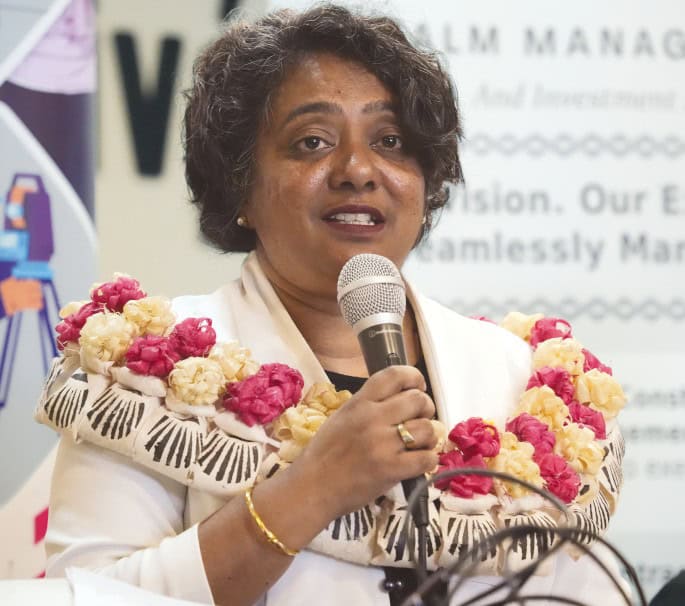
IN a country where 64 per cent of women have experienced some form of violence, Fiji’s Minister for Women, Children and Social Protection Sashi Kiran is raising the alarm.
Progress on gender equality cannot remain just words on paper.
Gender-based violence remains one of Fiji’s most urgent and persistent crises, touching women and girls in every community and age group.
Kiran emphasises that behind every statistic is a real person whose safety, dignity, and future are at stake.
This International Women’s Day, Kiran is championing urgent action to protect women’s safety, dignity, and rights—both in the halls of Parliament and in communities across the Pacific.
Kiran’s path to public office began not in political circles, but on the frontlines of disaster response.
“During the COVID pandemic, we had to step in where government support was missing,” she recalls.
“My work in civil society exposed the cracks in our systems and showed me that real change could only come from within government.”
Motivated by a call to action—“If you want change, you cannot be on the sidelines”—Kiran entered politics just weeks before the national election, driven by a sense of responsibility to the most vulnerable.
Her journey has not been easy.
With women representing less than 10 per cent of Fiji’s Parliament, and the wider Oceania region having the world’s lowest rate of female political participation, Kiran says the barriers are both structural and cultural.
“Women are often active behind the scenes but rarely make it to decision-making roles. Internal party quotas and deliberate inclusion are necessary for progress.”
But the most pressing issue, she says, is the epidemic of gender-based violence.
“Evidence shows that 64 per cent of women in intimate relationships in Fiji have experienced violence from a partner. For many, justice remains out of reach,” she says.
It takes women, on average, more than two years to seek help. Only a fraction has access to the support they need. The scale and persistence of gender-based violence mean that stronger enforcement, greater awareness, and expanded support services are urgently needed.
The gap between legal frameworks and lived reality is stark.
For Kiran, International Women’s Day is a checkpoint and a call for action.
This year’s theme—Give to Gain—highlights the power of support, generosity, and collaboration in empowering women.
Kiran says that when individuals and organisations invest in women—through tangible support like funding and resources, as well as mentorship and knowledge sharing—they help create a more equitable world.
“Change is possible, but it needs all of us. Rights, justice, and action for women are not optional – they are urgent, and they are now.”
Her advice to young women: “Step forward – lead with confidence, speak up, and actively shape a safer, more just future for all. Your leadership is needed now more than ever.”