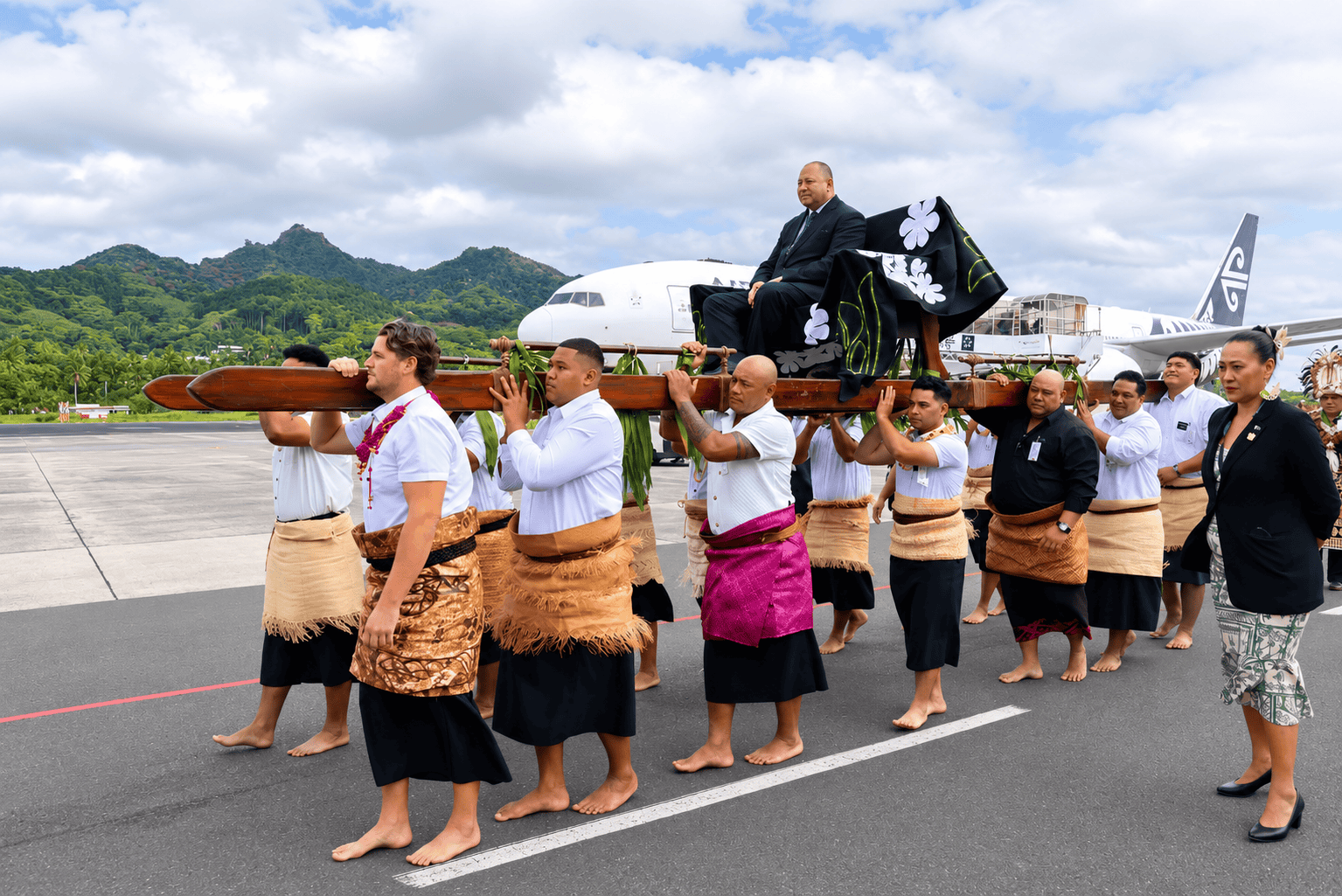
KING Tupou VI’s increased involvement in governance, framed as a political regression, rests on a narrow interpretation of democracy and a misreading of Tonga’s cultural and political landscape.
While the 2009–2010 reforms marked a significant shift toward parliamentary representation, they did not—and should not—signal the end of the monarchy’s active role in shaping national direction.
Rather than viewing the King’s engagement as a betrayal of democratic ideals, we must understand it as a culturally grounded assertion of sovereignty, stability, and adaptive leadership.
Rejecting the Western template
Tonga’s political system is not a carbon copy of Western liberal democracies, nor should it be. The assumption that democracy must follow a linear path toward diminished traditional authority reflects a colonial mindset that fails to appreciate the
diversity of democratic expression.
Tonga’s governance is a hybrid, rooted in centuries of Indigenous leadership, spiritual stewardship, and communal responsibility.
The 2009–2010 reforms were a recalibration, not a revolution. They introduced greater parliamentary representation while preserving the monarchy’s constitutional role. To interpret these reforms as a mandate for the King’s retreat from executive
influence is to misrepresent their intent. In fact, the reforms were designed to balance tradition and modernity – not to sever them.
Cultural anchor and moral compass
In Tonga, the monarchy is more than a political institution; it is a cultural anchor. The King embodies national identity, spiritual continuity, and moral authority.
His involvement in governance is not a power grab; it is a reflection of his duty to safeguard
the nation’s values, especially in times of political fragmentation and global uncertainty.
Critics argue that executive monarchy undermines democratic progress. But in practice, the King’s engagement has often served as a stabilising force, tempering factionalism and reinforcing long-term vision. Elected officials, while essential, are subject to electoral cycles and political pressures that can erode strategic coherence.
The monarchy offers continuity, impartiality, and a broader perspective on national interests.
Diaspora critique – A disconnected idealism
The critique of the King’s role often emerges from diaspora voices who, while passionate, may lack the lived experience of Tonga’s sociopolitical realities.
The accusation that diaspora traditionalists romanticise the past is ironic; many critics themselves
romanticise Western democratic norms without fully grappling with their limitations in Indigenous contexts.
Diaspora engagement is vital, but it must be tempered by humility and grounded in local realities – the lived experiences of Tongans at home. Those who navigate the complexities of governance, tradition, and development daily must be prioritised in shaping national discourse.
The King’s role, as understood by many within Tonga, is not regressive but protective – a safeguard against the erosion of cultural integrity.
Adaptive tradition: Evolution does not mean erasure
Tradition is not static, but neither is it disposable. Tonga’s political evolution must be adaptive, not disruptive. The idea thatt tradition must be stripped of executive influence to make way for democracy reflects a binary logic that does not serve Tonga’s unique context.
Instead, we must embrace a model of adaptive tradition, where cultural institutions evolve in dialogue with democratic mechanisms. The King’s involvement can coexist with parliamentary governance, provided there is transparency, accountability,
and mutual respect. This is not a contradiction; it is a synthesis.
Reframing the King’s role
Rather than calling for the King’s withdrawal, Tonga should reframe its role as a strategic leader in a hybrid system. Its engagement in areas such as climate resilience, education, and cultural preservation can complement parliamentary governance and elevate national priorities beyond electoral cycles.
This requires a clear delineation of responsibilities, not a reduction of influence. The King’s moral authority and long-term vision are assets that can guide Tonga through complex challenges, provided they are exercised in partnership with elected leaders and civil society.
Conclusion: Sovereignty through synergy
Tonga’s democracy is not fragile because of the monarchy; it is delicate when we fail to recognise the value of the balance between tradition and representation. The King’s involvement in governance is not a step backward; it is a culturally grounded assertion of sovereignty in a world that often demands conformity.
Progress in Tonga will not come from mimicking foreign models, but from refining its own. A strong constitutional
monarchy that is active, adaptive and accountable can coexist with a robust parliamentary democracy. The path forward is not subtraction, but integration.